
Plants
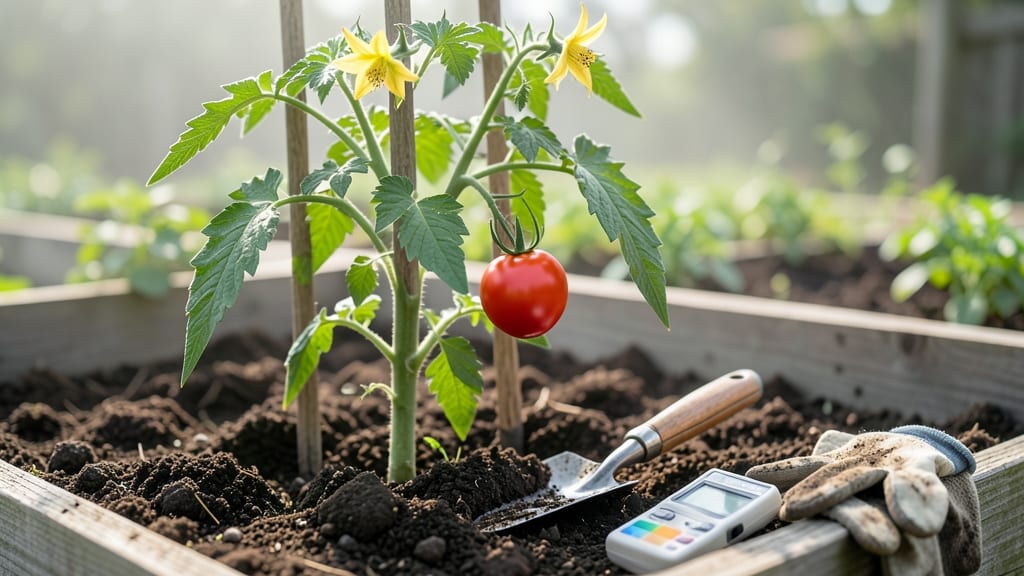
Tomatoes like well-draining, nutrient-rich loam soil with a slightly acidic to neutral pH (6.0–6.8). A mix of 60% topsoil, 30% compost, and 10% perlite or sand ensures aeration and moisture retention for optimal growth and fruit production.
Tomatoes prefer a soil blend that balances texture and nutrients—think of it as the perfect foundation for a skyscraper. 🌱 Loam soil, with its mix of sand, silt, and clay, provides the ideal structure: it drains excess water while holding enough moisture to prevent stress.
The 30% compost in the mix isn't just about nutrients; it also improves soil biology, encouraging beneficial microbes that break down organic matter into plant-available forms. I've found that adding a handful of worm castings to the mix can further boost growth by providing slow-release nutrients and improving soil aeration.
Beyond texture, the pH level is critical—tomatoes need that slightly acidic to neutral range to access essential nutrients like phosphorus and iron. If your soil tests too alkaline, a light application of sulfur can help adjust it over time.
For container gardening, I often use a pre-mixed potting soil with added perlite to mimic this ideal environment, ensuring my plants never struggle with waterlogged roots or nutrient deficiencies.
💡 In This Article
- Tomato Soil Composition Breakdown: Loam vs Sandy vs Clay
- pH and Nutrient Secrets for High-Yield Tomato Soil
Tomato soil composition breakdown: loam vs sandy vs clay
Tomatoes crave loam soil because its balanced texture—about 40% sand, 40% silt, and 20% clay—creates the perfect environment for root expansion and nutrient uptake. The sand particles provide drainage channels, while the silt and clay hold moisture and nutrients near the roots.
Imagine a sponge that drains well but still retains water: that's loam in action. Sandy soil, with its larger particles, drains too quickly, causing nutrients to wash away, while clay soil, dense and compact, suffocates roots by trapping excess moisture and limiting oxygen flow.
When I test soil for tomatoes, I look for a crumbly texture when squeezed—it should hold its shape but break apart easily. Organic amendments like compost and worm castings are game-changers: compost adds 1-2% organic matter per year, improving water retention and microbial activity, while worm castings provide a slow-release nutrient boost with 5x more nitrogen than regular compost.
For heavy clay soil, I mix in 20-30% coarse sand or perlite to break up compaction, while sandy soil benefits from 30-40% peat moss or coconut coir to boost moisture retention.
The science behind this is fascinating: tomato roots need oxygen to respire, and loam's pore space—40-60% air-filled—ensures roots breathe while absorbing water.
Sandy soil's pores are too large, letting water escape too fast, while clay's pores are too small, creating anaerobic zones where roots suffocate. Perlite or vermiculite added at 10% by volume can transform heavy soil into a loam-like texture, creating the ideal balance for tomato plants to thrive without stress.
For container gardens, I use a mix of 60% potting soil, 30% compost, and 10% perlite, which mimics loam's properties while preventing compaction. The perlite creates air pockets, while the compost provides a steady nutrient supply.
What most gardeners overlook is the microbiome: healthy soil teems with beneficial bacteria and fungi that break down nutrients into forms tomatoes can absorb. Adding a handful of mycorrhizal fungi to planting holes can increase nutrient uptake by 20-30%.
Here's a quick visual guide to soil textures and their tomato-growing suitability:
- Loam: Ideal for tomatoes—40% sand, 40% silt, 20% clay (holds moisture but drains well)
- Sandy: Drains too fast (85%+ sand)—amend with 30-40% organic matter
- Clay: Too dense (40%+ clay)—amend with 20-30% sand/perlite
One pro tip: if your soil feels sticky when wet or forms hard clumps when dry, it's likely too clay-heavy. For sandy soil, the grains should feel gritty between your fingers. The goal is that perfect crumbly texture—like a well-made chocolate cake batter. 🌱