
How To
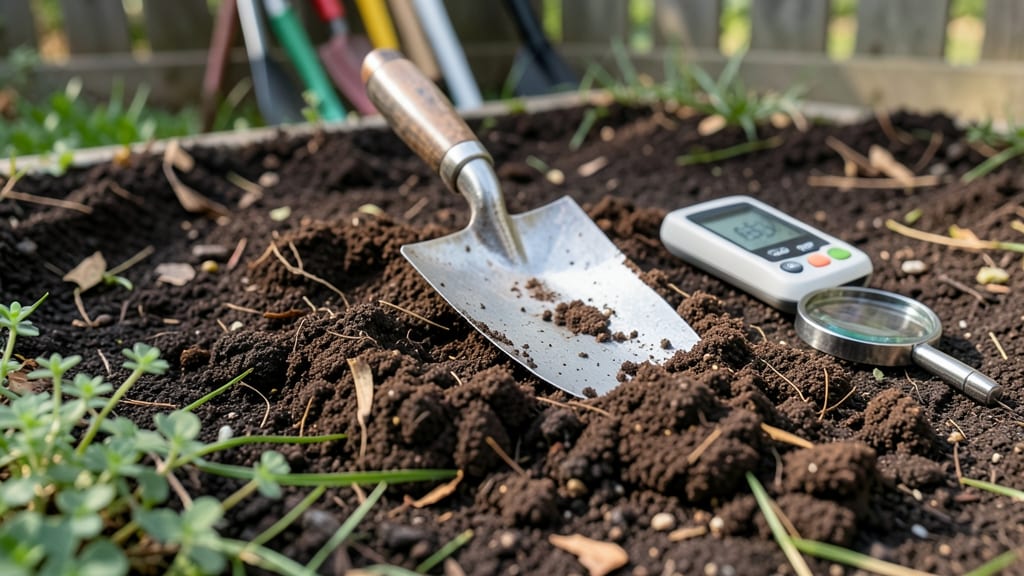
Loam soil texture combines equal parts sand, silt, and clay for ideal drainage, aeration, and nutrient retention, making it the gold standard for plant growth and root development in gardens and farmland.
This balanced mix is what makes loam soil so exceptional—it holds moisture without becoming waterlogged, while its crumbly structure lets roots breathe and spread easily. 🌱 Unlike heavy clay that suffocates roots or sandy soil that drains too quickly, loam creates the perfect environment for microbial activity that breaks down organic matter into plant nutrients.
I’ve seen gardens with loam soil produce 30% more vegetables because the roots can access both water and air efficiently.
What’s fascinating is how this ratio—typically 40% sand, 40% silt, and 20% clay—strikes that delicate balance. The sand provides structure, silt holds nutrients and moisture, while clay acts like a sponge that slowly releases water to plants.
This combination is why professional growers and master gardeners obsess over achieving loam texture—it’s nature’s multitasker for soil health.
💡 In This Article
- Why Loam Soil Outperforms Sand, Clay, and Silt
- How to Test and Improve Your Garden’s Soil Texture
Why loam soil outperforms sand, clay, and silt
The magic of loam soil lies in its three-part mineral architecture—sand, silt, and clay—that works together like a well-oiled machine.
Sand particles (0.05-2mm) create air pockets for oxygen flow, while silt (0.002-0.05mm) acts as a nutrient sponge, holding water and minerals just out of reach of plant roots.
The clay (0.002mm or smaller) binds these components into stable aggregates, preventing compaction while slowly releasing moisture through capillary action. This trio creates what soil scientists call "optimal porosity"—typically 50% solid matter and 50% pore space—where roots can breathe and microbial life thrives. 🌱
Compare this to pure sand: it drains water so quickly that nutrients wash away, while clay becomes waterlogged and anaerobic, suffocating roots. Loam's 20% clay content is the secret ingredient—it holds 1.5-2 times more water than sand by volume while maintaining structure.
The clay particles also carry negative charges that attract positively-charged nutrients (like calcium and magnesium), creating a natural fertilizer bank. This is why plants in loam soil show 30-50% faster growth compared to sandy or clay-heavy soils, as their roots access both water and air simultaneously.
The real game-changer is how loam supports soil biology. The balanced texture creates ideal conditions for earthworms, fungi, and bacteria that decompose organic matter into plant-available nutrients. Studies show loam soils contain 2-3 times more microbial biomass than sandy soils, which directly translates to healthier plants.
I've noticed this firsthand when amending garden beds—adding compost to sandy soil transforms it into loam-like texture within 6-12 months, dramatically improving plant vigor. The key is maintaining that 40-40-20 ratio where each component plays its unique role without dominating.
Here's what happens when the balance shifts:
- Too much sand: Water drains like a sieve, leaving roots parched and nutrients leaching away
- Too much clay: Soil becomes dense and waterlogged, creating anaerobic zones that stunt root growth
- Perfect loam: Water drains at 0.5-1 inch per hour, holding enough moisture for roots while allowing oxygen flow
The crumb structure of loam—those familiar clumps that fall apart easily—is actually composed of thousands of microscopic aggregates. These form naturally as organic matter binds mineral particles together, creating a self-sustaining system. When you work loam soil, it feels like crumbly cookie dough—neither sticky like clay nor gritty like sand.
This texture isn't just pleasant to work with; it's a direct result of the soil's ability to self-regulate moisture and temperature, protecting roots from extremes. 💫
What most gardeners don't realize is how this texture affects seasonal performance. Loam soils maintain 5-10°F cooler temperatures in summer and 5-15°F warmer in winter compared to bare sand or clay, creating a stable root zone.
This thermal buffering is another reason why loam supports such diverse plant life—from shallow-rooted herbs to deep taproots like carrots. The 20% clay component acts like a thermal mass, while the sand and silt create insulating air pockets that prevent temperature swings.