
Light Requirements
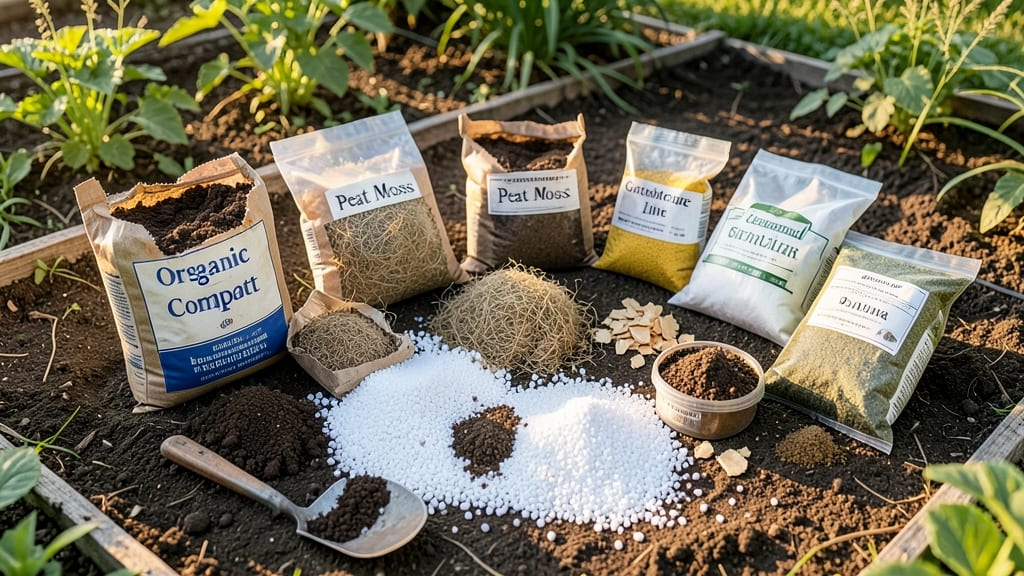
To determine what soil amendments you need, start with your soil test results: incorporate compost to boost organic matter, use lime to adjust pH upward for acid-sensitive plants, apply sulfur to acidify soil for acid-loving varieties, and add fertilizers (like 10-10-10) for nutrient deficiencies. For heavy clay, blend in sand or perlite; for sandy soil, mix in peat moss or coconut coir to improve moisture retention.
The right soil amendments transform poor soil into a thriving garden foundation. 🌱 For instance, compost not only adds nutrients but also improves soil structure, while lime or sulfur can shift pH levels dramatically—sometimes within weeks.
Many gardeners overlook micronutrients like iron or manganese, which become critical when plants show yellowing between veins or stunted growth. I always recommend testing soil every 2-3 years, as amendments wear out over time and environmental factors like rain can alter pH naturally.
Your plant choices directly influence amendment needs. Acid-loving blueberries, for example, demand consistent pH adjustments, while tomatoes prefer slightly acidic to neutral soil. Heavy feeders like corn or squash benefit from balanced fertilizers, while perennials often thrive with slow-release organic matter.
The key is matching amendments to both your soil's current state and your garden's long-term goals—whether that's maximizing flower production or growing larger vegetables.
💡 In This Article
- Decoding Soil Test Results: Which Amendments Match Your Soil’s Needs
- Plant-Specific Soil Amendment Guides for Common Garden Staples
Decoding soil test results: which amendments match your soil’s needs
Your soil test reveals three critical numbers: pH, organic matter percentage, and nutrient levels (like nitrogen, phosphorus, and potassium). The pH scale runs from 0-14, where 7.0 is neutral, below 7.0 is acidic, and above 7.0 is alkaline.
For example, blueberries thrive in pH 4.5-5.5, while tomatoes prefer 6.0-7.0.
If your test shows pH 6.8 but you’re growing azaleas (which love pH 5.0-5.5), you’ll need to add elemental sulfur—about 2-3 pounds per 100 square feet—to lower the pH gradually over 2-3 months. 🌿
Organic matter percentages below 3-5% signal compacted or nutrient-poor soil. Compost or well-rotted manure (like cow or horse manure) adds 2-5% organic matter per application, improving water retention and microbial activity.
For instance, a 1-inch layer of compost spread over 100 square feet and tilled in will boost organic matter by roughly 0.5%. Micronutrient deficiencies—like iron chlorosis (yellow leaves with green veins)—often appear when pH is too high; adding chelated iron (a synthetic amendment) can correct this quickly.
Nutrient levels are measured in parts per million (ppm). If phosphorus (P) is below 20 ppm, bone meal or rock phosphate (organic and synthetic options, respectively) can raise levels. For nitrogen (N), which fuels leafy growth, use blood meal (12-0-0) for organic or ammonium sulfate (21-0-0) for synthetic.
The key is balancing: too much nitrogen leads to lush foliage but weak stems, while too little phosphorus stunts root development. Always follow package rates—overapplying can harm plants and leach into groundwater.
Texture matters too. Clay soil (particles 0.002 mm) drains poorly, while sandy soil (0.05-2 mm) loses nutrients quickly. To improve clay, mix in coarse sand or perlite—about 20-30% by volume—to create air pockets.
For sandy soil, peat moss or coconut coir adds moisture retention without altering drainage drastically. The goal is a loamy texture: 40% sand, 40% silt, 20% clay, which holds water and nutrients while allowing roots to breathe.
Timing is everything. Apply lime or sulfur in early spring (6-8 weeks before planting) to let it integrate into the soil. Organic amendments like compost work year-round but are most effective when tilled in before planting or as a top-dressing in fall.
Synthetic fertilizers, however, should be split into 3-4 applications during the growing season to prevent nutrient burn. For example, a 10-10-10 fertilizer applied at 1 pound per 100 square feet every 6 weeks keeps nutrients steady without overwhelming plants.
Don’t forget micronutrients! Even if your soil test shows adequate major nutrients, deficiencies in zinc, copper, or boron can cause stunted growth or deformed leaves.
For instance, zinc deficiency (white bands on leaves) is common in high-pH soils; adding zinc sulfate at 0.5 pounds per 100 square feet can resolve it. Always re-test soil after 6-12 months to track progress—amendments don’t last forever, and your garden’s needs evolve with time. 💡