
How To
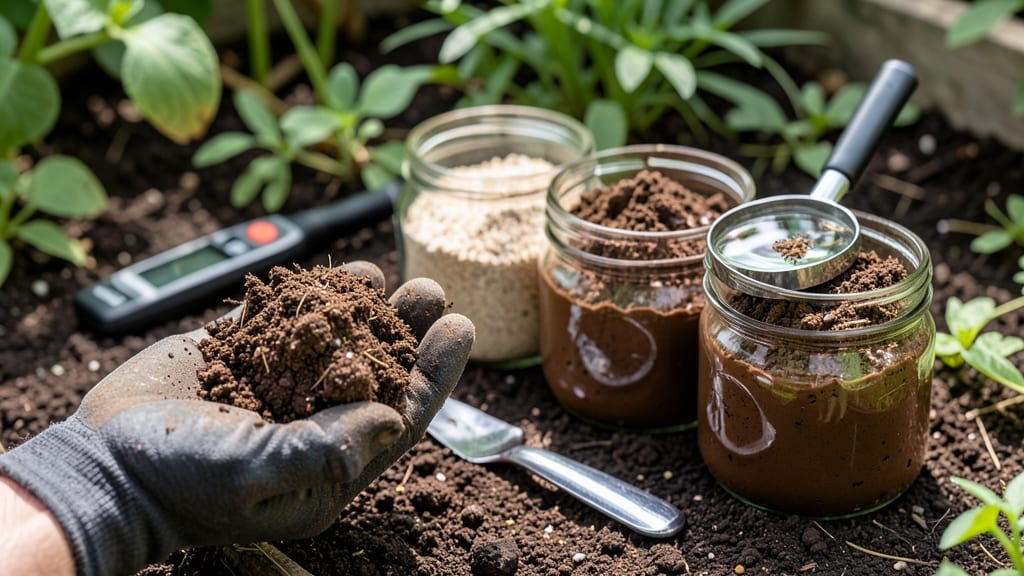
Loamy soil means a balanced mix of sand, silt, and clay that creates an ideal growing medium for plants, offering excellent drainage, water retention, and nutrient availability while promoting strong root development and microbial activity.
Loamy soil is often called the "perfect" growing medium because it strikes the right balance between drainage and moisture retention. 🌱 The ideal mix—about 40% sand, 40% silt, and 20% clay—lets roots breathe while holding enough water and nutrients to support healthy plant growth.
Unlike heavy clay or pure sand, loamy soil crumbles easily when dry and holds moisture without becoming waterlogged, making it ideal for both vegetables and flowers.
This texture also fosters beneficial microbial life in the soil, which breaks down organic matter and releases nutrients plants can absorb. Many gardeners work to achieve loamy conditions because it reduces the need for constant watering and fertilization while creating an environment where roots can spread freely.
The result? Stronger plants with fewer struggles against drought or nutrient deficiencies.
💡 In This Article
- Loamy Soil Composition: Why the Perfect Balance Matters
- How to Improve Your Soil Toward a Loamy Texture
Loamy soil composition: why the perfect balance matters
Loamy soil achieves its ideal qualities through a precise ratio of three fundamental components: sand, silt, and clay. The typical breakdown—40% sand, 40% silt, and 20% clay—creates a crumbly texture that feels almost velvety between your fingers when moist.
Sand provides the largest particles, creating air pockets that improve aeration and drainage, while clay's tiny particles hold water and nutrients like a sponge. Silt, with its medium-sized particles, bridges the gap by retaining moisture longer than sand but draining better than clay.
This trio works together like a well-orchestrated team, where each component compensates for the others' limitations. 🌱
The particle size differences create microscopic spaces that determine how water and air move through soil. Sand's coarse texture allows water to drain quickly, preventing root suffocation, while clay's fine particles hold onto water and nutrients, feeding plants during dry spells.
Silt acts as the moderator, absorbing water like a damp towel but releasing it gradually. This balance means loamy soil can hold 50-60% of its volume in water while still maintaining 25-30% air space, giving roots both hydration and oxygen.
For comparison, pure clay soil might hold 70% water but only 10% air, while sandy soil offers 30% water and 40% air—both extremes that struggle to support healthy plant growth.
This composition also creates the perfect environment for microbial life. The balanced structure provides shelter and food for beneficial bacteria and fungi that break down organic matter into plant-accessible nutrients.
In loamy soil, you might find 10-100 million bacteria per gram and 10,000-100,000 fungi, compared to just 1-10 million bacteria in sandy soil. These microbes form a living network that connects plant roots, creating a symbiotic relationship where roots receive nutrients and microbes receive sugars from photosynthesis.
The result is a self-sustaining ecosystem that requires less human intervention than other soil types. 🌿
Visual clues can help identify loamy soil: when dry, it forms small crumbs that break apart easily; when moist, it holds its shape but can be molded without sticking to your hands.
This texture contrasts sharply with clay soil, which forms hard clods, or sandy soil, which feels gritty and falls apart completely. The ideal loamy texture also warms up faster in spring, giving plants a head start on the growing season.
Many commercial potting mixes aim to replicate this balance because it mimics the natural conditions where most garden vegetables thrive.
Understanding this composition helps explain why loamy soil supports root development. The balanced structure allows roots to penetrate easily without meeting compacted layers, while the consistent moisture and nutrient availability reduce stress on plants.
For example, tomato plants in loamy soil develop stronger root systems than in heavy clay, which can restrict growth, or pure sand, which offers little nutritional support. The result is plants that grow faster, produce more fruit, and resist diseases better because their roots can access everything they need. 🌱
Consider this comparison: a garden with 10% organic matter in loamy soil will produce 25-30% more yield than the same garden with 5% organic matter in clay soil. The difference comes from how well the soil can support root expansion and microbial activity.
Even small adjustments to soil composition can dramatically improve plant health, which is why many gardeners work to achieve this balance through amendments and proper cultivation techniques.