
Planting
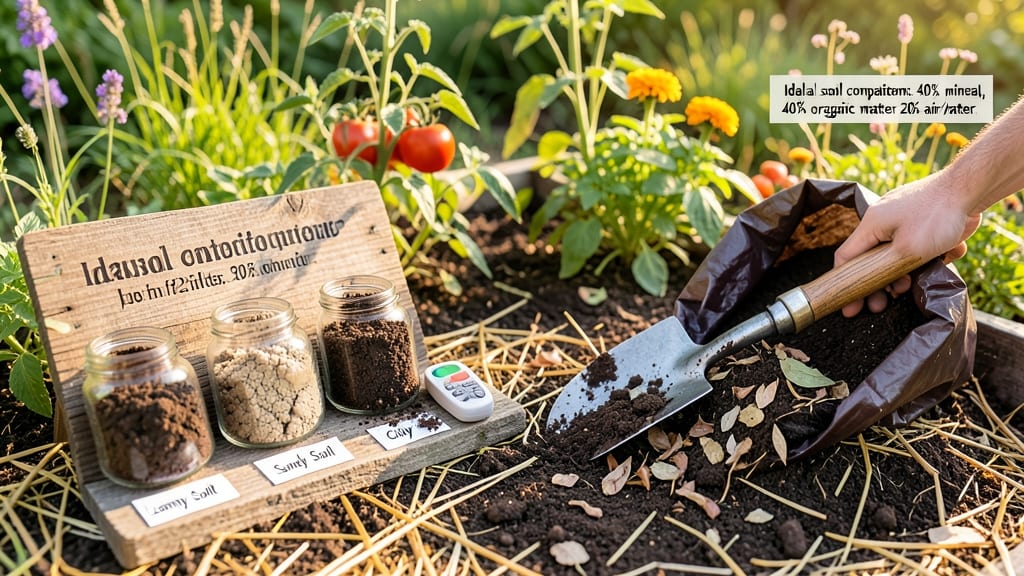
The ideal soil for plant growth combines loamy texture with balanced pH (6.0–7.0), rich organic matter, and proper drainage to support root development and nutrient absorption while preventing compaction or waterlogging.
The perfect growing medium for plants balances three key elements: a loamy texture that holds moisture without suffocating roots, a neutral pH range (6.0–7.0) that unlocks essential nutrients, and organic matter that feeds soil microbes. 🌱 This combination creates an environment where roots can breathe, expand freely, and access the nutrients they need to thrive.
Without proper drainage, even the best soil becomes waterlogged, starving plants of oxygen and inviting root rot. The magic happens when these factors work together—think of it as the foundation for healthy plant growth.
For example, gardeners often amend heavy clay soils with compost or sand to improve aeration, while sandy soils benefit from organic additives like peat moss to retain moisture.
Testing your soil's pH with a simple kit can reveal whether your plants are struggling due to nutrient lockout (like iron deficiency in alkaline soils) or toxicity (such as aluminum buildup in acidic conditions).
The goal isn't perfection—it's creating a dynamic ecosystem where roots can explore, microbes can thrive, and plants can access everything they need to grow strong.
💡 In This Article
- Loam Soil Composition: Why It’s Perfect for Plant Roots
- Adjusting pH and Soil Health for Optimal Plant Performance
Loam soil composition: why it’s perfect for plant roots
Loam soil achieves its near-perfect balance by containing roughly 40% sand, 40% silt, and 20% clay—a ratio that creates an ideal playground for roots.
The sand particles (0.05–2mm) provide excellent drainage, preventing waterlogging that would suffocate roots, while the tiny silt particles (0.002–0.05mm) hold moisture and nutrients near the root zone.
The clay (less than 0.002mm) acts like a sponge, retaining water and essential minerals while still allowing oxygen to reach roots through its microscopic pores.
This texture creates what scientists call "aggregate stability"—clumps of soil particles that hold together just enough to maintain structure without compacting. When you squeeze a handful of healthy loam, it should crumble easily between your fingers rather than forming a hard clod or falling apart like sand.
The pores between particles (about 10–30% air space) allow roots to breathe while giving beneficial microbes room to thrive. These microbes break down organic matter, releasing nutrients in forms plants can absorb—like a natural fertilizer factory operating 24/7.
Consider how loam supports different plant types: shallow-rooted herbs like basil thrive in its moisture-retaining capacity, while deep-rooted perennials like asparagus benefit from the soil's ability to store nutrients at various depths.
The clay fraction also buffers against rapid pH changes, maintaining that crucial 6.0–7.0 range where most nutrients become plant-available. Without this buffering, acidic soils might lock out phosphorus while alkaline soils prevent iron uptake—both leading to stunted growth despite fertile conditions.
What makes loam particularly remarkable is its self-regulating nature. When you add organic matter (like compost), it improves the soil's "tilth"—the ideal balance of structure, water retention, and aeration.
This is why gardeners often describe loam as "self-healing": even after disturbance, it tends to return to its optimal state over time. The key is maintaining that 40-40-20 ratio—too much sand makes soil infertile, while excess clay creates brick-like conditions that strangle roots.
For practical application, think of loam as the Goldilocks of soil textures—not too coarse, not too fine, but just right. When you dig into well-amended loam, you'll notice how it feels slightly gritty yet moist, with a dark brown or black hue from organic matter.
This visual and tactile feedback tells you the soil is actively supporting life beneath your plants. The microbial activity in healthy loam also produces that earthy, fresh smell—proof of a thriving underground ecosystem at work.
One common misconception is that loam must be "perfect" out of the box. In reality, most garden soils start as clay, sand, or silt-heavy and benefit from amendments. For example, adding 2–3 inches of compost annually can gradually transform heavy clay into loam-like conditions over 2–3 years.
The process involves breaking down clay particles through microbial activity while adding organic matter that binds the soil particles together without creating compaction.
Here's what happens when loam fails: if the clay content rises above 35%, roots struggle to penetrate the dense structure, while sandier loam (>50% sand) drains too quickly, forcing plants to expend energy seeking moisture.
The solution often lies in strategic amendments—peat moss for sandy soils, gypsum for clay soils—to restore that magical balance where roots can explore freely while accessing everything they need to grow.