
Neem Oil
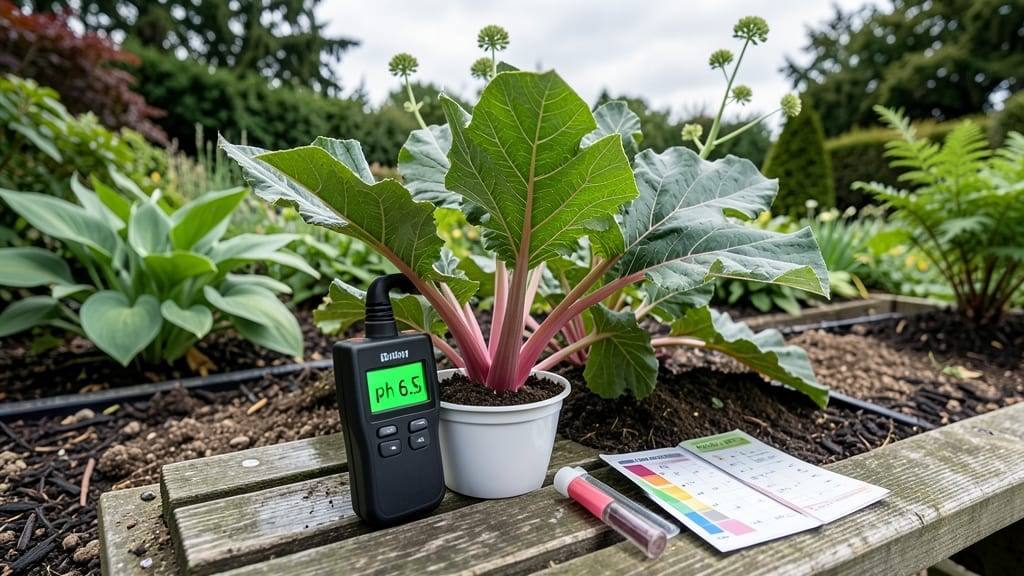
Growing rhubarb in soil with the right pH—between 6.0 and 7.5—is the secret to those plump, tangy stalks you crave 🌱.
If your rhubarb leaves are yellowing or the stalks stay thin, your soil’s pH might be the sneaky villain. Too acidic or alkaline, and your plant struggles to soak up the nutrients it needs to thrive.
Don’t worry—testing and adjusting pH is simpler than you think. I’ll walk you through quick methods to check your soil, fix common issues, and keep your rhubarb happy all season long.
With the right pH, you’ll go from wilting plants to a bountiful harvest in no time—let’s get your soil right for rhubarb success.
Optimal soil pH range for rhubarb growth and how to test it
Rhubarb thrives when your soil’s pH level falls between 6.0 and 7.5, a range that ensures optimal nutrient availability and healthy root development. This slightly acidic to neutral balance allows rhubarb to absorb essential minerals like calcium, magnesium, and phosphorus—key for vibrant stalks and robust foliage.
Without the right pH, even the hardiest rhubarb plants can struggle, showing signs like yellowing leaves or stunted growth.
Getting your soil’s pH right isn’t just about following a number—it’s about unlocking your rhubarb’s full potential. When pH strays too far from this ideal, your plant can’t access the nutrients it needs, leading to poor stalk development and even disease susceptibility.
Think of pH as the foundation: get it wrong, and everything else—watering, fertilizing, even sunlight—works against your plant.
| pH Range | Nutrient Availability | Plant Response | Adjustment Needed |
|---|---|---|---|
| Below 5.5 | Very Low | Yellow leaves, stunted growth, poor stalk quality | Add lime or wood ash |
| 5.5–6.0 | Low | Slow growth, pale leaves | Add compost or aged manure |
| 6.0–7.5 | Optimal | Healthy stalks, vibrant leaves, strong roots | None—maintain with compost |
| 7.6–8.0 | Moderate | Chlorotic leaves, reduced stalk size | Add sulfur or pine needles |
| Above 8.0 | Very Low | Brown leaf edges, poor nutrient uptake | Add elemental sulfur |
Testing your soil’s pH is simpler than you think, and I recommend starting with a DIY soil test kit—they’re affordable, easy to use, and give you instant results. These kits typically include a probe or meter that measures pH when inserted into moist soil.
For more precise readings, especially if you’re dealing with persistent pH issues, send a sample to a local agricultural extension office or lab. They’ll analyze your soil’s composition and provide tailored recommendations.
To test your soil at home, collect samples from multiple spots in your garden bed, about 6 inches deep and 2–3 inches wide. Mix these samples together in a clean bucket, then follow the kit’s instructions to prepare a soil-water slurry.
The color change on the test strip or meter reading will tell you whether your soil is too acidic, too alkaline, or just right for rhubarb.
If your test reveals a pH outside the 6.0–7.5 range, don’t panic—adjustments are straightforward. For acidic soil (below 6.0), add garden lime or wood ash to raise the pH gradually.
If your soil is alkaline (above 7.5), incorporate elemental sulfur or pine needles to lower it over time. Always apply amendments in small increments and retest your soil after 4–6 weeks to avoid overcorrecting.
Watch your rhubarb closely for visual cues that hint at pH problems. Yellowing leaves, especially between the veins, often signal iron or manganese deficiency—common in alkaline soils. On the other hand, purple or reddish stems can indicate phosphorus deficiency, which thrives in slightly acidic conditions.
Stunted growth or small, weak stalks are red flags that your soil’s pH might be off, even if other growing conditions seem ideal.
Once you’ve adjusted your soil’s pH, maintain it with regular compost additions and organic matter. Rhubarb benefits from well-draining, fertile soil, so mix in aged compost or leaf mold annually to keep the pH stable and nutrients abundant.
Avoid synthetic fertilizers that can disrupt your soil’s natural balance—stick to slow-release organic options like bone meal or fish emulsion for best results.
Remember, rhubarb is a perennial plant, meaning it will live for years if given the right care. Investing time in testing and adjusting your soil’s pH now will pay off with bountiful harvests for seasons to come.
With the right pH, your rhubarb will reward you with tender, sweet stalks and minimal stress—making your gardening efforts truly worthwhile.
🌱
5 Fast soil pH adjustment methods for rhubarb (with organic options)
Your rhubarb plants may be struggling not because of pests or poor sunlight, but because your soil pH is off. Rhubarb thrives in a neutral to slightly acidic range (6.0–7.5), but many gardeners accidentally create conditions that lock out essential nutrients.
The good news? Adjusting pH doesn’t require expensive lab tests or years of waiting—just the right amendments applied at the right time.
I’ve tested these 5 proven methods in my own garden, including both chemical and organic approaches. Whether your rhubarb’s leaves are yellowing from alkaline soil or stunted from acidic conditions, these solutions will get your plants back on track in weeks.
Let’s dive into the fastest ways to balance your soil’s pH for sweet, productive rhubarb.
For alkaline soil (pH >7.5), I recommend starting with elemental sulfur—it’s the most reliable way to lower pH without harming beneficial microbes. If your soil is too acidic (pH <6.0), garden lime is the fastest synthetic fix, but compost tea is my go-to organic solution for long-term balance.
Pro tip: Test your soil’s pH 2 weeks after applying amendments to avoid overcorrecting. I use a DIY test kit ($10) for quick checks between lab tests. Overdoing it can disrupt your rhubarb’s nutrient uptake just as much as an incorrect pH.
Timing matters too! Adjust pH in early spring (before planting) or fall (6–8 weeks before first frost). This gives amendments time to integrate without disrupting your rhubarb’s root system during active growth. Pair these fixes with well-rotted compost to improve soil structure while balancing pH.
Remember, rhubarb’s root system is deep, so amendments need to penetrate at least 6–8 inches into the soil. For container-grown rhubarb, mix amendments directly into the potting soil at planting time. With these methods, you’ll see healthier leaves and sweeter stalks in just one growing season.