
How To
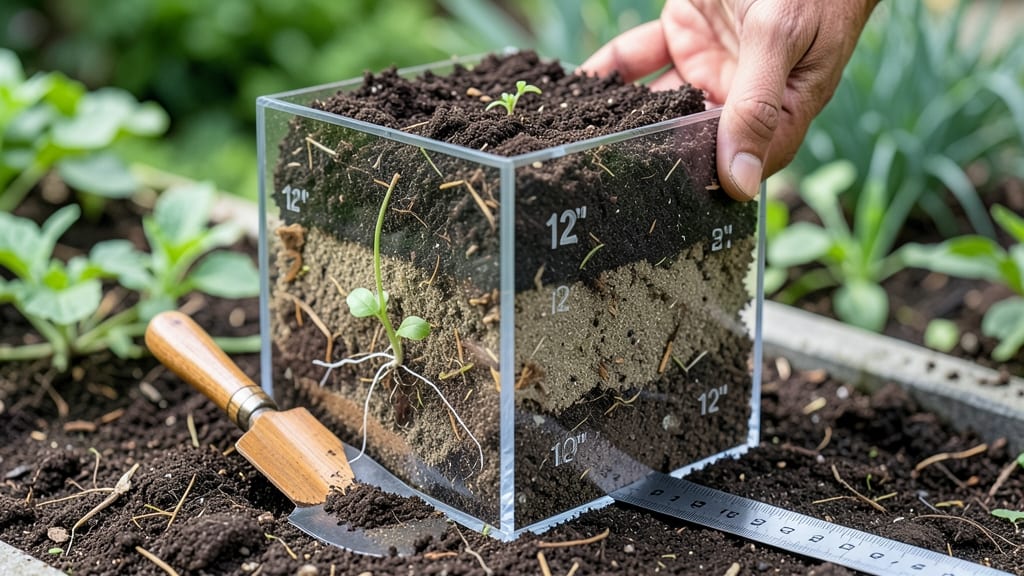
Understanding soil cubic feet turns guesswork into perfect planting. 🌱 Whether you're digging a hole for a new tree or mixing soil for containers, precise measurements mean roots get exactly what they need—no more, no less.
My first rose bush struggled because I eyeballed the hole, and the roots ended up crowded in a space that was too small.
Here's the game-changer: a 12-inch-deep hole with a 12-inch diameter holds about 1 cubic foot of soil. Multiply that by the number of plants, and you've got the foundation for strong growth.
For deep-rooted plants like fruit trees, aim for 3 cubic feet per plant—that's a hole twice as wide and deep as you might think. Shallow-rooted veggies like lettuce need just ½ cubic foot, so you can fit more in a small space.
Why does this matter? Roots spread based on available soil volume, not just depth. Too little space means stunted growth; too much wastes soil and water. When you nail the cubic feet calculation, you'll see plants establish faster, resist drought better, and produce neighbor-jealousy levels of blooms or harvests.
The payoff is worth the quick math—trust me, my second rose bush thrived because I measured right.
Pro tip: Use a 5-gallon bucket as your measuring tool—it holds roughly 1 cubic foot of soil. Fill it, dump it into your planting hole, and repeat until you reach the right volume. For containers, calculate the cubic feet of your pot and adjust soil mix ratios accordingly.
This method works for everything from window boxes to backyard beds, so grab a tape measure and let’s get precise!
📚 In This Guide
- What you need
- Instructions
- Tips and common mistakes
- Wrapping up and next steps
What you need
- ● Measuring Tape: A 25-foot tape measure (for accuracy in larger spaces).
- ● Notebook or App: For recording dimensions (e.g., length × width × depth).
- ● Soil: Topsoil: 1–2 cubic yards (depends on project size; ~27 cubic feet per yard).
- ● Compost or Amendments: 1–5 gallon buckets (e.g., peat moss, perlite, or compost for drainage/nutrients).
- ● Wheelbarrow or Shovel: For moving soil (a 5–7 cubic-foot wheelbarrow is ideal).
- ● Level or Straightedge: To ensure even soil distribution.
- ○ Calculators (Optional but Helpful): Basic calculator (for manual volume = L × W × D calculations).
- ● Online soil volume calculator (for quick conversions).
- ● Garden Gloves: Protect your hands from rough soil or sharp edges.
- ● Knee Pads: For comfort during long projects.
- ● Soil Test Kit: Check pH/nutrient levels before planting.
- ● Landscape Fabric: Line beds to reduce weed growth.
- ● Watering Can or Hose: Moisten soil before and after filling.
Instructions for calculating soil cubic feet for precision planting
Here's how I calculate soil volume like a pro—no guesswork, just perfect beds every time.
📏 Step 1: Measure Your Planting Area Dimensions
Start by measuring the length, width, and depth of your planting bed using a tape measure. For raised beds, measure the interior dimensions—this gives you the actual soil volume. I always measure twice to avoid mistakes, especially when dealing with irregular shapes. Write these numbers down: length × width × depth.
If your bed has sloping sides or uneven edges, break it into rectangular sections and calculate each separately. For example, a 4-foot by 8-foot bed with a 1-foot depth would be 4 × 8 × 1 = 32 cubic feet. This becomes your baseline for soil quantity.
📐 Step 2: Convert Dimensions to Cubic Feet
Multiply the three measurements together to get the total cubic feet. For example, a 3-foot by 6-foot bed filled to a depth of 12 inches (1 foot) requires 3 × 6 × 1 = 18 cubic feet of soil. If your depth is in inches, convert it to feet first—12 inches equals 1 foot.
For deeper beds, like those for root crops or large shrubs, divide the depth into manageable layers. A 2-foot-deep bed would be calculated as two 1-foot layers: 3 × 6 × 2 = 36 cubic feet. This helps when ordering soil in bulk or planning layered amendments.
🌱 Step 3: Adjust for Soil Settling and Amendments
Soil settles over time, so add 10-20% extra to your cubic feet calculation. For example, if you calculated 20 cubic feet, order 22-24 cubic feet to account for compaction. This extra volume also allows room for organic matter like compost or peat moss.
If you're mixing amendments, calculate their volume separately. For instance, adding 2 cubic feet of compost to a 10-cubic-foot bed means you’ll need 12 cubic feet of base soil to maintain the correct proportions. Always weigh heavier amendments like sand or gravel separately—they don’t settle like organic soil.
⚖️ Step 4: Verify Soil Weight for Heavy Plants
Some plants, like tomatoes or large shrubs, need extra soil depth for root growth. A cubic foot of typical garden soil weighs about 40-50 pounds, so a 20-cubic-foot bed could weigh 800-1,000 pounds. Use a wheelbarrow or helper when moving heavy loads—this isn’t a solo job.
For containers or lightweight mixes, check the bag’s weight per cubic foot. A bag labeled "1 cubic foot" might weigh 25-35 pounds if it’s mostly perlite or vermiculite. Always distribute weight evenly to avoid tipping over pots or uneven settling in beds.
✅ Step 5: Double-Check and Refine
After filling your bed, press the soil down gently with your hands or a board to simulate settling. If the soil level drops noticeably, add more to reach your target depth. This final adjustment ensures your plants have the root space they need without overcrowding.
For large projects, use a soil calculator or spreadsheet to track multiple beds. I keep a log of past calculations—it saves time and prevents costly mistakes. Now your planting bed is ready for perfect, stress-free growth.
Tips & tricks for perfect planting beds
Precision planting starts with the right soil volume—and these tricks ensure you never guess again.
Measurement Accuracy: Use a sturdy tape measure with clear inch markings for Step 1. For irregular beds, I recommend marking the dimensions directly on the ground with stakes before measuring—this prevents misalignment errors when calculating your 4 × 8 × 1 = 32 cubic feet example. A laser measure can save time for large projects, but even a basic tape works perfectly when used carefully.
Layer Calculation Strategy: When dividing deeper beds into 1-foot layers (like your 2-foot example becoming 36 cubic feet), I keep a small notebook handy to track each layer's volume separately. This prevents confusion when ordering soil—especially important for root crops where depth matters most. Label each layer as you go to maintain organization.
Soil Weight Reality Check: The 40-50 pounds per cubic foot guideline is a great starting point, but I've found that freshly turned garden soil often weighs closer to 50 pounds while bagged potting mixes can be lighter (25-35 pounds). For heavy plants like tomatoes, I always round up to 55 pounds per cubic foot to account for moisture content variations in different soil types.
Double-Checking System: After pressing down your soil in Step 5, I recommend using a straight board to create a level surface before measuring the final depth. This gives you a consistent reference point rather than relying on visual estimates. For raised beds, I even mark the target depth with a line of spray paint on the inside walls before filling.
Pro Tips for Soil Cubic Feet
- Precision planting starts with the right soil volume—and these tricks ensure you never guess again.
- Measurement Accuracy: Use a sturdy tape measure with clear inch markings for Step 1. For irregular beds, I recommend ...
- Layer Calculation Strategy: When dividing deeper beds into 1-foot layers (like your 2-foot example becoming 36 cubic ...
Frequently asked questions
Got questions about soil cubic feet? You’re not alone!
Whether you're prepping for a garden or troubleshooting a project, here are some common queries—and clear answers—to help you dig in with confidence.
How do I calculate cubic feet of soil for my garden bed?
Measure the length, width, and depth of your bed in feet, then multiply them together (e.g., 4’ x 3’ x 1’ = 12 cubic feet). For irregular shapes, break the area into rectangles or use a soil calculator for accuracy. Pro tip: Round up to avoid shortages!
How much does a cubic foot of soil weigh?
A cubic foot of average garden soil weighs about 70–100 pounds, depending on moisture and organic matter. Loose topsoil is lighter (~60 lbs), while clay-heavy soil can exceed 120 lbs. Always check bags for weight specs—overestimating saves you from backaches!
Can I use bags of soil to estimate cubic feet?
Yes! Most bags label their volume (e.g., a 2-cubic-foot bag). Divide your total cubic feet by the bag’s volume to find how many you need. For example, 24 cubic feet ÷ 2 sq ft/bag = 12 bags. Bonus: Buy 5–10% extra for settling or mistakes.
How long does it take to fill a large planting area with soil?
For a 100-cubic-foot bed, expect 2–4 hours if working solo (assuming 25–50 lbs per carry). Team up to halve the time! Factor in leveling, compacting, and breaks—patience ensures even root growth.
What if my soil is too heavy or compacted?
Amend with compost or perlite (1 part amendment to 3 parts soil) to lighten and aerate. For dense clay, till in sand or peat moss to improve drainage. Test your soil first—local extension offices offer cheap pH/structure analysis!
Can I reuse old soil from my garden?
Reuse is great, but sterilize first! Solarize (cover with plastic for 4–6 weeks) or bake in a oven at 200°F for 30 mins to kill pests/diseases. Mix with fresh soil (50/50) to replenish nutrients. Warning: Avoid reuse if weeds or fungi were present.
Wrapping up and next steps
Understanding soil cubic feet is your secret weapon for creating thriving planting beds—whether you're a seasoned gardener or just starting out. 🌱 By mastering this simple yet powerful measurement, you’ll ensure your plants get the perfect balance of space, nutrients, and drainage. Now’s your chance to put this knowledge into action! Grab your measuring tools, calculate with confidence, and transform your garden into a lush, high-yielding paradise. Ready to dig in?
- Next step: Start small—measure your first bed today and adjust as you go!
- Pro tip: Keep a soil journal to track moisture, amendments, and plant growth over time.