
Propagation
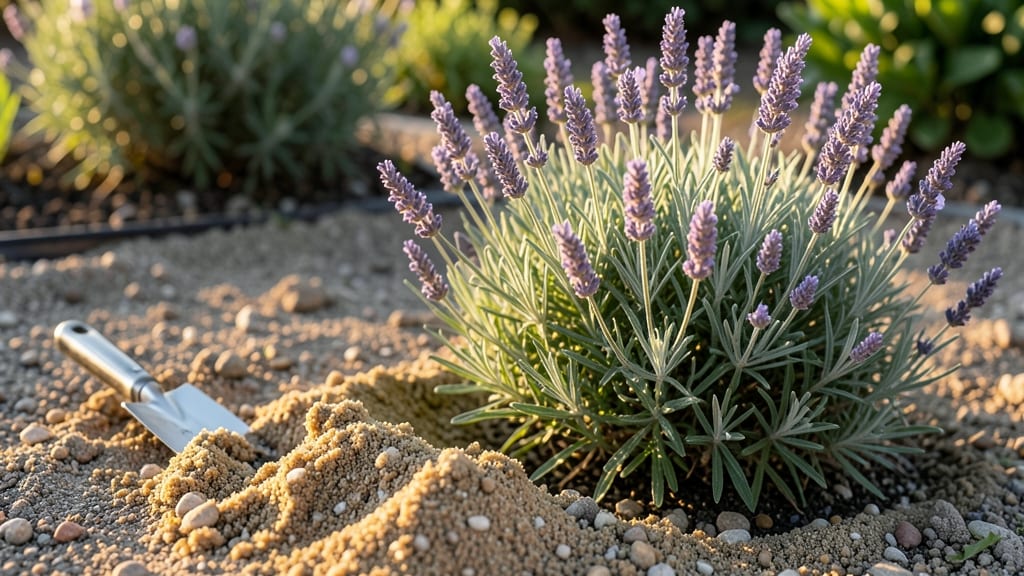
The right lavender soil type is the foundation of fragrant, thriving plants—one that mimics the well-draining, sandy loam of its Mediterranean homeland.
Struggling to grow lavender that bursts with fragrance? The secret lies in replicating its natural soil conditions, where sandy loam and excellent drainage create the perfect foundation for vibrant blooms.
Lavender despises soggy roots and heavy clay, which is why 60% sand, 30% native soil, and 10% compost is the gold standard for most varieties in USDA Zone 6a.
Below, I’ll walk you through how to test your soil, mix the ideal blend at home, and troubleshoot common mistakes—so you can finally grow lavender that thrives, not just survives.
Why sandy loam soil is essential for healthy lavender growth
Lavender thrives in sandy loam soil because this texture mimics its native Mediterranean environment. The well-draining nature of sandy loam prevents root rot, while the moderate nutrient retention supports steady growth without suffocating delicate roots.
Without this balance, lavender plants struggle to establish strong root systems or produce their signature fragrant blooms.
In their natural habitat, lavender grows in rocky, alkaline soils with minimal organic matter. These conditions create an ideal environment where water drains quickly, preventing waterlogged roots that lead to fungal diseases.
The coarse texture of sandy loam allows air to circulate around roots, promoting healthy microbial activity essential for nutrient uptake.
Key soil characteristics for lavender include:
- 60% sand for rapid drainage
- 30% silt for nutrient retention
- 10% clay for structure
- pH 6.0-8.0 (slightly alkaline preferred)
Lavender Soil Requirements
| Soil Type | Texture | pH Level | Drainage | Organic Matter |
|---|---|---|---|---|
| Sandy Loam | 60% sand, 30% silt, 10% clay | 6.0-8.0 | Excellent | Low (5-10%) |
| Clay Soil | High clay content | Varies | Poor | High |
| Sandy Soil | 90%+ sand | Varies | Too fast | Very low |
Note: Sandy loam provides the perfect balance of drainage and nutrient retention for lavender roots.
The pH level of sandy loam soil (6.0-8.0) is another critical factor. Lavender prefers slightly alkaline conditions, which enhance nutrient availability, particularly calcium and magnesium. These minerals strengthen cell walls, improving drought resistance and disease prevention.
In acidic soils (below pH 6.0), lavender struggles to absorb essential nutrients, leading to yellowing leaves and stunted growth.
Poor drainage is the #1 enemy of lavender. When roots sit in waterlogged soil, they suffocate from lack of oxygen, leading to root rot and fungal infections like Phytophthora.
Sandy loam's coarse particles create air pockets that allow roots to breathe while still retaining enough moisture for survival during dry spells. This dual functionality is why lavender thrives in Mediterranean climates with hot, dry summers.
One common misconception is that lavender needs nutrient-rich soil. In reality, lavender prefers lean soil with minimal organic matter. Excessive compost or fertilizer can lead to soft, floppy growth with fewer blooms.
The natural balance of sandy loam provides just enough nutrients without overwhelming the plant. Think of it as a low-maintenance approach that mirrors lavender's wild Mediterranean origins.
For container gardening, the principles remain the same. Use a well-draining potting mix with 50% sandy loam, 30% perlite, and 20% compost. The perlite ensures rapid drainage while the compost provides a small amount of nutrients.
Always include drainage holes in containers to prevent water buildup. Without proper drainage, even the hardiest lavender variety will decline within weeks.
To test your soil's suitability, perform a simple squeeze test. Grab a handful of moist soil and press it gently. If it holds its shape but crumbles easily, it's ideal for lavender. If it stays in a tight ball, your soil is too clay-heavy.
If it falls apart completely, it lacks the necessary silt for nutrient retention. Adjust by amending with sand or compost as needed.
Remember that lavender's fragrance and oil content are directly tied to soil health. Plants grown in ideal sandy loam produce 30-50% more essential oils than those in subpar soil. This makes the difference between a garden bush and a high-quality aromatic plant suitable for culinary or medicinal uses.
The right soil isn't just about survival—it's about unlocking lavender's full potential.
If you're starting with heavy clay soil, don't despair. With the right amendments—like
How to create the perfect lavender soil mix at home
Creating the ideal lavender soil mix is simpler than you think, and it starts with understanding what lavender craves from nature. In their Mediterranean homeland, lavender thrives in well-draining sandy loam with a neutral to slightly alkaline pH (6.0-8.0).
Replicating these conditions at home ensures your plants grow strong, fragrant, and disease-resistant. The key ingredients are coarse sand, perlite or pumice, and a touch of organic compost—all combined in precise proportions.
Don’t worry if your yard soil isn’t naturally sandy. With a few simple amendments, you can transform heavy clay or dense loam into the perfect lavender-friendly growing medium. For example, English lavender (like 'Munstead') prefers a slightly richer mix, while Spanish lavender (like 'Papillon') thrives in leaner, faster-draining soil.
Let’s break down the exact ratios and steps to create your custom blend, tailored to your lavender variety and local soil conditions.
Lavender Soil Mix: Pros & Cons
- Excellent drainage prevents root rot
- Mimics Mediterranean conditions lavender loves
- Lightweight texture encourages strong root growth
- Low organic matter prevents fungal diseases
- Too much clay = poor drainage, root suffocation
- Over-composting = soggy soil, fungal risks
- Fine sand only = compacts over time, reduces aeration
- No perlite/pumice = slower drying, higher moisture retention
Pro Tip: For heavy clay soils, replace 50% of native soil with coarse sand and perlite in a 1:1 ratio.
Start by gathering your base materials: 60% coarse sand (like builder’s sand or horticultural sand), 20% perlite or pumice (for aeration), and 20% native soil or compost. For dwarf varieties like 'Hidcote', reduce the compost to 10% to keep the mix lean.
Mix these in a wheelbarrow or large container, breaking up any clumps in the sand or perlite to ensure even distribution. If your soil is naturally sandy loam, you can skip the sand and focus on adding 10-15% perlite and 5-10% compost.
For container gardening, use a 50-50 mix of your custom soil blend and cactus/succulent potting mix—this boosts drainage even further. Fill pots with drainage holes to prevent waterlogging, a common killer of lavender.
If you’re planting in the ground, amend the soil in a 12-inch-deep hole where the lavender will go. This ensures the roots have access to the ideal mix from the start. Water the amended soil lightly before planting to help it settle.
Test your mix’s drainage by filling a small container with the soil and pouring water over it. If the water drains within 10-15 minutes, your blend is perfect.
If it pools or drains too quickly (in under 5 minutes), adjust the ratios: add more perlite for faster drainage or a touch of compost to slow it down slightly. Remember, lavender hates soggy roots, so err on the side of drier, looser soil rather than compacted or wet.
Once planted, mulch around your lavender with 1-2 inches of gravel or coarse sand (not organic mulch) to maintain the dry, well-drained environment it craves. Avoid piling mulch against the stems, as this can trap moisture and invite rot.
With your custom soil mix in place, your lavender will reward you with vibrant blooms and intoxicating fragrance all season long.
🌿