
Propagation
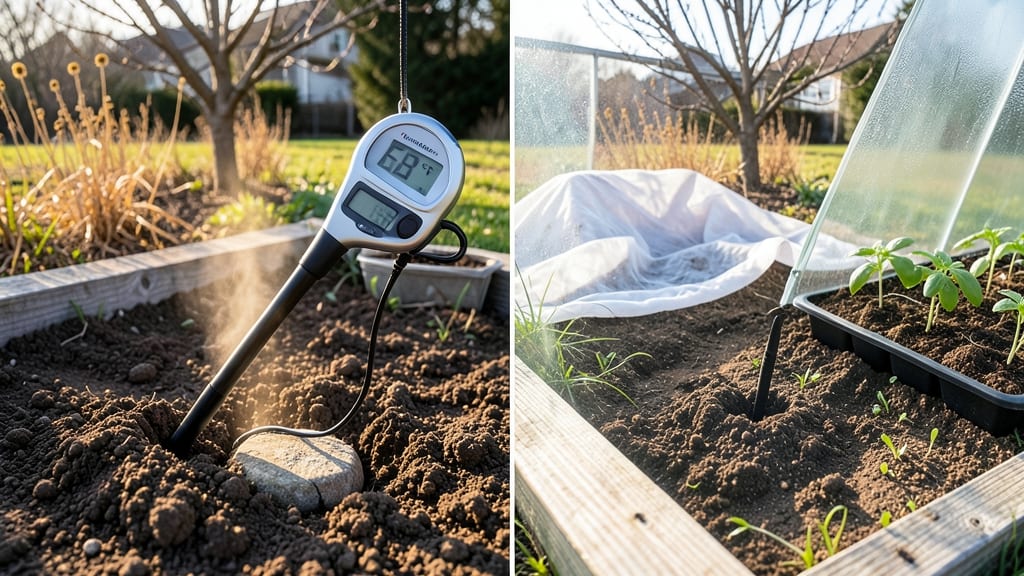
Soil temperature is often warmer than air temperature because soil absorbs and retains heat longer during daytime and sunny conditions, creating a stable environment that supports root development and seed germination.
This happens because soil acts like a natural insulator, absorbing sunlight and storing heat in its dense structure.
Unlike air, which heats up quickly but cools just as fast, soil releases warmth gradually—especially when it contains moisture or organic matter. 🌱 For gardeners, this means soil temperatures stay consistently warmer than air temps, even after sunset, giving plants the steady warmth they need to thrive.
The difference can be as much as 10-15°F on sunny days, making soil the true thermometer for plant health.
What's particularly interesting is how this affects germination. Many seeds won't sprout until soil reaches 60-75°F, while air temps might still be chilly.
That's why gardeners often use black plastic mulch or cold frames—not just to warm soil directly, but to create that critical heat buffer between the air and root zone. Even a 5°F difference can mean the difference between successful sprouting and stalled growth.
💡 In This Article
- Why Soil Retains Heat Better Than Air
- Optimal Soil Temperatures for Plant Growth and Germination
Why soil retains heat better than air
Soil acts like a giant heat sink because of its high density and ability to store thermal energy. Unlike air, which is mostly empty space, soil is packed with minerals, organic matter, and water—all of which absorb and hold onto heat.
When sunlight hits bare soil, the particles convert solar energy into thermal energy far more efficiently than air molecules can. For example, a sunny day might see air temperatures at 75°F while the top inch of soil reaches 85-95°F, creating a warm buffer zone for plant roots.
The moisture content in soil plays a crucial role too. Water has a high specific heat capacity, meaning it absorbs and releases heat slowly. A damp soil can stay 10-15°F warmer than dry soil at the same air temperature.
This is why gardeners often water soil before planting—it helps maintain that critical warmth needed for seed germination. The organic matter in soil, like decomposed leaves or compost, further enhances heat retention by trapping air pockets that act as insulation, similar to how a down jacket works for humans.
Thermal conductivity differences also explain why soil stays warmer. Air is a poor conductor of heat, meaning it heats up quickly but loses heat just as fast. Soil, however, conducts heat more efficiently through its solid particles, redistributing warmth downward where roots need it most.
This is why you'll often find soil temperatures 5-10°F warmer at a depth of 2-3 inches compared to surface air temperatures, even in cold climates. This consistent warmth is essential for root development and microbial activity in the soil ecosystem.
Another key factor is the color of the soil surface. Darker soils absorb more sunlight than lighter ones, similar to how black asphalt gets hotter than concrete in summer. Organic-rich soils often appear darker, which increases their heat absorption capacity.
This is why gardeners use dark mulches—they not only suppress weeds but also help maintain soil warmth. The contrast between soil and air temperature becomes especially noticeable during clear nights when air cools rapidly, but soil releases its stored heat slowly, keeping roots warm.
Consider how this plays out in real-world scenarios: In early spring, air temperatures might hover around 50°F while soil temperatures remain in the 60°F range—perfect for planting warm-season crops like tomatoes or peppers. This difference is what allows gardeners to start planting weeks before air temperatures would suggest.
The stability of soil temperature creates an ideal microclimate where plants can establish strong root systems before facing cooler air conditions.
For those tracking soil temperatures, a simple soil thermometer inserted 2-3 inches deep will reveal this phenomenon. You'll often see readings that are 5-15°F warmer than nearby air temperatures, especially in sunny conditions.
This isn't just academic—it directly impacts what you can grow and when. Understanding this heat retention mechanism helps explain why some plants thrive in cooler air but require warmer soil to germinate successfully.