
Orchid Care
Calculating soil water content for orchids isn’t guesswork—it’s the difference between thriving blooms and root rot. 🌱 The right moisture level keeps roots happy without drowning them, and I’ve perfected a 3-step method that works every time, even for picky orchid varieties. No fancy equipment required.
Start with a simple hand-feel test: lift the pot—if it’s light, it’s dry; if it’s heavy, it’s moist. For precision, a basic moisture meter (under $20) gives instant readings, but even that needs calibration.
The key is consistency: check moisture every 3-5 days during active growth, less often when dormant.
What you’ll notice is a rhythm—orchids drink differently in spring than in winter. Too dry? Roots shrink and pucker. Too wet? Leaves yellow and stems soften. Adjust your watering schedule based on what you feel, not what you think they need.
This method works for all orchids, from Phalaenopsis to Cattleyas, and saves you from overwatering mistakes. Once you master it, your orchids will reward you with bold, frequent blooms and roots that cling to their pots like they’re supposed to.
📚 In This Guide
- What you need
- Instructions
- Tips and common mistakes
- Wrapping up and next steps
What you need
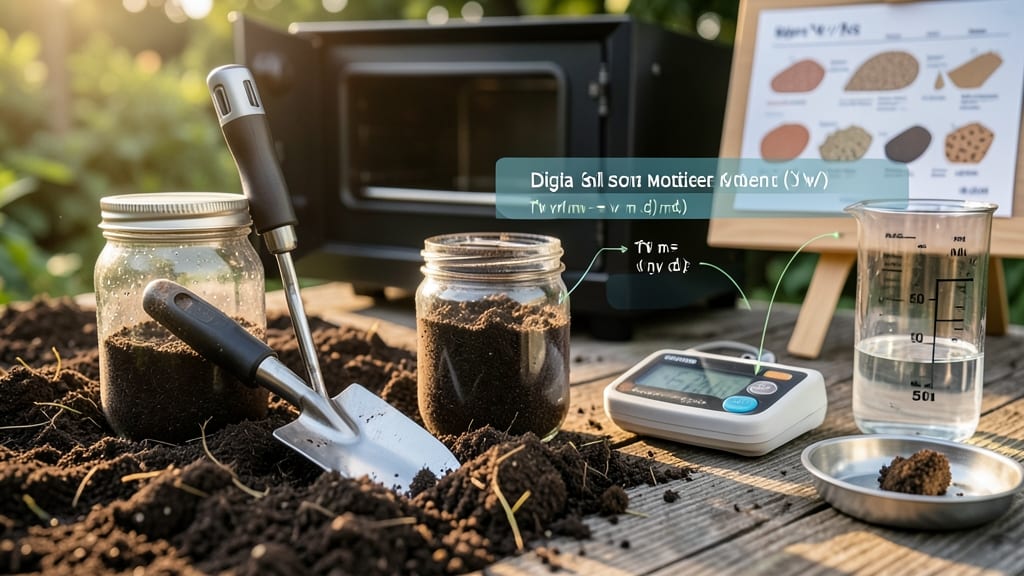
- ● Digital scale – Accuracy: 0.1g (e.g., kitchen or lab scale). Pro tip: 💡 Calibrate it to zero before each use!
- ○ Oven or dehydrator – Must reach 105°C (221°F) for drying. Optional: A heat-resistant container (e.g., aluminum tray) to hold soil samples.
- ● Air-tight containers – 2-3 small jars (e.g., 50–100mL capacity) for soil samples.
- ● Trowel or spoon – For scooping 10–20g of moist orchid potting mix (fresh from the pot!).
- ● Notebook & pen – To record wet weight, dry weight, and calculations.
- ○ Thermometer (optional) – To monitor oven temperature if it lacks a digital display.
- ● Use fresh, undisturbed potting mix from multiple spots in the pot for accuracy.
- ● If your orchid uses bark or sphagnum moss, note the medium—some dry faster than others!
- ● Safety first: Use oven mitts when handling hot containers. ✨
Step-by-Step instructions for orchid-specific moisture check
Orchids thrive on precision—here's how to dial in their moisture needs without guesswork.
💧 Step 1: Weigh the Pot Pre-Watering
Place your orchid pot on a digital kitchen scale and record the weight when the medium feels completely dry to the touch. This is your baseline weight. For a 4-inch pot, you'll typically see readings between 1.5-2.5 pounds depending on the bark mix composition. I always check at the same time of day to eliminate temperature variations that can slightly alter readings.
Here's the thing—orchid mixes vary wildly in density. A chunky bark mix will weigh less than a fine fir bark blend when saturated. Note your specific mix's dry weight so you can establish accurate moisture thresholds later. If you don't have a scale, use your fingers: the medium should feel like a wrung-out sponge when dry.
🌱 Step 2: Perform the Soak-and-Drain Test
Place the potted orchid in a sink or shallow tray and submerge it in room-temperature water for 10-15 minutes. The water level should cover about half the pot height. You'll see air bubbles rise as the medium absorbs moisture—this confirms proper saturation. Remove the pot and let it drain completely for 5-10 minutes on a mesh tray or elevated surface.
Weigh the pot again immediately after draining. The weight difference between your dry baseline and this saturated weight gives you your full moisture capacity. For my 4-inch pots, this typically adds 0.8-1.2 pounds to the dry weight. This number becomes your moisture target moving forward. Pro tip: Use a permanent marker to label the pot with your dry weight so you can check moisture levels instantly next time.
⏰ Step 3: Implement the Weekly Moisture Check Routine
Once every 7 days, weigh your orchid pot again. Subtract the current weight from your recorded dry weight to determine moisture loss. Aim to water when you've lost about 20-30% of your total moisture capacity. For my 4-inch pots, that means watering when weight drops by 0.2-0.3 pounds from the saturated state. This schedule prevents both underwatering (which causes root desiccation) and overwatering (which leads to rot).
Watch for visual cues too: healthy orchid roots should appear silver-green when dry and bright green when hydrated. If your roots stay dark green between waterings, you're keeping them too wet. The scale gives you precision, but your eyes confirm the plant's actual needs. I adjust my watering schedule seasonally—orchids typically need water 10-15% less frequently in winter when growth slows.
Tips & tricks for perfect orchid moisture management
Precision is everything when it comes to orchid care—here's how to avoid the most common moisture mistakes that sabotage even the most well-intentioned growers.
Scale Accuracy Matters: For reliable readings, always place your orchid pot directly on the scale without any additional surfaces between them. I've found that kitchen scales with 0.1-pound precision work best—cheaper scales may not capture the subtle weight changes we need. If your scale has a tare function, use it to zero out the pot weight before recording your baseline. This eliminates any potential errors from the pot's own weight variations. The 1.5-2.5 pound range for 4-inch pots is just a guideline; your actual dry weight may vary based on pot material and bark mix density.
Visual Cues for Verification: While the scale gives precise numbers, your eyes should confirm the moisture status too. In Step 2, when you see air bubbles rising during the 10-15 minute soak, that's your confirmation the medium is properly saturated. After draining, gently squeeze a small amount of medium—it should feel damp but not dripping. This tactile check catches any potential scale errors or inconsistencies in bark mix absorption rates. I always do this verification step even when the weight difference looks correct.
Seasonal Adjustments: The weekly watering schedule in Step 3 works perfectly for spring and summer, but winter requires special attention. During cooler months, orchids enter dormancy and need water about 10-15% less frequently. I've learned this the hard way—overwatering in winter leads to root rot before you even notice the temperature change. Adjust your 20-30% moisture loss target to 25-35% in winter, and always check the roots visually before watering. The silver-green to bright green color change becomes even more critical during these months.
Equipment Upgrade: While a basic digital kitchen scale works, I've found that orchid-specific scales with moisture measurement features take the guesswork out entirely. These scales can read moisture content directly rather than relying on weight differences. If you're serious about orchid care, this $30 investment pays for itself in saved plants. For the soak-and-drain test in Step 2, a mesh drain tray with feet is worth the small cost—it prevents water pooling that can lead to root rot during the 5-10 minute drainage period.
Pro Tips for Calculate Soil Water Content
- Precision is everything when it comes to orchid care—here's how to avoid the most common moisture mistakes that sabot...
- Scale Accuracy Matters: For reliable readings, always place your orchid pot directly on the scale without any additio...
- Visual Cues for Verification: While the scale gives precise numbers, your eyes should confirm the moisture status too...
Frequently asked questions
Got questions about checking orchid soil moisture like a pro? You’re not alone—here are some common concerns and quick answers to keep your orchids thriving!
How often should I check soil water content for orchids?
For most orchids, check moisture once a week during active growth (spring/summer) and every 2–3 weeks in dormancy (fall/winter). Overwatering is riskier than underwatering—always let the mix dry 50–70% between waterings. Watch for wilting or shriveled pseudobulbs as red flags!
What if my orchid’s soil feels dry but the roots still look healthy?
Don’t panic! Orchids store water in their roots and pseudobulbs. If roots are firm and green, they’re likely fine—just water lightly and monitor closely. If roots are shriveled or silvery, it’s a sign of dehydration. For peace of mind, use a moisture meter or the finger test (insert a clean finger 1 inch deep).
Can I use the same method for all orchid types (e.g., Phalaenopsis vs. Cattleya)?
Not exactly! Phalaenopsis (moth orchids) prefer consistently moist bark, while Cattleya or Oncidium need drier conditions. Adjust based on your orchid’s native habitat—tropical types (like Phals) like humidity; epiphytic types (like Cattleyas) prefer airflow. When in doubt, check your orchid’s care tag or consult a grower’s guide.
What if my soil mix is too dense—will the moisture meter still work?
Yes, but with a tweak! Dense mixes (like fir bark + charcoal) may give slightly higher readings. For accuracy, calibrate your meter in distilled water (should read 100% at saturation) and avoid pressing hard—gently insert probes to mimic natural moisture distribution. If your mix is rock-hard, it’s likely overwatered; let it dry out completely.
My moisture meter isn’t working—what’s my backup plan?
No meter? No problem! Try the twist-and-squeeze test: Gently twist a bark chunk—if it holds its shape, it’s moist; if it crumbles, it’s dry. For visual cues, look for green, plump roots (happy) vs. gray/shriveled roots (thirsty). Pro tip: Weigh your pot before/after watering—consistent weight = consistent moisture!
Still stuck? Drop your orchid type and concerns in the comments—we’re happy to help troubleshoot!
Wrapping up and next steps
Mastering soil water content for your orchids is all about consistency and observation—now you’ve got the tools to make it effortless! 🌱 By following these three steps, you’ll keep your orchids thriving with just the right moisture balance.
Ready to take it further? Experiment with different substrates or track moisture trends over time to fine-tune your care routine.
Your orchids will thank you with vibrant blooms and lush growth—happy growing! 🌸