
Propagation
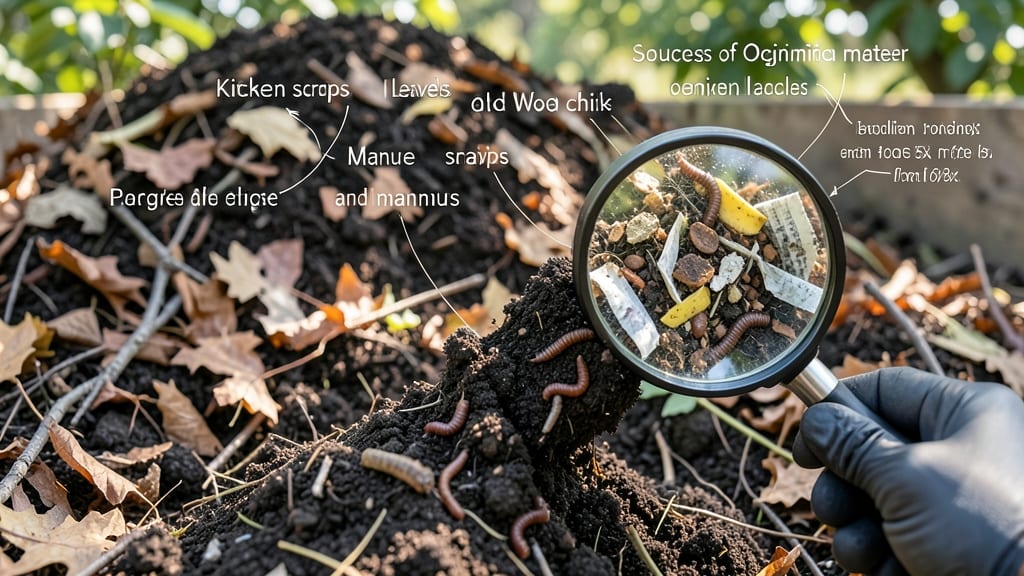
Organic matter in soil is made from decomposed plant materials like leaves, roots, and grass, along with animal residues such as manure, insects, and microbial biomass, which enrich texture and fertility.
This natural soil enrichment comes from the breakdown of both plant and animal sources through decomposition. 🌱 Microbes and earthworms transform fallen leaves, dead plants, and animal waste into nutrient-rich humus, which improves water retention and supports root growth.
The process also releases essential minerals like nitrogen and phosphorus, making the soil more fertile over time.
For gardeners, understanding these sources helps choose the right amendments. Compost, worm castings, and leaf mold are all excellent ways to boost organic matter naturally.
I always recommend adding compost in early spring to give plants a nutrient-rich start, while mulching with grass clippings or straw helps maintain moisture and slowly enrich the soil throughout the growing season.
💡 In This Article
- How Decomposition Transforms Plant and Animal Waste Into Soil Nutrients
- Best Organic Soil Amendments for Gardeners: Natural Sources and Applications
How decomposition transforms plant and animal waste into soil nutrients
The transformation begins when microorganisms—bacteria, fungi, and actinomycetes—attack organic materials like fallen leaves or animal waste. These tiny decomposers secrete enzymes that break down complex molecules: cellulases target cellulose in plant cell walls, proteases dissolve proteins from animal residues, and ligninases tackle the tough lignin that gives plants structure.
This process releases simple sugars, amino acids, and other compounds that microbes can consume, creating energy while releasing carbon dioxide and water as byproducts. 🔥
As decomposition progresses, the initial "fresh" organic matter transforms into more stable compounds. Within 6-12 months, the breakdown produces humus—a dark, spongy substance rich in humic acids that binds soil particles together.
Humus contains 50-60% organic carbon and acts like a nutrient reservoir, slowly releasing nitrogen, phosphorus, and potassium to plant roots. Unlike fresh compost, humus resists further decomposition, providing long-term soil fertility that can last decades.
The nutrient cycling process is particularly fascinating with nitrogen. Microbes first convert organic nitrogen from plant and animal waste into ammonium (NH₄⁺), then through nitrification into nitrates (NO₃⁻) that plants can absorb.
This cycle explains why adding organic matter improves plant growth—it doesn't just provide nutrients immediately but creates a self-sustaining system where microbes continuously recycle elements between organic and inorganic forms.
Temperature and moisture play critical roles in this transformation. At 60-80°F, decomposition occurs most efficiently, while extreme heat or drought slows microbial activity. That's why compost piles need regular turning and moisture maintenance.
In contrast, cold climates see slower decomposition, which is why gardeners in northern regions often use leaf mold (decomposed leaves) as a winter soil amendment—it's already partially broken down and ready to enrich the soil when spring arrives.
What most people don't realize is how animal residues contribute differently than plant materials. Manure, for example, contains 2-5% nitrogen by weight but also has high phosphorus and potassium levels. When properly composted, it creates a balanced fertilizer, while raw manure can burn plants due to its high salt content.
The microbial communities in animal waste also introduce beneficial bacteria that help suppress plant diseases, creating a more resilient soil ecosystem. ✨
This biological transformation explains why organic matter improves soil structure. The humus created during decomposition has a 10-20 times greater water-holding capacity than mineral soil, while its fibrous nature creates pores that improve aeration.
This dual benefit—better water retention and oxygen supply—is why gardeners with high organic matter levels can grow plants in both drought and flood conditions with equal success.