
Light Requirements
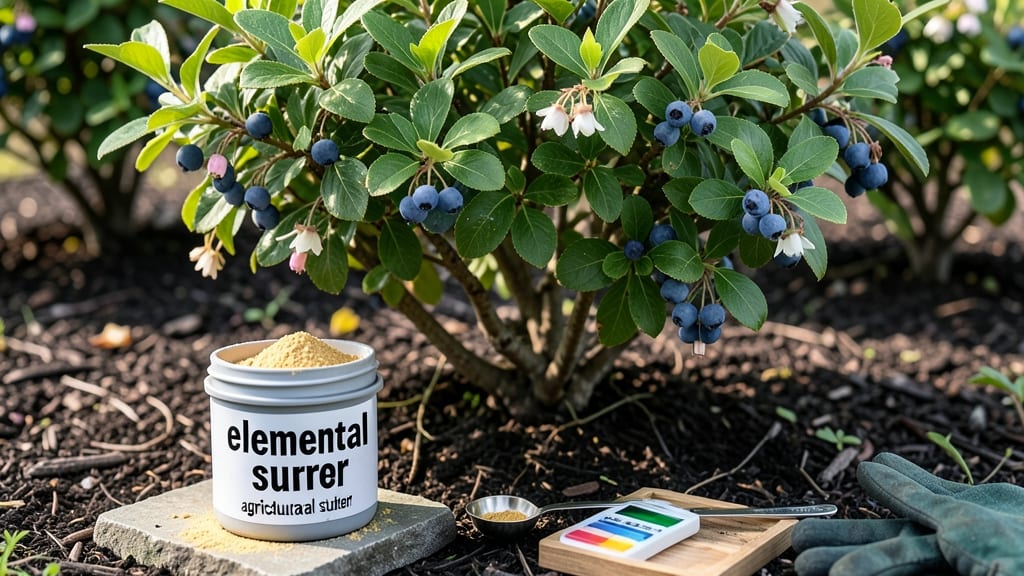
To lower soil pH with sulfur, you'll need 10–20 pounds per 100 square feet for each full pH unit you want to reduce, with sandy soils requiring more and clay soils less. Always test your soil first, spread the sulfur evenly, and water it in thoroughly to prevent plant damage.
Sulfur works by converting to sulfuric acid in the soil, which gradually lowers pH—but the process varies by soil type. 🌱 Sandy soils need more sulfur because they drain faster, while clay holds moisture and releases acid more slowly.
I recommend splitting applications over time to avoid shocking plants, especially for acid-sensitive crops like blueberries or azaleas. Fine sulfur dissolves quicker than pellets, but pellets are easier to spread and less likely to burn roots if overapplied.
For best results, apply sulfur in fall when soil is moist but not frozen, or in early spring before planting. Always re-test soil after 2–3 months to monitor changes, as organic matter can buffer the effect. Overdoing it can harm beneficial microbes and make nutrients like phosphorus unavailable.
💡 In This Article
- How Sulfur Chemistry Affects Soil pH Adjustment
- Step-by-Step Guide: Applying Sulfur for pH Correction
How sulfur chemistry affects soil pH adjustment
When you add sulfur to soil, it doesn't work magic instantly—it undergoes a chemical transformation. The sulfur oxidizes through microbial action and rainfall, converting to sulfuric acid (H₂SO₄), which then dissociates into hydrogen ions (H⁺). These hydrogen ions are what actually lower the pH by increasing acidity.
In sandy soils, this process happens faster because water drains through quickly, carrying dissolved sulfur deeper where microbes can act. Clay soils, however, hold moisture longer, slowing the oxidation but making the acidification more gradual and sustained. 🔥
The rate of pH change depends heavily on your soil's organic matter content. Organic matter acts like a buffer, absorbing some of the hydrogen ions and delaying the full effect.
That's why peat-heavy soils (common in acid-loving plants) may need up to 30% more sulfur than mineral soils to achieve the same pH drop.
For example, a clay soil with 5% organic matter might only need 12 pounds per 100 sq ft to drop pH by 1 unit, while sandy soil with 1% organic matter could require 18 pounds for the same result.
Here's where sulfur form matters: fine powdered sulfur dissolves quickly, releasing acid within 2-4 weeks in ideal conditions, but can burn plant roots if overapplied. Pelletized sulfur takes 2-3 months to fully oxidize, giving a slower, steadier release that's gentler on plants.
The key difference is surface area—powder has 10x more surface area than pellets, so it reacts faster but with less control. For container gardens, I recommend pellets to avoid sudden pH swings that could stress roots. ✨
Temperature also plays a hidden role. Below 50°F, sulfur oxidation nearly stops, which is why fall applications work best in most climates. The microbial activity that drives the chemical reaction slows dramatically in cold soil.
In tropical regions, sulfur works year-round, but you'll need to monitor more frequently since warm, wet conditions accelerate the process. Always consider your local climate when planning applications.
What most gardeners overlook is how soil structure affects sulfur distribution. In compacted soils, sulfur may form concentrated pockets where oxidation happens too quickly, creating localized acidity that can harm nearby roots.
Loosening soil before application ensures even distribution. For raised beds, mixing sulfur into the top 6 inches of soil maximizes contact with moisture and microbes where the reaction occurs. 💫
One advanced technique is to combine sulfur with elemental sulfur bacteria (like Thiobacillus thiooxidans), which naturally accelerate the oxidation process. These microbes thrive in slightly acidic conditions and can speed up pH adjustment by 30-50% compared to natural oxidation alone.
While not necessary for most gardeners, this approach is valuable for commercial growers or large-scale pH corrections where time is critical.