
How To
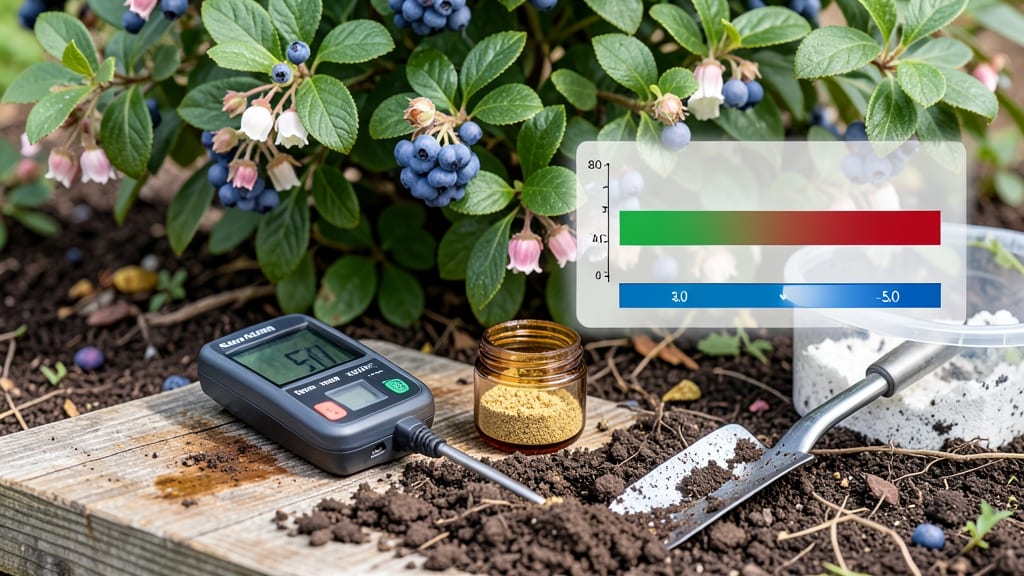
Understanding proper soil pH is key to healthy plant growth, as most vegetables prefer slightly acidic to neutral levels (6.0–7.0), while blueberries and azaleas thrive in highly acidic soil (4.5–5.5). Testing your soil’s pH with a simple kit or meter lets you adjust it using lime to raise or sulfur to lower the acidity.
Soil pH directly impacts what nutrients your plants can access—think of it as the lock and key system for roots. 🌱 For example, tomatoes need that 6.0–7.0 range to absorb enough calcium (preventing blossom-end rot), while acid-loving plants like hydrangeas won’t bloom vibrantly unless their soil stays below 6.0.
Even a 1-point pH shift can make phosphorus (critical for flowering) 10x more available or nearly useless. That’s why I always test before planting—it’s the difference between a thriving garden and one that’s struggling despite your best efforts.
Testing is easier than you’d think. A digital pH meter gives instant readings, while liquid test kits (like LaMotte) show color changes you compare to a chart. 🔬 For adjustments, I use pelletized lime to raise pH gradually over months, or elemental sulfur for lowering—both take time, so plan ahead.
Pro tip: Test again 2–3 months after amending to confirm your changes took hold.
💡 In This Article
- How Soil pH Affects Nutrient Availability for Plants
- Step-by-Step Soil pH Testing and Adjustment Guide
How soil pH affects nutrient availability for plants
Soil pH acts like a chemical gatekeeper, controlling which nutrients your plants can absorb.
At pH 6.0–7.0, most vegetables (like tomatoes, peppers, and beans) thrive because this range keeps essential nutrients like nitrogen, phosphorus, and potassium in their most available forms. 🌱 For instance, nitrogen—critical for leafy growth—becomes locked in alkaline soils above 7.5, while phosphorus binds tightly in acidic soils below 5.5, making it inaccessible.
This is why blueberries, which need 4.5–5.5 pH, struggle in regular garden soil unless you acidify it.
The magic happens at the microscopic level: soil pH alters the electrical charge of nutrient molecules and root cell membranes. For example, iron and manganese—needed for chlorophyll production—become more soluble in acidic conditions (pH 5.5–6.5).
That’s why plants like azaleas and rhododendrons, which love acidity, often show yellowing leaves (iron deficiency) when grown in neutral soil. Conversely, calcium and magnesium, vital for cell structure, are most available in slightly alkaline soils (7.0–7.5), which is why broccoli and cabbage prefer that range.
Think of it like a restaurant menu: the pH determines which "dishes" (nutrients) are on special. At pH 6.5, phosphorus is a star item, but at pH 8.0, it’s barely on the menu.
This is why a soil test isn’t just about numbers—it’s about unlocking the full potential of your plants. For example, strawberries need 5.5–6.5 pH to absorb enough boron for fruit set, while potatoes prefer 5.0–6.0 to prevent scab disease caused by calcium deficiency in alkaline soils.
Even micronutrients play by these rules. Zinc, for instance, becomes toxic to plants at pH 6.5 and below, which is why acid-loving plants like blueberries can suffer from zinc overload if their soil gets too acidic.
On the flip side, molybdenum—essential for nitrogen metabolism—is nearly nonexistent in highly acidic soils (pH 5.0), explaining why legumes (like peas) often struggle in such conditions. The balance is delicate, and small pH shifts can tip the scales dramatically.
Here’s how pH ranges break down for common plant groups:
- Vegetables: 6.0–7.0 (tomatoes, peppers, lettuce, carrots)
- Fruits: 5.5–6.5 (strawberries, blueberries), 6.0–7.0 (apples, peaches)
- Flowers: 5.5–6.5 (azaleas, hydrangeas), 6.0–7.5 (roses, tulips)
- Lawns: 6.0–7.0 (cool-season grasses), 5.5–6.5 (warm-season grasses)
Most garden soils naturally sit around 6.0–7.0, but urban or heavily amended soils can skew higher (alkaline) due to limestone or lower (acidic) from organic matter breakdown. That’s why testing is non-negotiable—your soil’s pH could be silently starving your plants of nutrients they desperately need. 💡