
Propagation
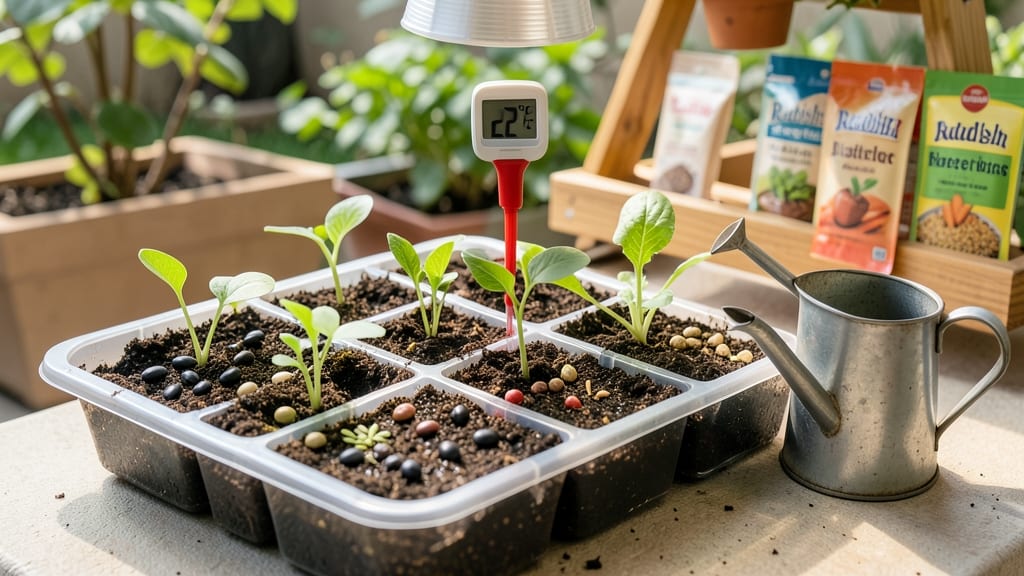
The ideal soil temperature for seed germination varies widely—cool-season plants like spinach and peas germinate best between 50°F and 65°F, while warm-season favorites such as peppers and eggplants require 70°F to 95°F to sprout efficiently. Missing the target range can delay germination by days or weeks, so always verify seed packet guidelines.
Germination isn't just about moisture—temperature triggers the biochemical reactions that break seed dormancy. 🔥 For example, peas need cooler soils to activate their enzymes, while cucumbers stall below 70°F because their metabolic processes slow dramatically.
Even a 5°F difference can cut sprouting time in half for some varieties. I've seen tomato seeds take 14 days at 60°F versus just 5 days at 85°F, proving how critical precision is.
Most gardeners don't realize their local soil stays too cold for warm-season plants until they plant too early. A simple soil thermometer costs $10 and saves hours of frustration—just check temperatures at 2-inch depth (where most seeds are planted) in the morning when soils are coolest.
For stubborn slow starters, a seedling heat mat under flats can add 10°F to soil warmth without overheating delicate roots.
💡 In This Article
- How Soil Temperature Affects Germination Speed and Success
- Adjusting Soil Temperature for Faster Germination
How soil temperature affects germination speed and success
Temperature acts as a biochemical trigger for seeds, activating enzymes that break down stored nutrients and kickstart cell division. At 50°F, cool-season crops like lettuce and spinach produce amylase enzymes that convert starches into sugars—this metabolic process slows below 45°F and stalls entirely under 40°F.
Warm-season plants, however, need higher temperatures to activate lipase enzymes, which break down fats for energy—below 60°F, tomato seeds may never sprout. 🌱 The difference isn't just speed; it's survival.
Peas and carrots demonstrate this perfectly: their seeds contain natural dormancy mechanisms that require 40-50°F to overcome. Plant them at 70°F, and they'll rot before sprouting. Conversely, cucumber seeds contain oleic acid that only becomes metabolically active above 70°F—below that, their membranes stiffen and block nutrient flow.
Even a 10°F deviation from optimal can double germination time, turning 5-day cucumbers into 10-day failures.
Heat stress above 95°F becomes equally deadly, causing seed proteins to denature (unfold) and cell membranes to rupture. I've seen basil seeds turn to mush when exposed to 100°F+ soils for more than 48 hours.
The sweet spot isn't just about speed—it's about maintaining 90-95% viability. For example, pepper seeds lose 30% viability when kept at 85°F for 14 days versus 95% viability at 75°F.
Seasonal soil temperature swings explain why gardeners in Zone 5 often struggle with warm-season crops. Morning soil temps can drop 15°F from afternoon highs, creating dangerous fluctuations. A 75°F afternoon might feel perfect, but a 60°F morning could stall germination.
This is why professional growers use soil thermometers at 2-inch depth—the depth where most seeds germinate—and monitor 24-hour averages rather than peak temperatures.
Even moisture management plays a hidden role. At 60°F, seeds absorb water 30% faster than at 40°F, but this rapid uptake can suffocate roots if drainage is poor. The ideal scenario combines consistent warmth with even moisture—think of it like a cozy blanket for your seeds.
For instance, radish seeds germinate in 4 days at 65°F with proper moisture, but take 10 days if soils stay 55°F.
What most gardeners miss is how seed age interacts with temperature. Older seeds (over 2 years) require 5°F warmer soils to germinate than fresh ones. A 2-year-old tomato seed might need 80°F instead of 75°F to achieve the same 90% sprouting rate.
This is why seed packets list both temperature ranges and viability periods—they're directly connected.
For maximum success, pair your soil thermometer with a germination chart that maps plant types to their ideal ranges. For example, broccoli (60-70°F) and squash (70-90°F) have 10°F overlap, but mixing them in the same bed without temperature control leads to one thriving while the other languishes.
Precision pays off—just ask any grower who's turned 3-week germination failures into 5-day successes with the right heat.