
Light Requirements
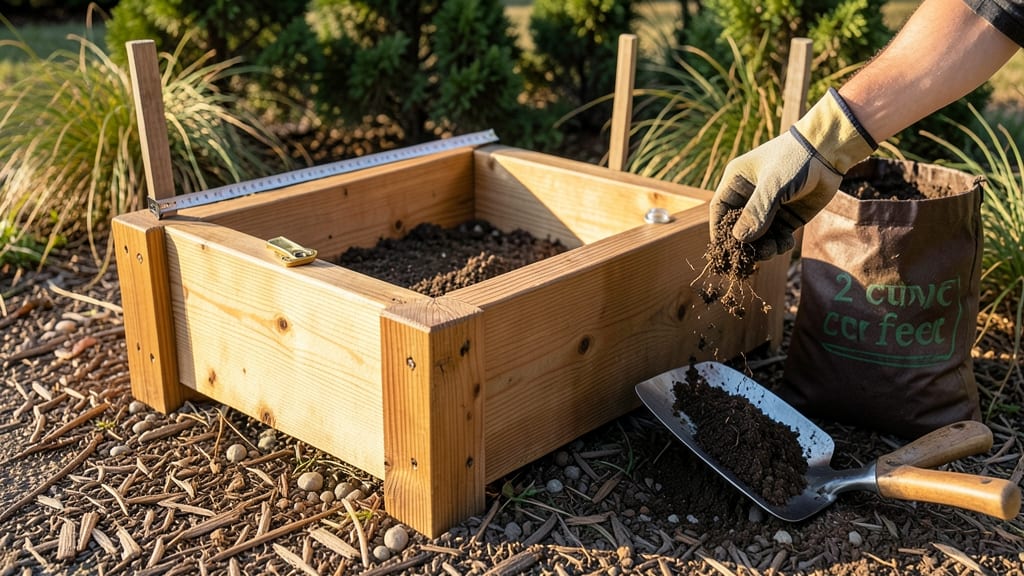
To determine how much soil for a 4x4 raised bed, multiply the bed's depth in inches by 1.33 cubic feet—so a 6-inch bed requires 8 cubic feet and a 12-inch bed needs 16 cubic feet. Always buy 10-20% extra to account for settling and better drainage.
Calculating soil volume starts with understanding your bed's dimensions. A 4x4 raised bed measures 16 square feet at the base, and multiplying that by the depth (in feet) gives you the cubic footage.
For example, a 6-inch bed (0.5 feet) needs 8 cubic feet of soil, while a 12-inch bed (1 foot) doubles that to 16 cubic feet. 🌱 I always recommend adding 20% extra—so 10 cubic feet for a 6-inch bed—to ensure proper settling and drainage over time.
This extra volume also helps maintain moisture levels and prevents compaction issues that can stunt root growth.
Most gardeners aim for 6-12 inches of soil depth in raised beds, as this range accommodates the root systems of most vegetables and flowers. Shallow-rooted plants like lettuce thrive in 6 inches, while deeper-rooted crops like tomatoes need the full 12 inches.
If your soil is heavy clay or sandy, consider mixing in compost or coconut coir to improve structure and water retention. This adjustment can sometimes require even more soil volume to maintain the right texture.
💡 In This Article
- Calculating Soil Volume for Raised Garden Beds
- Best Soil Mixes and Depth Recommendations for 4x4 Raised Beds
Calculating soil volume for raised garden beds
The cubic feet calculation for your 4x4 raised bed comes from simple geometry: multiply length × width × height. Since your bed is 4 feet long and 4 feet wide, the base area is 16 square feet.
For every inch of depth, you need 1.33 cubic feet of soil because 16 × (1/12) = 1.33.
This means a 6-inch bed (0.5 feet) requires 8 cubic feet, while a 12-inch bed (1 foot) needs 16 cubic feet. 🌱 The key here is understanding that soil settles over time—especially when watered and worked—so always add that extra 10-20% buffer.
Depth matters more than you might think. Shallow beds (6 inches) work for leafy greens and herbs, but root crops like carrots or potatoes need 12 inches to thrive. The extra depth isn't just for roots—it also improves moisture retention and reduces temperature fluctuations in the soil.
For example, a 12-inch bed maintains cooler, more stable temperatures than a 6-inch bed, which can be critical for heat-sensitive plants like lettuce or spinach during summer months.
Here's a quick breakdown of how depth affects your soil needs:
- 6-inch bed: 8 cubic feet (plus 10-20% extra = 9-10 cubic feet)
- 8-inch bed: 11 cubic feet (plus 10-20% extra = 12-13 cubic feet)
- 12-inch bed: 16 cubic feet (plus 10-20% extra = 18-20 cubic feet)
Most gardeners underestimate how much soil they'll need because they forget about the 10-20% extra rule. This accounts for settling, which can reduce your bed's height by 1-2 inches after the first watering.
For instance, if you fill a 12-inch bed with 16 cubic feet of soil, it might settle to 10 inches after a few weeks—leaving you short for deeper-rooted plants. 💫 Buying extra also gives you flexibility to adjust the mix if your native soil has poor drainage or nutrient levels.
Another factor is the type of soil you're using. Bagged garden soil often compacts more than loose, airy mixes like compost-amended topsoil. If you're using a 50/50 mix of compost and topsoil, you might need even more volume because compost breaks down over time, reducing the bed's height.
For heavy clay soils, adding 30% perlite or vermiculite can improve aeration but may require adjusting your calculations slightly upward to maintain structure.
Pro tip: Measure your bed's depth before filling it. Many raised beds lose 1-2 inches in height just from the wood frame's thickness.
If your bed is supposed to be 12 inches tall but the frame itself takes up 2 inches, you're actually working with 10 inches of usable soil depth—meaning you'll need to compensate by adding more soil to reach the ideal 12-inch mark for deeper-rooted crops. ✨