Plants
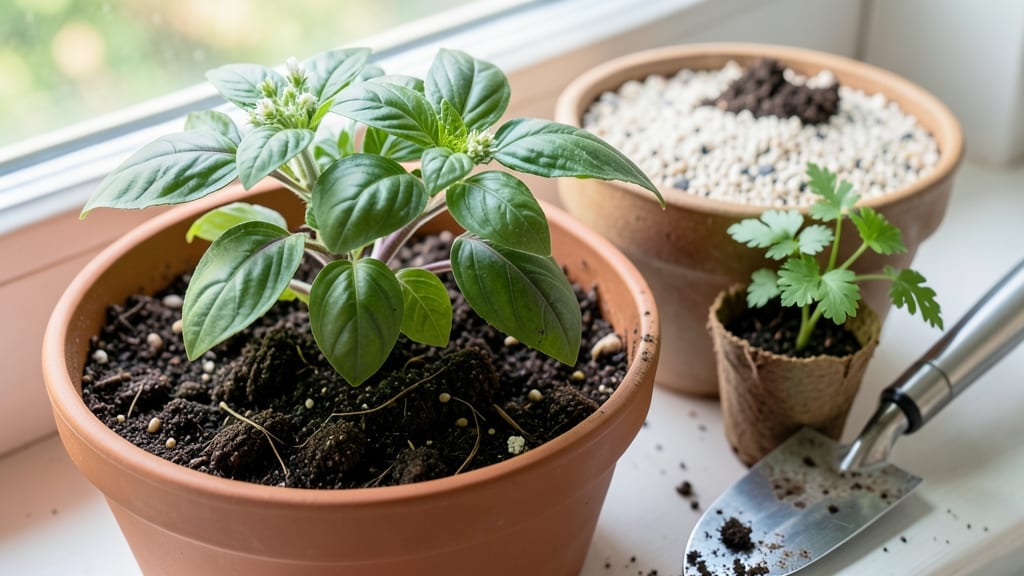
You shouldn't use garden soil for potting plants because it compacts easily, drains poorly, and may harbor pests or diseases. Instead, opt for lightweight potting mixes with perlite, peat moss, or coconut coir to ensure proper aeration and drainage for healthy root growth.
Garden soil is heavy and dense, which can suffocate plant roots by cutting off oxygen flow and trapping excess moisture. 🌱 This creates the perfect conditions for fungal growth and root rot, especially in containers where water can't escape as easily as in open garden beds.
Many garden soils also contain weeds seeds or pathogens that can harm your potted plants over time. For container gardening, you need a mix specifically designed to stay loose, drain efficiently, and provide the right balance of nutrients without compacting.
Lightweight potting mixes solve these problems by incorporating organic matter like peat moss or coconut coir, which hold moisture without becoming waterlogged. Adding perlite or vermiculite creates air pockets that prevent compaction while allowing roots to breathe.
These mixes are sterile, eliminating the risk of introducing garden soil's unwanted pests and diseases to your potted plants.
💡 In This Article
- Why Garden Soil Fails as Potting Mix
- Best Potting Soil Alternatives for Healthy Plants
Why garden soil fails as potting mix
Garden soil is designed for outdoor planting where roots can spread freely and excess water drains naturally into the surrounding earth. In containers, however, this same soil becomes a suffocating environment for plants.
The clay and silt particles in garden soil pack tightly when watered, reducing pore spaces by up to 70%—this compaction cuts off oxygen to roots, which need 10-20% air space in their growing medium to thrive.
Without proper aeration, roots suffocate and can't absorb nutrients efficiently, leading to stunted growth or death. 🌱
The drainage issue is equally critical. Garden soil holds 30-50% more water than ideal potting mixes, creating waterlogged conditions that drown roots within 24-48 hours. This excess moisture triggers anaerobic conditions where harmful bacteria thrive, producing toxins that damage delicate root hairs.
Unlike garden beds where water can seep downward, container plants have nowhere to escape—water pools at the bottom, accelerating fungal infections like Phytophthora or Pythium, which are common killers of potted plants.
Nutrient imbalances further complicate matters. Garden soil often lacks the consistent, easily accessible nutrients that potted plants crave. While outdoor plants benefit from gradual mineral release over seasons, container plants need rapid nutrient availability.
Garden soil's organic matter breaks down too slowly, leaving plants malnourished. Additionally, it may contain weed seeds that germinate in containers or pathogens like nematodes that attack roots directly. 💀
Consider this comparison: A typical garden soil has a bulk density of 1.2-1.6 g/cm³, while premium potting mixes maintain 0.2-0.4 g/cm³. This lighter structure prevents compaction and allows roots to explore the entire container volume.
The difference is like trying to grow plants in concrete versus fluffy, airy soil—one suffocates, while the other supports healthy development.
Even the texture differs dramatically. Garden soil feels gritty and dense when moist, while potting mixes have a crumbly, almost sponge-like texture that holds moisture without compacting.
This structural difference explains why plants in garden soil often develop blackened, mushy roots—a classic sign of root rot—while those in proper potting mixes develop strong, white, fibrous roots that absorb nutrients efficiently.
The pest risk is another silent threat. Garden soil may contain larvae from beetles, grubs, or slug eggs that hatch in containers, devouring young plants. These pests have no natural predators in potted environments, allowing them to multiply unchecked.
Unlike outdoor gardens where beneficial insects can balance ecosystems, containers create isolated ecosystems where harmful pests thrive unopposed. 🐛