
Light Requirements
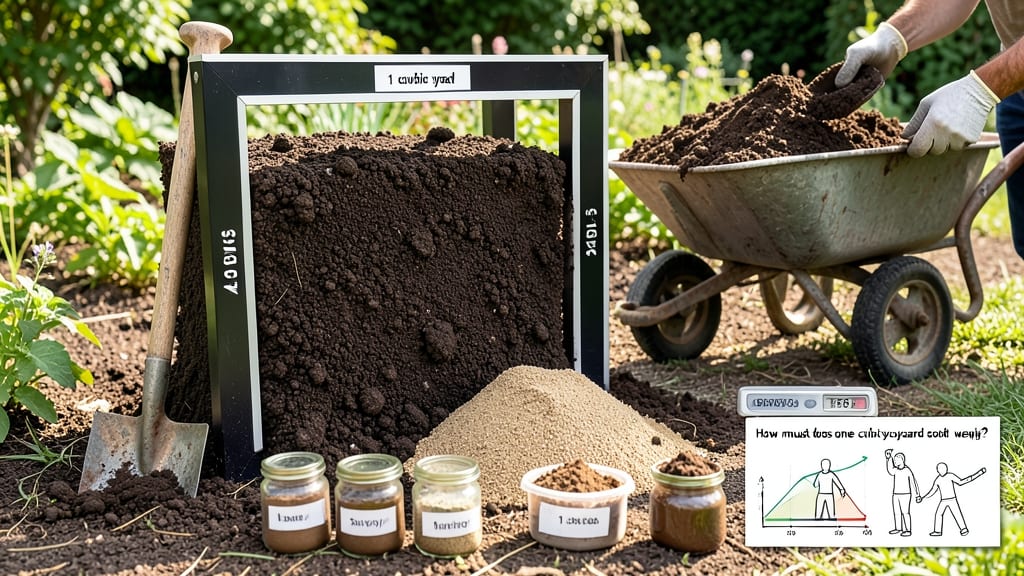
To determine how much one cubic yard of soil weighs, expect between 2,000 to 2,800 pounds—sandy soils are lighter (~2,200 lbs) while clay-heavy or moist soils can exceed 3,000 lbs. Loam, the gardener's favorite, typically ranges from 2,400 to 2,600 pounds when dry, but moisture and organic content can add 30% or more to the total weight.
Understanding soil weight starts with its composition—sand, silt, and clay each contribute differently to density. 🌱 Sandy soils pack lighter because their particles are larger and leave more air space, while clay holds moisture and compacts tightly, making it heavier.
Even a small change in moisture content can shift the weight dramatically; for example, a cubic yard of dry loam might weigh 2,500 pounds, but after rain, it could jump to 3,200 pounds. This variability is why gardeners often adjust calculations when planning raised beds or bulk deliveries.
For practical applications, knowing soil weight helps with logistics—like determining how many wheelbarrow trips you'll need or whether your truck can handle the load. 🚛 A general rule of thumb is that every 10% increase in moisture adds roughly 100 pounds per cubic yard.
If you're working with peat-based mixes or compost-heavy soil, expect even greater weight fluctuations due to their high organic content.
💡 In This Article
- Soil Composition and Weight Variations by Type
- Calculating Soil Weight for Gardening Projects
Soil composition and weight variations by type
The weight of soil isn't just about volume—it's about what's inside that cubic yard. Sandy soil, with its large particles, weighs around 2,200 pounds per cubic yard because the spaces between grains hold mostly air.
Think of it like a bag of marbles versus a bag of sand: the marbles (sand particles) take up less space but leave more empty room.
Clay, on the other hand, packs tightly due to its tiny, plate-like particles that cling together, often exceeding 3,000 pounds when wet. 🌊 This is why clay feels heavy and sticky when moist—those particles trap water and compress.
Loam, the gardener's gold standard, strikes a balance with roughly 2,400 to 2,600 pounds per cubic yard when dry. Its mix of sand, silt, and clay (about 40-40-20%) creates a stable structure, but add organic matter like decomposed leaves or compost, and the weight climbs.
A cubic yard of peat-based mix, for instance, can weigh 2,800 pounds or more because peat holds up to 90% water by volume—imagine carrying a sponge full of liquid! Even topsoil, which contains organic material, typically weighs 2,500 to 3,000 pounds due to its nutrient-rich composition.
Moisture is the wild card here. Water alone weighs 62.4 pounds per cubic foot, so a cubic yard (27 cubic feet) of pure water would be 1,685 pounds.
When soil absorbs moisture, its weight skyrockets—clay can gain 50% more weight after rain, while sandy soil might only add 10-15%. This is why a freshly tilled garden bed feels lighter in summer but becomes a labor-intensive beast after spring showers.
The same cubic yard of loam might weigh 2,500 pounds dry but balloon to 3,200 pounds when saturated. 💦
Compaction plays a role too. Foot traffic or machinery can squeeze soil particles closer together, increasing density and weight. For example, a compacted clay layer might weigh 3,500 pounds per cubic yard, while the same soil in a loose state could be 3,000 pounds.
This is why construction sites often specify "loose" soil weights—they're accounting for how the material will be handled. Even organic amendments like compost or manure add bulk and weight; a cubic yard of compost can weigh 1,800 to 2,500 pounds, depending on how decomposed it is.
Here’s a quick comparison of common soil types and their typical weights per cubic yard:
- Sandy soil: 2,000–2,400 lbs (dry), up to 2,600 lbs when moist
- Clay soil: 2,600–3,200 lbs (dry), 3,500+ lbs when saturated
- Loam (ideal garden soil): 2,400–2,800 lbs (dry), 3,000–3,500 lbs when wet
- Peat moss: 1,200–1,800 lbs (dry), 2,000–2,800 lbs when wet (high water retention!)
- Topsoil (organic-rich): 2,500–3,000 lbs (varies by organic content)
Understanding these variations helps you plan for everything from raised garden beds to landscaping projects. For instance, if you're building a 4'x8'x12" raised bed, that’s about 0.33 cubic yards of soil—expect 800–1,000 pounds of loam, or 1,200+ pounds if it’s wet.
Knowing these weights keeps your project on track and your back from overloading! 💪