
How To
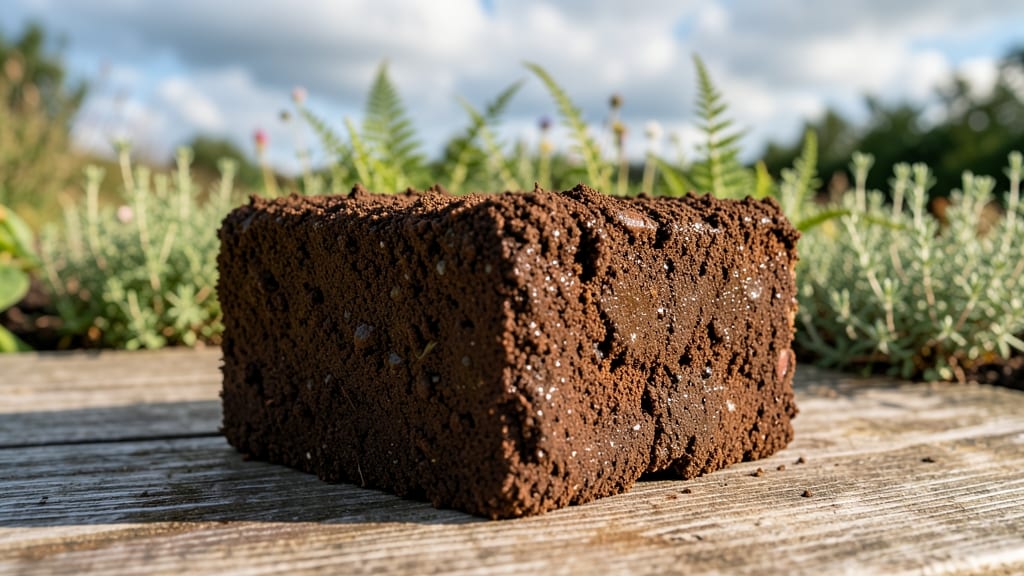
Understanding how many cubic feet are in a 40 lb bag of potting soil helps with garden planning, as most bags hold between 0.75 and 1 cubic foot, depending on soil type and moisture levels. Lighter, organic-heavy mixes expand more than heavier, mineral-based blends.
This range makes sense when you consider how different soil compositions pack. 🌱 A bag of pure peat moss, for example, might stretch to nearly 1.2 cubic feet due to its airy structure, while a dense, mineral-heavy mix could barely reach 0.6 cubic feet.
For accurate planning, always check the manufacturer's volume specs on the bag itself—this small detail can save you trips to the garden center when your project requires precise measurements.
When estimating how much potting soil you'll need, remember that cubic feet calculations are essential for raised beds and large containers. A standard 4'x8' raised bed with 12" depth requires 32 cubic feet—that's 32 bags of the average 1-cubic-foot mix.
For smaller pots, multiply the container's length, width, and depth in feet to find the volume needed, then divide by the cubic feet per bag.
💡 In This Article
- How Soil Density Affects Cubic Foot Measurements
- Calculating Potting Soil Needs by Cubic Feet
How soil density affects cubic foot measurements
Soil density is the secret sauce behind why a 40 lb bag of potting soil might measure anywhere from 0.75 to 1 cubic foot.
The key factor is the mix's composition—organic materials like peat moss or coconut coir create air pockets that increase volume, while mineral-heavy blends (like perlite or vermiculite) pack tighter.
For example, a bag with 50% peat moss could stretch to 1.1 cubic feet, while one with 70% sand might only reach 0.6 cubic feet. 🌱
Moisture content plays a huge role too. Wet soil weighs more but occupies less space because water fills the air gaps between particles.
A freshly opened bag of 40 lb potting soil might measure 1 cubic foot when dry, but after watering, it could shrink to 0.8 cubic feet due to compaction.
This is why gardeners often overestimate volume needs—what looks like 1 cubic foot in the bag can become 20% smaller once hydrated.
Think of it like comparing packing peanuts to sand. The peanuts (organic matter) create a loose, voluminous structure, while sand (mineral content) settles densely. When planning your garden, check the bag's label for "cubic feet" or "volume" specs—some brands even list both dry and moist measurements.
For instance, Miracle-Gro's premium mix lists 1.5 cubic feet per 40 lb bag due to its high peat content, while Black Gold's all-purpose blend typically measures 0.9 cubic feet.
Temperature also sneaks into the equation. Cold soil particles pack more tightly, reducing volume by up to 5-10% compared to warm soil. This is why winter deliveries of potting soil might seem "shorter" than summer bags—your 40 lb purchase could yield slightly less cubic feet in January than in July.
Store bags in a dry, temperature-stable area to maintain consistent density.
The science behind this involves porosity—the percentage of air space in the soil. A highly porous mix (like seed-starting blends) can have 40-50% air space, while dense mixes (like cactus soil) might only have 20-30%**. This porosity directly impacts how much the soil expands when loose.
For example, a 40 lb bag of seed-starting mix might measure 1.2 cubic feet because its 50% air content makes it fluffier than a 40 lb bag of garden soil with only 30% air.
Here's a practical tip: If you're filling a raised bed, account for 20% compaction once the soil is watered. A 4'x8'x12" bed needs 32 cubic feet of loose soil, but after watering, you'll effectively have 25.6 cubic feet of usable space.
Always round up when estimating—it's better to have extra soil than realize you're 10% short halfway through your project! ✨