
Light Requirements
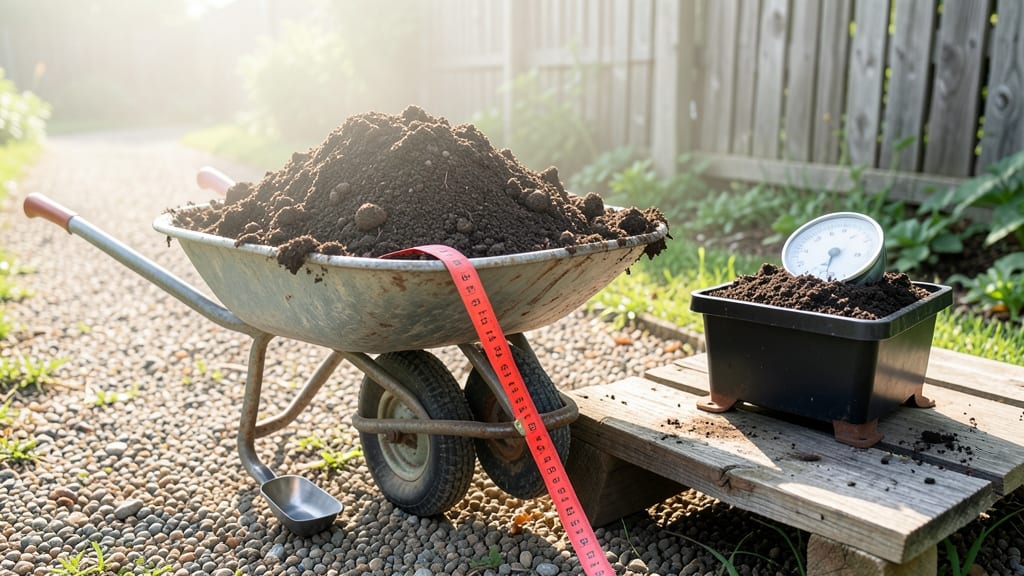
To determine how much a yard of garden soil weighs, expect 1,800 to 2,200 pounds—sandy mixes lean toward the lighter end (~1,800 lbs), while clay-heavy or loamy blends often exceed 2,200 lbs. Always confirm with suppliers, as moisture levels and additives like compost can skew the total significantly.
A yard of garden soil's weight isn't just about volume—it's a science of particle density and moisture. 🌱 Sandy soils feel lighter because their larger grains create air pockets, while clay particles pack tightly, adding heft.
Even a 10% moisture increase can add 200+ pounds to the total, so suppliers often adjust quotes based on your project's specific needs.
For example, a raised garden bed might need 2,000 lbs of loamy soil, but the same cubic yard for a container garden could weigh closer to 1,900 lbs if it's less compacted.
Pro tip: Ask suppliers whether their weight estimates include additives like compost or fertilizer. Some "premium" blends can tip the scale by 300+ pounds per yard due to organic matter content. Always verify before scheduling delivery—overestimating can mean costly adjustments mid-project.
💡 In This Article
- Factors Affecting Garden Soil Weight per Cubic Yard
- Practical Tips for Estimating Soil Weight Before Delivery
Factors affecting garden soil weight per cubic yard
Soil weight isn't just about volume—it's a complex interplay of particle size, moisture content, and organic matter. Sandy soils, with their large grains, create more air pockets, making them lighter at around 1,800 pounds per yard.
In contrast, clay particles are tiny and pack tightly, increasing density and weight to 2,200+ pounds. The difference? Clay particles have a surface area 10-100 times greater than sand, allowing them to hold more water and organic matter.
Moisture is the wild card—adding just 10% water can increase a yard's weight by 200+ pounds. This is why suppliers often specify "dry weight" versus "wet weight." For example, a 2,000-pound bag of loamy soil could swell to 2,300 pounds after rainfall.
Organic matter like compost also adds weight—each 10% increase in compost can add 100-150 pounds per yard due to its higher water retention capacity.
Compaction plays a surprising role too. Loose, freshly tilled soil might weigh 1,900 pounds, but after being driven over by a truck or settled in a raised bed, the same volume could tip the scales to 2,100 pounds.
This happens because particles shift closer together, reducing air space. Even foot traffic can compact soil by 5-10%, adding 100-200 pounds of unplanned weight to your project.
Here's a breakdown of how each factor stacks up:
- Particle Type: Sand (1,800 lbs) vs. Clay (2,200+ lbs)
- Moisture Content: 10% water = +200 lbs per yard
- Organic Matter: 10% compost = +100-150 lbs per yard
- Compaction: 10% reduction in air space = +100-200 lbs
For gardeners, this means your 10x10x1-foot raised bed might need 2,000 pounds of soil—but if it's clay-heavy and compacted, you could be dealing with 2,300 pounds. Always ask suppliers for "in-place weight" estimates, not just volume. 💫
What most people overlook is how additives like perlite or vermiculite can actually reduce total weight. These materials add volume but are much lighter than mineral soil—sometimes cutting 100-150 pounds off the total weight per yard. It's a trade-off between weight and drainage properties that's worth considering for container gardens.