
Light Requirements
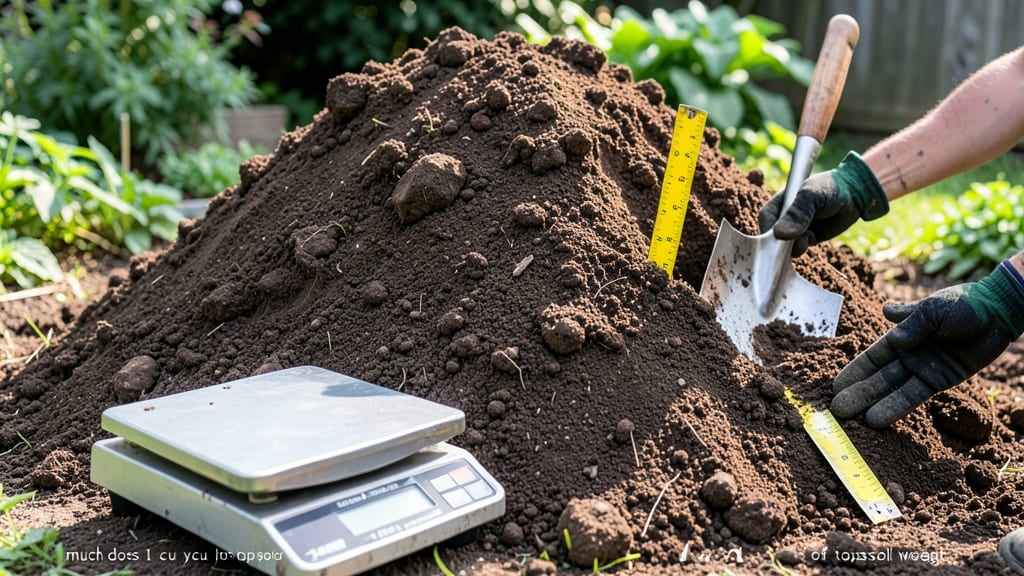
To determine how much 1 cubic yard of topsoil weighs, expect 2,000 to 2,800 pounds—this range accounts for variations in moisture, compaction, and organic material, with drier, looser soil weighing less and wet, packed soil reaching the heavier end.
Understanding topsoil weight helps with everything from project planning to truck capacity. 🌱 The 2,000-pound baseline applies to dry, sandy soil with minimal organic matter, while clay-heavy or moisture-rich topsoil can easily approach 2,800 pounds.
For practical purposes, I always round up to 2,500 pounds when estimating deliveries—this accounts for average moisture conditions and gives you a buffer for unexpected variations. The weight difference might seem small, but it becomes critical when calculating how many truckloads you'll need for large landscaping projects or garden beds.
What's interesting is how quickly weight changes with moisture—just a 10% increase in water content can add 200-300 pounds to your cubic yard. This is why professional landscapers always ask about recent rainfall when quoting projects.
For raised garden beds, where precision matters, I recommend testing a small bag of your soil first to get an accurate weight-per-cubic-foot measurement, then scaling up from there.
💡 In This Article
- Factors Affecting Topsoil Weight per Cubic Yard
- Practical Weight Estimates for Gardening Projects
Factors affecting topsoil weight per cubic yard
The weight of topsoil varies dramatically because it's not a uniform product—think of it as a living ecosystem with constantly changing properties.
Moisture content is the biggest factor: dry, sandy topsoil might weigh just 1,800 pounds per cubic yard, while the same soil saturated with water can balloon to 2,500 pounds.
This happens because water adds 62.4 pounds per cubic foot (its own weight), and topsoil absorbs water like a sponge—sometimes holding 20-30% of its weight in water after rainfall.
Organic matter content plays a secondary but critical role. Soil with high organic material (like compost or decomposed leaves) weighs less per cubic yard because organic matter is less dense than minerals.
A cubic yard of pure mineral topsoil might weigh 2,200 pounds, while the same volume with 10% organic content could drop to 2,000 pounds. The reason? Organic material has more air pockets and lighter particles.
Compaction is another game-changer: packed soil can weigh 10-15% more than loose soil because the particles are forced closer together, reducing air space.
Soil composition creates wild variations too. Sandy loam (common in many gardens) typically weighs 2,000-2,300 pounds per cubic yard, while clay-heavy topsoil can exceed 2,600 pounds due to its dense particle structure. The particle size distribution matters because smaller particles (like clay) pack together more tightly than larger sand grains.
For example, a cubic yard of pure clay might weigh 2,800 pounds, while the same volume of pure sand would only weigh 1,600 pounds. 🌱 This is why soil tests often include density measurements—it directly impacts how much you can fit in a truck or how deep you can spread it.
Temperature also sneaks into the equation because it affects moisture retention. Cooler soils hold more water (and thus weigh more) than warm soils in summer. This seasonal variation explains why fall deliveries often feel heavier than spring deliveries—even if the volume appears identical.
The science here involves capillary action: cooler temperatures slow evaporation, keeping water bound to soil particles longer. For practical purposes, I always add 10% extra weight to my estimates during fall projects to account for this natural variation.
One surprising factor is the presence of rocks or gravel. While topsoil is typically screened to remove large stones, some "topsoil" blends contain 10-20% coarse material that significantly increases weight.
A cubic yard with 15% gravel might weigh 2,400 pounds instead of 2,200 pounds—the gravel adds bulk without increasing volume much. This is why landscape suppliers often specify "screened topsoil" when weight precision matters for projects like golf course repairs or precision agriculture.
For home gardeners, the most practical way to account for these variations is to consider your local soil type. If you're in a sandy region (like parts of Florida or coastal areas), you can safely estimate 2,000 pounds per cubic yard.
In clay-heavy areas (like the Midwest), round up to 2,500 pounds. The key takeaway is that weight isn't just about volume—it's about the complex interplay of what's actually in that cubic yard. 💫