
How To
Wood ash actually makes soil less acidic by raising pH levels, neutralizing acidity through alkaline minerals like calcium and potassium, though overuse can create overly alkaline conditions harmful to plants.
Wood ash works as a natural soil amendment because it contains alkaline minerals that react with acidic compounds in the soil. When you sprinkle ash, its calcium and potassium content binds with hydrogen ions—those are the particles that make soil acidic. 🌱 The result?
A more balanced pH that helps plants like tomatoes and peppers thrive. However, the effect varies depending on the type of wood burned (hardwoods like oak are more effective than softwoods) and your soil's starting composition.
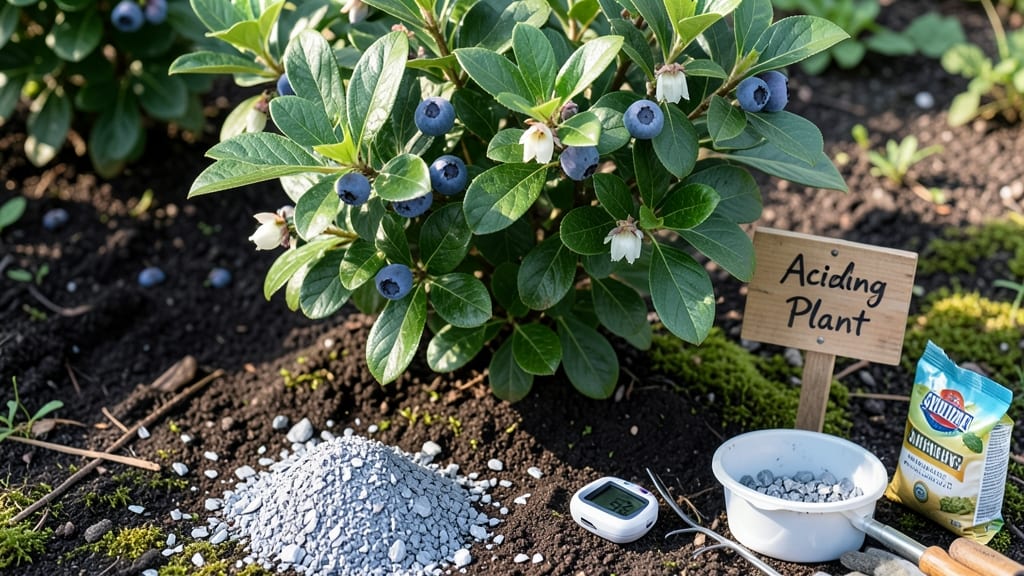
Think of wood ash as a gentle pH regulator, not a cure-all. A little goes a long way—too much can make your soil too alkaline, stressing acid-loving plants like blueberries or azaleas.
I always recommend starting with just 1-2 cups per 100 square feet and testing your soil afterward. The key is balance, not brute force.
💡 In This Article
- How Wood Ash Alters Soil pH Chemistry
- Best Practices for Using Wood Ash in Gardens
How wood ash alters soil pH chemistry
Wood ash acts like a natural pH booster because it contains alkaline compounds that chemically neutralize acidic soil. When burned, wood transforms into ash rich in calcium carbonate (up to 40% by weight) and potassium hydroxide, both of which react with hydrogen ions—the same particles that make soil acidic.
This reaction follows a simple chemical principle: alkaline minerals bind with acidic hydrogen ions, reducing their concentration and raising the soil's pH level. For example, calcium carbonate (CaCO₃) reacts with hydrogen ions (H⁺) to form calcium bicarbonate (Ca(HCO₃)₂), effectively removing acidity from the soil solution. 🔥
The effectiveness depends heavily on the wood source. Hardwood ashes (oak, maple) contain more calcium carbonate than softwood ashes (pine, cedar), which means they raise pH more dramatically.
A typical hardwood ash can increase soil pH by 0.5 to 1.0 units when applied at 1-2 cups per 100 square feet. However, softwood ashes—though still alkaline—often contain higher levels of soluble salts that can temporarily raise soil salinity, requiring more watering to flush out.
The key difference lies in the mineral composition: hardwoods provide a cleaner alkaline boost, while softwoods add a mix of minerals that might need additional soil testing to manage.
Soil composition plays a critical role in how wood ash works. In sandy soils, which drain quickly, the pH adjustment lasts longer because the ash minerals aren't washed away as fast.
Clay soils, on the other hand, hold onto the ash's alkaline effects but may require more frequent applications due to their higher natural buffering capacity.
For instance, a sandy loam soil might see a pH shift from 6.0 to 6.8 after one application, while a clay-heavy soil might only move from 5.5 to 6.2.
This is why gardeners in regions with acidic soils (like the Pacific Northwest) often see more dramatic results from wood ash than those in naturally neutral or alkaline areas.
What most people don't realize is that wood ash doesn't just raise pH—it also adds essential nutrients. The potassium in ash helps strengthen plant cell walls, while calcium supports root development.
However, the pH effect is temporary unless the ash is worked into the top 2-3 inches of soil, where microbial activity can further break down the minerals.
Over time, rain and organic matter decomposition will gradually lower the pH again, which is why wood ash is best used as a maintenance tool rather than a one-time fix. 🌱
Testing your soil before and after application is crucial. A simple home pH test kit can show whether your soil has moved into the ideal range of 6.0-7.0 for most vegetables.
For example, if your tomatoes struggle in slightly acidic soil (pH 5.5), adding wood ash might push the pH to 6.5, improving nutrient uptake and reducing blossom-end rot.
But if your blueberries (which love pH 4.5-5.5) are already thriving, wood ash could push the pH too high, leading to yellowing leaves and poor fruit production. The goal is to fine-tune, not overcorrect.
One common misconception is that all wood ash is the same. In reality, the type of wood burned affects both the pH adjustment and the nutrient profile. For instance, ash from untreated wood contains more potassium, while ash from painted or chemically treated wood may introduce harmful compounds.
Always use ash from untreated, natural wood sources, and avoid ash from pressure-treated lumber, which can contain copper and arsenic. The safest bet is to collect ash from hardwood fires in your own fireplace or wood stove, where you can control the source. ✨