
How To
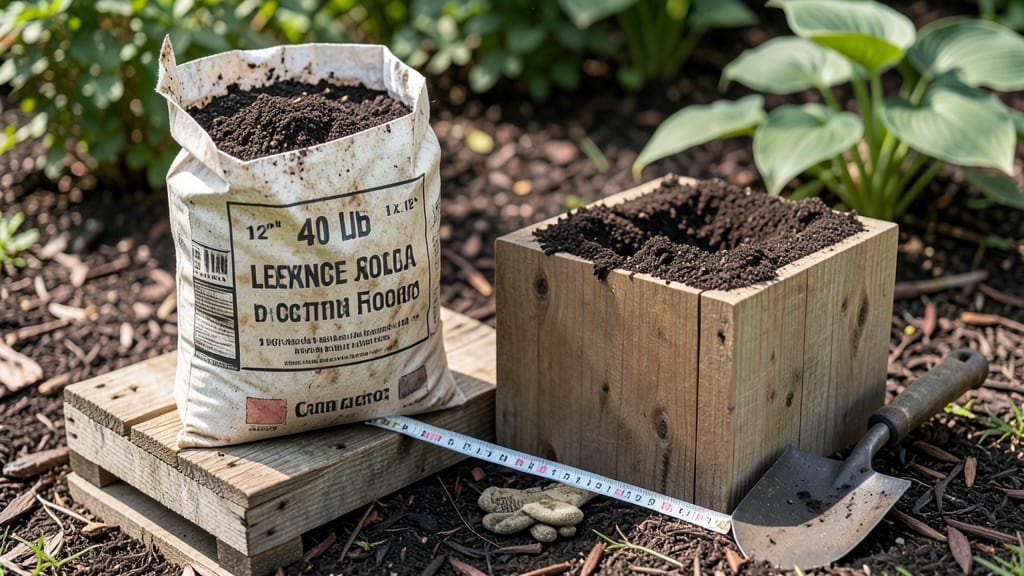
A 40 lb bag of soil generally measures between 0.75 and 1.0 cubic feet, with variations depending on whether it's lightweight potting mix or denser garden soil. The difference comes down to how tightly the particles are packed together.
A 40 lb bag of soil doesn't always translate to the same volume because soil density isn't uniform. 🌱 Potting mixes with perlite or vermiculite often take up more space (closer to 1.0 cubic feet), while heavier garden soils with clay or sand may only reach 0.75 cubic feet.
This matters when planning projects—like filling a raised bed—where knowing exact coverage helps avoid waste or shortfalls. For example, a 4'x8' raised bed needs about 16 cubic feet of soil, so you'd need roughly 16-22 bags depending on the type.
Understanding this conversion also helps when mixing custom blends. 💫 If you're combining different soil types, test a small batch first to check its final volume. Many gardeners keep a reference chart handy for common bag sizes, which makes estimating soil needs for containers or in-ground planting much easier.
💡 In This Article
- Factors Affecting Soil Weight-to-Volume Conversion
- Calculating Cubic Feet for Garden Projects
Factors affecting soil weight-to-volume conversion
Soil density varies dramatically based on its composition, and this directly impacts how many cubic feet you get from a 40 lb bag. The primary factor is particle size distribution—sandy soils have larger particles that pack loosely, while clay soils contain tiny particles that compress tightly.
For example, a bag of pure sand might measure about 1.2 cubic feet due to its coarse, airy structure, whereas the same weight in clay-rich soil could shrink to just 0.6 cubic feet because the particles interlock tightly.
Moisture content plays a huge role too. Wet soil weighs more per cubic foot because water fills the spaces between particles, increasing overall density.
A freshly opened bag of potting mix might feel light and fluffy (around 0.9 cubic feet per 40 lbs), but if stored damp, it could compact to 0.75 cubic feet or less.
Organic matter—like compost or peat moss—also affects volume by adding bulk without significant weight, which is why potting mixes often exceed 1.0 cubic foot per 40 lbs despite their lighter feel.
Compaction is another critical factor, especially for garden soils. When soil is tilled or walked on, the particles settle closer together, reducing volume. This is why bagged garden soil often measures closer to 0.75 cubic feet per 40 lbs—it's already been pre-compacted during manufacturing.
In contrast, loose topsoil straight from a bulk pile can expand to nearly 1.2 cubic feet because it hasn't been compressed. The difference becomes obvious when filling containers: a 40 lb bag of loose topsoil will cover more area than the same weight of pre-packaged garden mix.
Specialty blends add another layer of complexity. Hydroponic mixes with perlite or coconut coir can reach 1.1-1.3 cubic feet per 40 lbs due to their airy structure, while cactus/succulent mixes might only yield 0.8 cubic feet because they contain heavier mineral components.
Even within the same product line, moisture variations during production can cause batches to differ by 10-15% in volume. That's why manufacturers often list "approximate" cubic feet—it's not exact science!
Here's what most people don't realize: soil weight doesn't correlate directly to nutrient content or quality. A 40 lb bag of sterile potting mix might measure 1.0 cubic feet but contain fewer natural nutrients than a 40 lb bag of garden soil measuring only 0.75 cubic feet.
The key is matching your project's needs—container gardening benefits from lightweight mixes, while heavy garden soil is better for in-ground planting where compaction isn't an issue. 🌱
For precise calculations, always check the manufacturer's specifications—some brands even list "dry weight" versus "as-packaged" weight, which can differ by 5-10 lbs due to moisture content. This variation explains why your neighbor's 40 lb bag might cover more or less ground than yours, even if it's the same brand.
The science behind soil volume is all about particle physics and moisture dynamics!