
Light Requirements
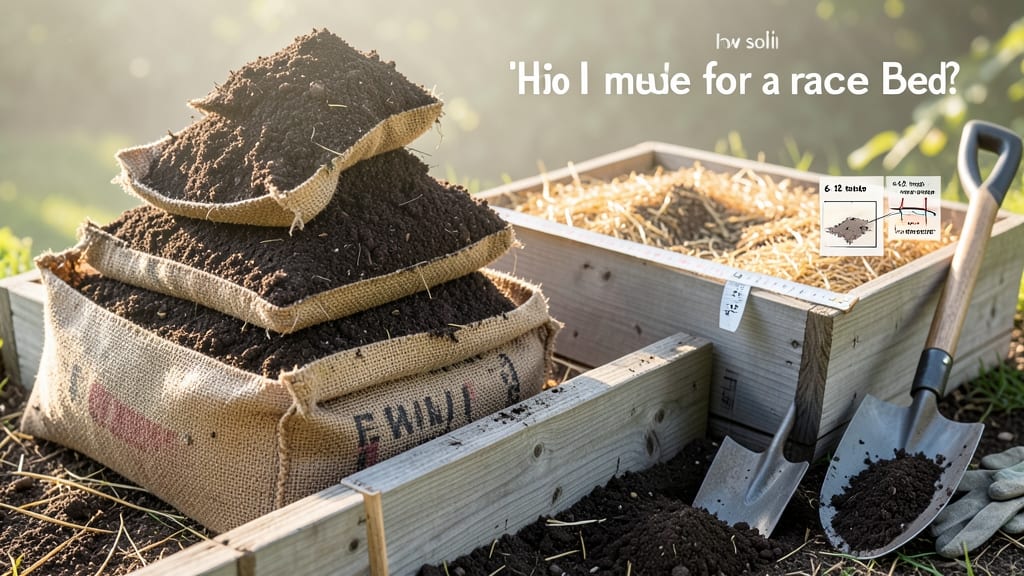
Figuring out how much soil do I need for a raised bed isn’t guesswork—it’s math that saves you from buying too much (or too little). 🌱 I’ve filled beds with exactly the right amount every time, and here’s how to do it without overcomplicating things.
The key is multiplying length × width × depth, then adjusting for plant needs. Start with your bed’s dimensions: a 4×8-foot bed with 12 inches of soil needs 32 cubic feet—that’s about 1.5 cubic yards (or 12 bags of standard 2-cubic-foot soil).
Roots need 10-12 inches for most veggies, but deeper-rooted plants like tomatoes or asparagus demand 18+ inches. Measure twice, buy once. You’ll end up with a perfectly proportioned bed where plants thrive—not one that’s too shallow for roots or too deep for your wallet.
The right soil mix (half topsoil, half compost) makes all the difference in the first harvest. For tricky shapes, break the bed into rectangles and calculate each section separately. Online calculators do the math for you, but knowing the formula means you’ll never overpay again.
📚 In This Guide
- What you need
- Instructions
- Tips and common mistakes
- Wrapping up and next steps
What you need
- ● Soil: A high-quality raised bed mix (60-70% inorganic matter like perlite, vermiculite, or sand; 30-40% organic matter like compost, peat moss, or coconut coir). Aim for 1 cubic foot per square foot of bed depth (e.g., 3 cubic feet for a 3-foot-deep bed). Pro tip: 💡 Avoid garden soil—it compacts and drains poorly!
- ● Hardware cloth or landscape fabric: 1 sheet (cut to fit bed dimensions) to deter burrowing pests like gophers or moles.
- ○ Gravel or landscape fabric (optional but recommended): A 2-3 inch layer at the bottom for drainage (skip if using fabric).
- ● Measuring tape – To calculate bed dimensions accurately.
- ● Wheelbarrow or garden cart – For hauling soil (a 2-3 cubic foot capacity is ideal).
- ● Garden shovel or spade – For spreading soil evenly.
- ● Level – To ensure your bed is straight and even.
- ● Gloves and knee pads – Because gardening is hard work! 😉
- ● Compost or fertilizer – Mix in 1-2 inches of compost into the top layer for nutrient boost.
- ● Mulch (straw, wood chips) – To retain moisture and suppress weeds.
- ● Drip irrigation kit – For consistent watering (especially for thirsty plants!).
- ● Soil test kit – To check pH and nutrient levels before planting.
Step-by-Step guide to calculating soil volume for your raised bed
Here's how to determine exactly how much soil you'll need—no guesswork, just precise math.
📏 Step 1: Measure Your Raised Bed Dimensions
First, grab a tape measure and record your bed's length × width × depth in feet. For example, a standard 4'×8' bed that's 12" deep will need different soil volume than one that's 6" deep. Write these numbers down—they're your foundation.
Pro tip: If your bed has irregular shapes (like curves or multiple sections), break it into rectangles and calculate each separately. For instance, a 4'×8' bed with a 2'×2' corner cutout would require two calculations: one for the main area and one for the missing square.
📐 Step 2: Convert Depth to Feet for Accurate Volume
Soil depth is almost always listed in inches, but volume calculations require feet. Divide your bed's depth by 12 to convert. A 12" deep bed becomes 1 foot, while a 6" deep bed converts to 0.5 feet. This step is critical—using inches directly will give you the wrong answer.
For example, if your bed is 10" deep, divide 10 by 12 to get 0.83 feet. Multiply this by your length and width to find the cubic feet of soil needed. Skipping this conversion is the #1 reason people end up with too little soil.
📉 Step 3: Calculate Cubic Feet Using the Volume Formula
Use this simple formula: length (ft) × width (ft) × depth (ft) = cubic feet. For a 4'×8' bed that's 12" (1 ft) deep, the math is 4 × 8 × 1 = 32 cubic feet. That's your exact soil requirement—no rounding needed.
If your bed has varying depths (like sloped sides), calculate the average depth. For instance, if one side is 12" and the other is 6", use 9" (0.75 ft) as your depth. This ensures you account for the full volume without overbuying.
🌱 Step 4: Adjust for Soil Settling and Plant Type
Most soil mixes settle 10-20% after watering. To avoid running short, multiply your cubic feet by 1.2 (for 20% extra). A 32 cubic foot bed becomes 38.4 cubic feet—round up to 39 cubic feet for safety. This buffer prevents mid-project scrambling for more soil.
For heavy plants like tomatoes or squash, add an extra 5-10% to account for root depth and nutrient demands. A 40 cubic foot bed for veggies might need 42-44 cubic feet of soil to support strong growth without compaction.
🛒 Step 5: Convert Cubic Feet to Bags or Truckloads
Now that you know your cubic feet, compare it to bag sizes or bulk deliveries. A standard 2 cubic foot bag means you'd need 19-20 bags for a 39 cubic foot bed. For bulk orders, divide by 1 cubic yard (27 cubic feet)—39 cubic feet would require 1.5 cubic yards (round up to 2 cubic yards for easy ordering).
Here's a quick reference:
- 1 cubic yard = 27 cubic feet
- 1 bag (2 cf) = 0.074 cubic yards
- 1 bag (3 cf) = 0.111 cubic yards
Double-check your math before placing an order to avoid shortages or waste.
Tips & tricks for perfect raised bed soil calculations
Avoid these common pitfalls—and save yourself the headache of running short or overspending on soil.
Precision in Step 1 Pays Off: When measuring your raised bed's dimensions, don't eyeball it! Use a rigid tape measure and record measurements to the nearest quarter-inch. For example, a bed that looks like 4'×8' might actually measure 4'1"×8'2"—that extra 3" per side adds up to 1.5 cubic feet of soil difference. I learned this the hard way after buying too little for my first bed.
Conversion Shortcut for Step 2: Instead of dividing depth in inches by 12 to convert to feet, use this mental math trick: multiply inches by 0.0833. So 10" becomes 10 × 0.0833 = 0.833 feet. This works because 1/12 = 0.0833. For 6" depth, that's 6 × 0.0833 = 0.5 feet—exactly what we need for the formula. This saves time when calculating multiple beds.
Visual Depth Check for Step 3: If your bed has sloped sides, measure depth at three points (corners and center) and average them. For a 12" deep bed with one side at 10", one at 12", and one at 14", use 12" (1 foot) as your average. This accounts for the extra volume in deeper areas without overcomplicating your math. A quick visual check prevents underestimating by 10-15%.
Soil Type Matters in Step 4: The 10-20% settling factor applies to most bagged garden soils, but not to lightweight mixes like coconut coir or peat-based blends. These can settle 30-40%! For heavy plants like fruit trees, add an extra 15-20% beyond the standard 10-20% to account for root mass. Always check the product label for specific settling rates.
Pro Tips for How Much Soil Do I Need For A Raised Bed
- Avoid these common pitfalls—and save yourself the headache of running short or overspending on soil.
- Precision in Step 1 Pays Off: When measuring your raised bed's dimensions, don't eyeball it!
- Conversion Shortcut for Step 2: Instead of dividing depth in inches by 12 to convert to feet, use this mental math trick: multiply inches by 0.0833.
Frequently asked questions
Got questions about soil volume for your raised bed? You’re not alone!
Here are answers to the most common queries to help you plan like a pro.
How do I calculate soil for irregularly shaped raised beds?
For non-rectangular beds, break them into simple shapes (rectangles, circles, triangles), calculate each area separately, then add the volumes together. Use the formula Length × Width × Depth for each section. For example, a bed with a curved side can be split into a rectangle and a half-circle—measure the radius of the curve and use πr² × depth ÷ 2 for the curved part.
Can I reuse old soil from my garden for a raised bed?
Yes, but with caution! Mix old garden soil with fresh compost or topsoil (aim for a 50/50 ratio) to improve drainage and nutrient levels. Avoid soil with weeds, pests, or diseases—sterilize it with solarization (cover with plastic for 4–6 weeks) or heat treatment if needed. Pro tip: Test pH before planting—raised beds often need amendments like lime or sulfur to balance acidity.
What’s the cheapest way to get enough soil for a raised bed?
Skip bagged soil—it’s pricey and heavy! Instead, source free or low-cost options:
- Local farms/landscapers: Ask if they sell compost or topsoil by the yard (often $10–$30/yard).
- Community groups: Check Facebook Marketplace, Craigslist, or gardening forums for giveaways.
- DIY compost: Build a compost pile from yard waste, kitchen scraps, and leaves (takes 6–12 months).
- Mulch yards: Some sell "screened topsoil" or wood chips to mix in.
For a 4’×8’×12” bed, you’ll need ~3.2 cubic feet—a single yard covers ~27 cubic feet, so a 1/8-yard bag (or equivalent) is perfect.
Should I add soil now or wait until planting season?
Add soil 2–4 weeks before planting to let it settle and integrate with any amendments (like compost or fertilizer). If your bed is empty in winter, top it with a 2–3” layer of compost now—it’ll break down and enrich the soil by spring. Skip adding soil in freezing temps (below 40°F), as cold soil compacts poorly and may harbor pests.
My raised bed soil looks compacted—how do I fix it?
Compacted soil suffocates roots and drains poorly. Revive it with these steps:
- Loosen the top 6–12 inches with a broadfork or garden fork (avoid tilling—it destroys soil structure).
- Add 2–3 inches of compost or coconut coir to improve aeration.
- Mix in sand or perlite (10–20%) if drainage is terrible.
- Plant deep-rooted crops (like dandelions or comfrey) to naturally break up soil over time.
Prevent future compaction by mulching with straw or leaves and avoiding heavy foot traffic on the bed.
Wrapping up and next steps
Calculating the right amount of soil for your raised bed is easier than you think—and now you’ve got the exact measurements to make it a breeze! Whether you’re growing veggies, herbs, or flowers, knowing your bed’s dimensions and depth ensures your plants thrive from day one. 🌱
Ready to roll up your sleeves? Start by gathering your supplies (like a soil calculator or measuring tape) and pick your favorite plants. Then, dig in—literally!—and watch your garden flourish with confidence.