
How To
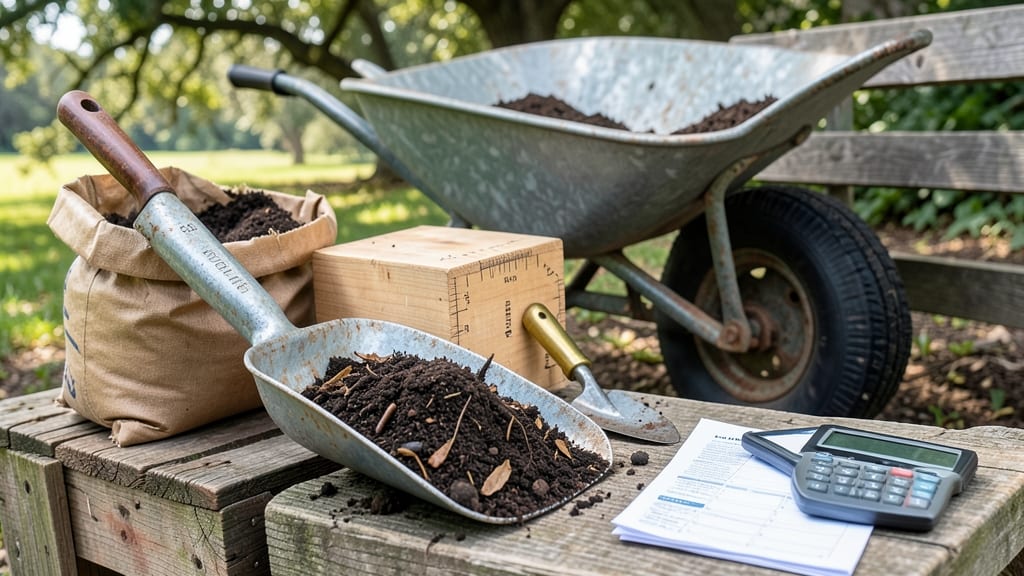
Converting 25 quarts of soil to cubic feet equals 0.76 cubic feet, a precise measurement that's critical for accurate gardening projects like container sizing or potting mix recipes. This conversion helps you scale soil quantities efficiently.
Understanding this conversion is key because soil behaves differently than liquids.
A cubic foot of soil contains roughly 25.714 quarts, but the actual volume you measure depends on how tightly the soil particles pack together. 🌱 For example, sandy soil will take up more space than clay-based mixes, which compact more easily.
This is why gardeners often adjust their calculations based on the soil type they're working with—whether you're filling raised beds or mixing potting soil.
In practice, this conversion helps you avoid buying too much or too little soil. For instance, if you're planning a 4-foot by 2-foot raised bed that's 1 foot deep, you'll need about 8 cubic feet of soil.
Using the conversion, that translates to roughly 205 quarts—a much more manageable number to shop for than cubic feet alone. Always account for a 10% extra buffer to prevent underfilling, especially when working with dense or moisture-heavy soil mixes.
💡 In This Article
- How Quart and Cubic Foot Measurements Relate in Gardening
- Practical Ways to Use 25-Quart Soil Conversions
How quart and cubic foot measurements relate in gardening
The conversion between quarts and cubic feet for soil isn't just about simple math—it's about understanding how soil particles occupy space differently than liquids. A cubic foot contains approximately 25.714 quarts of liquid, but soil's volume varies due to its density and particle arrangement.
This is because soil particles aren't perfectly packed; they contain air pockets and moisture that affect total volume. For example, a quart of water weighs about 2.09 pounds, while a quart of garden soil typically weighs 3.5-4.5 pounds depending on moisture content and composition. 🌱
Particle size plays a huge role in this discrepancy. Sandy soil, with its larger particles, creates more air gaps, making it less dense and occupying more space than clay soil, which has finer particles that pack tightly together.
This is why 25 quarts of sandy soil might measure closer to 0.8 cubic feet, while the same volume of clay-heavy soil could be just 0.7 cubic feet.
Understanding this helps explain why your soil measurements might not match liquid conversions exactly—it's all about how those particles fit together.
When working with gardening projects, this conversion becomes especially important for tasks like filling containers or calculating raised bed requirements. For instance, a standard 5-gallon nursery pot holds about 6.3 quarts of soil, but its cubic foot equivalent is only 0.24 cubic feet.
This difference highlights why gardeners often rely on quarts for smaller projects and cubic feet for larger volumes. The key is recognizing that soil volume isn't fixed—it changes based on how compacted or loose the material is. 🔥
For precise calculations, always consider your soil's moisture level. Dry soil will occupy more volume than wet soil, which compacts as water fills the air pockets. This is why professional gardeners recommend measuring soil by weight (pounds) rather than volume when possible.
A 50-pound bag of potting mix will have a different cubic foot measurement than a bag of the same weight but different composition—this variability is why the 0.76 cubic feet conversion for 25 quarts is an average, not an absolute rule.
Another factor to consider is how soil settles over time. When you first fill a container, the soil volume might appear larger, but as it compacts (especially with watering), the actual cubic foot measurement decreases. This is why experienced gardeners always overfill containers by about 10-15% to account for settling.
For example, if your calculations suggest 0.76 cubic feet for a project, you might want to prepare 0.85 cubic feet to ensure you have enough after compaction.
Understanding these nuances helps you avoid common mistakes, like running out of soil mid-project or overfilling containers where roots need space to grow. The 25 quarts to 0.76 cubic feet conversion is a starting point, but real-world applications require flexibility based on your specific soil type and project requirements.
This is gardening—where precision meets practicality! ✨