Light Requirements
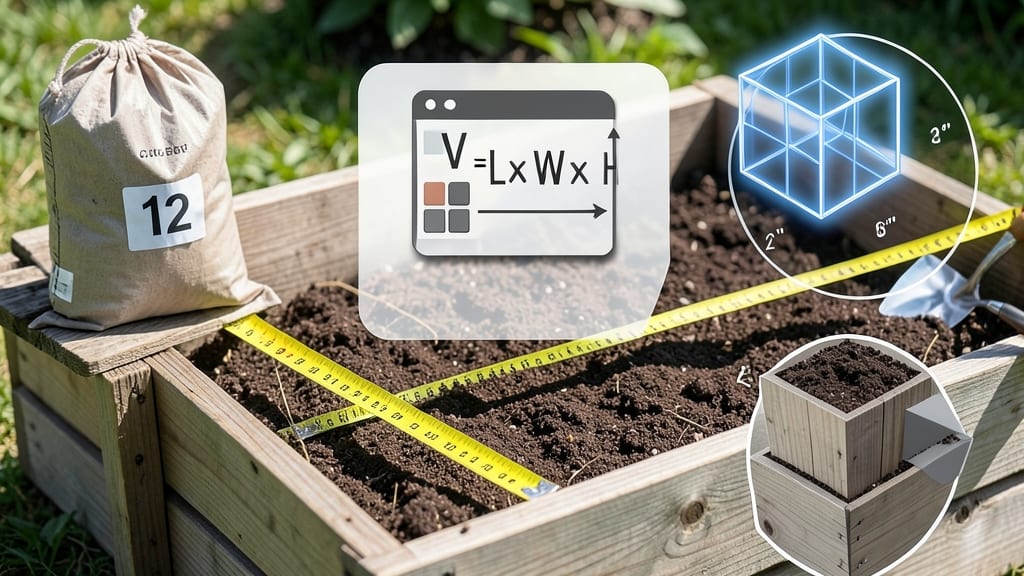
To determine how much cubic feet of soil you need, multiply the pot’s length, width, and depth (in feet), then adjust for plant root space—most containers need 1–3 cubic feet per plant, depending on size and growth habits. For example, a 12-inch-deep pot holds about 0.5 cubic feet of soil per square foot of surface area.
Figuring out soil volume starts with your container’s dimensions—length, width, and depth—but don’t stop there. 🌱 First, convert all measurements to feet (12 inches = 1 foot) to avoid calculation errors.
For instance, a 15-inch-wide pot equals 1.25 feet, and multiplying that by 1 foot depth gives you 1.25 cubic feet of space. Remember to account for drainage layers and root ball size, which can reduce usable soil volume by up to 20%.
Smaller pots like those for herbs or annuals often need just 1 cubic foot, while mature shrubs or small trees may require 3 cubic feet or more for proper root development.
Plant type plays a huge role here.
A basil plant thrives in 1 cubic foot of soil, while a mature blueberry bush demands 3–4 cubic feet to support its extensive root system. 🌿 For garden beds, multiply the area’s square footage by the planting depth (usually 6–12 inches) to estimate total soil volume.
Pro tip: Buy 10% extra soil to compensate for settling and compaction over time.
💡 In This Article
- Calculating Soil Volume by Container Dimensions
- Soil Volume Requirements for Common Plants and Pots
Calculating soil volume by container dimensions
The core calculation for soil volume is straightforward: multiply your container’s length × width × depth in feet. This gives you the total cubic feet of space available.
For example, a rectangular pot measuring 12 inches (1 foot) wide × 18 inches (1.5 feet) long × 10 inches (0.83 feet) deep holds 1.245 cubic feet of soil. 🌱 However, this is the total space—not all of it is usable for roots.
Drainage layers (like gravel at the bottom) and root ball size can reduce effective soil volume by 15-25%.
Converting inches to feet is critical to avoid errors. A 12-inch pot depth equals 1 foot, while a 15-inch pot becomes 1.25 feet. For garden beds, measure the area in square feet first, then multiply by the planting depth (typically 6–12 inches or 0.5–1 foot).
A 4×4-foot raised bed planted 1 foot deep requires 16 cubic feet of soil. Always round up to the nearest 0.25 cubic feet to account for settling—soil compacts over time, especially in clay-heavy mixes.
Root ball size matters more than you might think. A 5-gallon container-grown plant (common for nursery shrubs) has a root ball occupying about 0.3 cubic feet of space.
When transplanting, you’ll need to add 1–2 cubic feet of fresh soil around it to prevent root binding. 🌿 For example, a 3-gallon herb pot (about 0.25 cubic feet) needs 0.75–1 cubic foot of soil when planted, leaving room for root expansion.
This is why oversized pots (like 5-gallon buckets) are ideal for mature plants—they provide the 2–3 cubic feet needed for healthy root systems.
Drainage layers further complicate the math. A 2-inch gravel layer at the bottom of a pot (standard for most containers) reduces usable soil volume. In a 1-foot-deep pot, that’s 16.7% less soil for roots.
For precise calculations, subtract the drainage layer’s depth (in feet) from the total depth before multiplying. For instance, a 12-inch-deep pot with 2 inches of gravel has 10 inches (0.83 feet) of usable soil depth, cutting the total volume from 1 cubic foot to 0.83 cubic feet.
Material type also affects soil volume. Terracotta pots are 10–15% heavier than plastic due to their thickness, which can slightly reduce the internal volume. Meanwhile, fabric grow bags conform to root shapes, often requiring 10–20% more soil than rigid containers to fill gaps.
Always test-fit soil in your container before finalizing calculations—visual checks reveal how much extra you’ll need for proper drainage and root spread.
Pro tip: Use a soil volume calculator (available online) to input your container’s dimensions and plant type. These tools automatically adjust for drainage and root ball size, giving you a precise estimate.
For example, a 15-inch-diameter pot (common for citrus trees) holds about 1.5 cubic feet of soil, but you’ll need 2–2.5 cubic feet to account for root expansion and drainage.