
Container Gardens
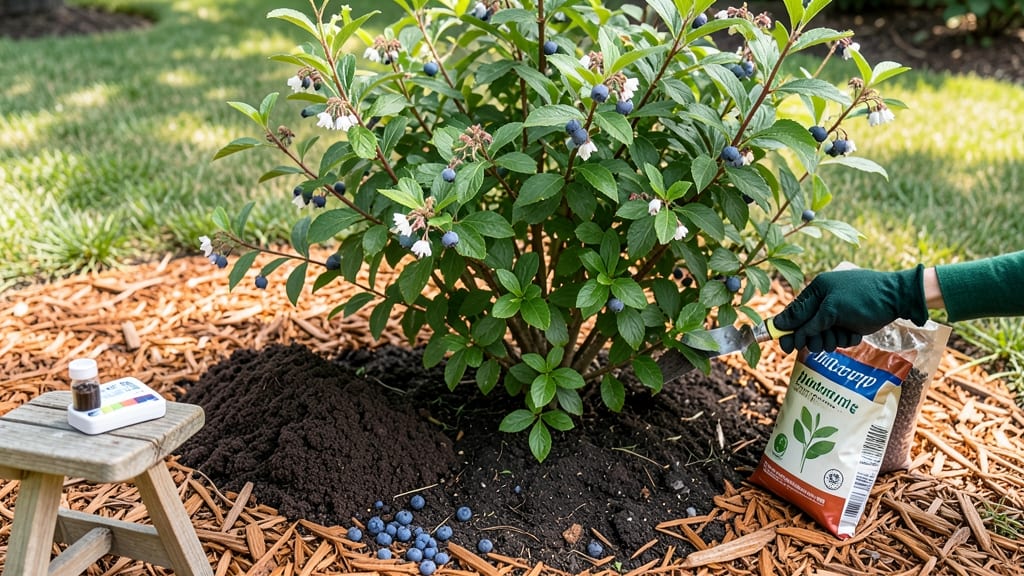
For growing blueberries, you need soil that's highly acidic (pH 4.5-5.5), packed with organic material like peat moss or pine bark, and designed to drain quickly to avoid root rot while keeping nutrients accessible for maximum berry growth.
Blueberries are famously picky about their growing conditions, and soil acidity is the foundation of success. 🌱 The right pH unlocks critical nutrients like iron and zinc, which blueberry roots crave to produce sweet, vibrant berries.
Without this acidic environment, plants struggle to absorb what they need, even if the soil looks fertile. I've seen gardeners add crushed pine needles or sulfur to their mix—these natural amendments help maintain that perfect pH range over time, especially in containers where soil chemistry changes faster.
What's often overlooked is how texture matters just as much as chemistry. Blueberries hate soggy roots, so a blend that drains well (like 50% peat moss, 30% pine bark, and 20% compost) prevents waterlogging while keeping moisture consistent.
Pro tip: Test your soil's pH every spring—even the best mix can drift outside the ideal range with rain or amendments.
💡 In This Article
- Why Blueberry Soil Must Be Acidic
- DIY Blueberry Soil Mix Recipes
Why blueberry soil must be acidic
Blueberry roots thrive in acidic soil because they need to absorb critical micronutrients like iron, manganese, and zinc—nutrients that become locked away in alkaline conditions.
At a pH above 5.5, these essential minerals precipitate out of solution, making them unavailable even if they're present in the soil. 🌱 For example, iron deficiency (common in neutral or alkaline soils) causes yellowing leaves and stunted growth, while manganese deficiency leads to brown spots on leaves—a clear sign your soil isn't acidic enough.
The magic happens when soil pH drops below 6.0, where hydrogen ions increase, helping dissolve these nutrients into forms blueberry roots can uptake. Think of it like a chemical key: only in acidic soil do these nutrients "unlock" and become bioavailable.
What's fascinating is how blueberries also avoid toxic aluminum buildup—something that would harm most plants—because their roots naturally exclude it in acidic conditions. This dual protection (nutrient access + aluminum tolerance) is why pH 4.5-5.5 is non-negotiable for optimal growth.
Organic amendments like sulfur or crushed pine needles work by slowly acidifying the soil through natural chemical reactions. Sulfur, for instance, oxidizes to form sulfuric acid when exposed to moisture, while pine needles release tannins that lower pH over time.
I've seen gardeners add 1-2 pounds of elemental sulfur per 100 square feet in spring to maintain acidity, or mix in 3-4 inches of pine bark fines (which has a natural pH of ~4.0) into their soil blend.
These methods aren't just about hitting a pH number—they're about creating the exact chemical environment blueberry roots evolved to exploit.
Here's what happens when you get it wrong: soil with a pH above 6.0 will show chlorotic (yellow) leaves because iron becomes insoluble, while pH below 4.0 risks aluminum toxicity, causing root damage.
The sweet spot is where nutrient availability peaks without introducing harmful byproducts—a delicate balance that explains why blueberries are often called "the divas of the garden." 💫
Container growers face an extra challenge because pH drifts faster in limited soil volumes. Rainwater (which is slightly acidic) or tap water (often alkaline) can shift pH within weeks.
That's why I recommend testing soil pH every 3-4 months and adjusting with amendments like aluminum sulfate (for quick fixes) or coffee grounds (which add organic acidity slowly).
The goal isn't just to hit a number—it's to mimic the naturally acidic forest floors where wild blueberries grow, where organic matter constantly breaks down to maintain that perfect acidic cradle for roots.
What most gardeners overlook is how soil texture interacts with acidity. Even the most acidic soil becomes problematic if it's poorly draining, because waterlogged conditions trigger anaerobic bacteria that can raise pH locally around roots.
That's why blueberry mixes always include 30-50% coarse material (like pine bark or perlite) to keep oxygen flowing while maintaining that critical acidity. It's a two-part equation: chemistry AND physics must work together for blueberries to flourish.