
Light Requirements
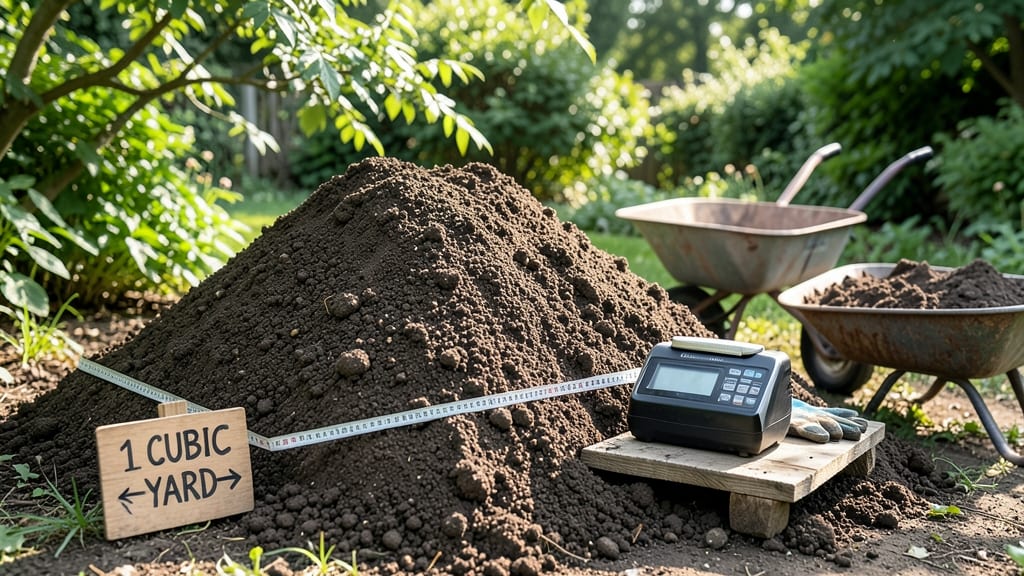
To determine how much one yard of soil weighs, expect between 1,800 and 2,200 pounds—sandy soil typically weighs around 1,800 lbs, while clay-heavy soil can exceed 2,500 lbs. Moisture levels play a huge role, with wet soil adding 20-30% more weight compared to dry soil.
Understanding soil weight is key whether you're planning a garden bed or calculating delivery costs. 🌱 The differences come down to particle size and moisture: sandy soils have larger gaps between particles, making them lighter, while clay soils pack tightly and hold more water.
Even a small change in moisture can shift the weight by hundreds of pounds—something to keep in mind when estimating for projects like raised beds or erosion control.
For practical purposes, gardeners often use a simple rule of thumb: assume 1,800 lbs for dry sandy soil and add 20% for moisture if your soil is damp. If you're working with heavy clay, start closer to 2,200-2,500 lbs and adjust based on recent rainfall.
Tools like a cubic yard calculator or soil moisture meter can help refine these estimates before you dig in.
💡 In This Article
- Soil Density and Weight Variations by Composition
- Practical Tips for Estimating Soil Weight in Gardening Projects
Soil density and weight variations by composition
Soil weight varies dramatically based on its particle composition, which determines how tightly the particles pack together. Sandy soil, made up of large particles with high porosity, typically weighs around 1,800 pounds per cubic yard when dry because the spaces between grains hold little material.
In contrast, clay soil—composed of tiny, tightly packed particles—can exceed 2,500 pounds per cubic yard due to its dense structure and higher water retention.
The difference lies in the soil's bulk density, a measure of dry mass per unit volume, which ranges from 1.2 to 1.6 grams per cubic centimeter for most soils.
Moisture content is the wild card in soil weight calculations. Water fills the pores between particles, adding significant bulk.
For example, a 10% moisture increase in sandy soil can add 180-200 pounds per cubic yard, while the same increase in clay soil might add 250+ pounds due to its higher water-holding capacity.
This is why wet spring soil often feels deceptively heavy—what seems like a manageable 2,000-pound load in dry conditions can balloon to 2,600 pounds after rainfall. 🌧️
Organic matter also plays a role, though its impact is less dramatic. Peat-based soils or those rich in decomposed plant material may weigh slightly less (1,500-1,800 lbs) due to their fibrous structure, but they compensate with higher water retention.
Compaction further complicates things: tilling or heavy machinery can increase bulk density by 10-20%**, making the same volume of soil weigh more. This is why construction sites often specify "compacted soil" weights—typically 5-10% higher than loose soil measurements.
For precise calculations, soil scientists use field density tests that measure moisture content and particle distribution. A simple lab test can reveal whether your soil is closer to the 1,800-lb sandy end or the 2,500-lb clay-heavy spectrum.
Even small variations—like 10% silt content—can shift the weight by 100+ pounds per cubic yard, making professional testing worthwhile for large projects like landscaping or erosion control. 🔬
Understanding these factors helps explain why a 10-cubic-yard delivery might feel like 18,000-25,000 pounds depending on soil type and weather. Gardeners working with raised beds often discover this the hard way when their 3-foot-tall structures become surprisingly heavy—especially after irrigation.
The key takeaway? Always account for 20-30% extra weight if your soil is damp, and consider particle size when estimating for structural projects.