
Light Requirements
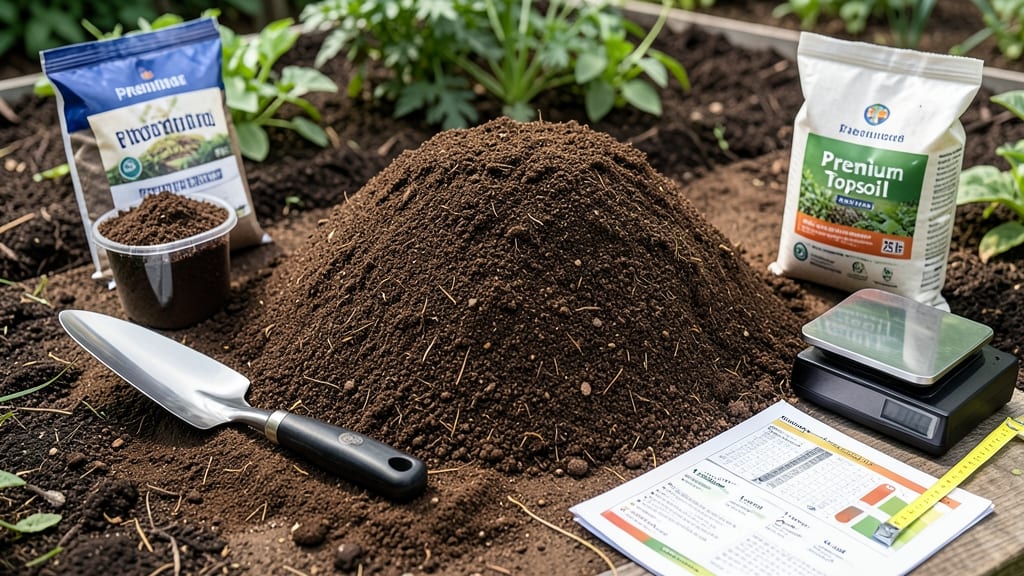
To determine how much a scoop of topsoil weighs, know that a standard shovelful typically measures 10 to 15 pounds, with variations based on moisture and soil type. A full cubic foot of loose topsoil weighs about 40 to 50 pounds, while a half-cubic-foot scoop (like from a wheelbarrow) holds 20 to 25 pounds when damp.
A scoop of topsoil's weight isn't just about volume—it's heavily influenced by moisture levels and soil composition. 🌱 For example, clay-heavy soil can weigh up to 30% more than sandy soil due to higher density.
I always recommend testing a small batch first, especially when mixing in amendments like compost, which can lighten the load. This helps avoid overestimating or underestimating your project needs, saving both time and money.
For practical gardening, think in cubic feet rather than scoops. A standard wheelbarrow holds about 2 cubic feet of topsoil, so you can quickly estimate 80 to 100 pounds per load.
If you're planning a raised bed, multiply length × width × depth (in feet) to get cubic footage, then adjust for soil type. Pro tip: Keep a moisture meter handy—dry soil can weigh 20% less than damp soil, throwing off all your calculations!
💡 In This Article
- Factors Affecting Topsoil Weight per Scoop
- Calculating Topsoil for Garden Beds: Practical Conversion Guide
Factors affecting topsoil weight per scoop
Topsoil weight isn't just about how much you scoop—it's a science of moisture, composition, and physics. The most critical factor is moisture content: damp soil can weigh 20-30% more than dry soil because water adds significant mass.
For example, a scoop of dry sandy topsoil might weigh 8-10 pounds, while the same volume when moist could reach 12-15 pounds. This is why professional landscapers always test soil moisture before estimating deliveries.
Soil type plays a massive role too. Clay-based topsoil has a bulk density of 1.2-1.4 grams per cubic centimeter, making it significantly heavier than sandy soil (which ranges from 1.1-1.3 g/cm³). That's why a shovelful of clay soil can feel like 15-18 pounds while sandy soil stays lighter.
Organic matter content also matters—soil with 5% compost might weigh 10-15% less than pure mineral soil due to its air pockets and decomposed structure.
The way soil is compacted changes everything. Freshly delivered topsoil from a yard is loose and aerated, but after a few days of settling, its density increases by 10-20%.
This is why gardeners often find their initial estimates off—what seemed like 10 cubic feet in a pile might only yield 8-9 cubic feet when spread in a garden bed. The compaction factor is why professionals recommend purchasing 10-15% more than calculated.
Temperature affects weight too, though subtly. Cold soil holds more moisture, increasing weight, while hot, dry conditions make soil lighter. This seasonal variation can cause 5-10% weight fluctuations in the same soil type.
For precise calculations, always measure during stable weather conditions—early morning in spring or late afternoon in summer provides the most consistent results.
Here's a quick comparison of common soil types:
- Sandy soil: 20-25 pounds per cubic foot (dry), 25-30 pounds when moist
- Loamy soil: 25-30 pounds per cubic foot (dry), 30-35 pounds when moist
- Clay soil: 30-35 pounds per cubic foot (dry), 35-40 pounds when moist
Understanding these factors helps you avoid common mistakes like buying too little or overpaying for excess soil. For instance, if you're mixing in 20% compost, your total weight will decrease by about 15-20%** compared to pure topsoil. Always account for these variables when planning your garden project! 🌱