
How To
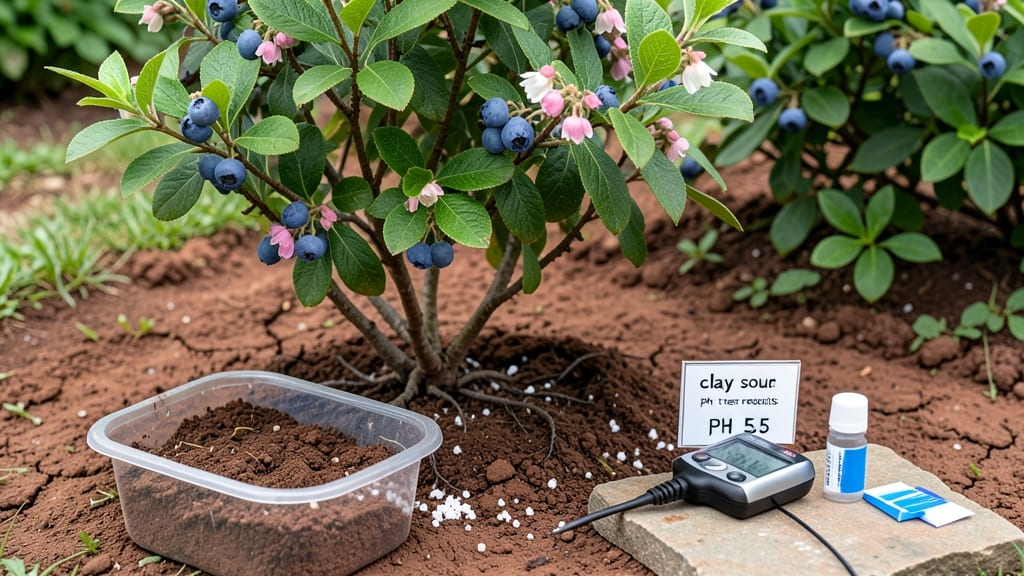
Is clay soil acid? It often is but not always—its pH typically ranges from 5.0 to 7.0, depending on organic matter, mineral content, and regional geology. Testing with a soil pH kit or meter is the best way to confirm acidity before adjusting for plants.
Is clay soil acid? The dense particles trap water, which can accelerate organic breakdown and release acidic compounds like aluminum and iron oxides. 🌱 In tropical regions, clay soils often skew more acidic due to higher rainfall and decomposition rates, while drier climates may produce neutral or slightly alkaline clay.
Without testing, you might guess wrong—some plants thrive in acidic conditions (like blueberries), while others need neutral or alkaline soil (like lavender).
Most home gardeners find that a simple soil pH test kit (around $10) gives accurate enough results, though lab tests offer more precision.
The key is acting on your findings: if your clay soil tests below 6.0, you'll likely need lime to raise pH, while values above 7.5 call for sulfur or elemental amendments. I always recommend testing in spring before planting—this gives you time to make adjustments without rushing.
💡 In This Article
- What Determines Clay Soil pH Levels?
- How to Test and Adjust Clay Soil pH for Gardening
What determines clay soil pH levels?
Clay soil's acidity stems from its mineral composition and water retention. The tiny particles trap moisture, creating an environment where organic matter decomposes rapidly, releasing acidic compounds like aluminum and iron oxides. These minerals dissolve in water, lowering pH—often below 6.0 in undisturbed clay soils.
The process is similar to how rust forms on metal, but in soil, it creates a slow-release acidity that persists for years. 🌱
Regional climate plays a huge role too. In tropical areas with heavy rainfall, clay soils frequently test 5.0-6.0 due to constant leaching of alkaline minerals. Meanwhile, drier temperate zones may produce neutral or slightly alkaline clay (6.5-7.5) because evaporation concentrates calcium and magnesium.
Even within your backyard, you might find pH variations—wet spots become more acidic while elevated areas stay neutral.
Organic matter content is another critical factor. Fresh compost raises pH slightly (making soil less acidic), while decomposed plant material adds humic acids that lower it. The balance depends on your soil's cation exchange capacity (CEC)—clay's high CEC means it holds more nutrients but also more acidic ions.
This is why clay soils often need 2-3 times more lime than sandy soils to raise pH by the same amount.
Don't overlook the role of parent material—the original rock that formed your soil. Clay derived from granite or shale tends to be more acidic, while limestone-based clay remains neutral or alkaline.
This geological history explains why some gardens naturally produce acidic clay while others don't. Testing multiple spots in your yard can reveal these hidden patterns. 🔍
Even within the same soil type, seasonal changes affect pH. Winter rains often acidify clay soils temporarily, while summer droughts can raise pH slightly due to microbial activity changes. These fluctuations are why gardeners should test soil in spring before planting—it gives the most stable reading for seasonal planning.
For visual reference, imagine clay soil as a sponge: it absorbs water and nutrients but also traps acidic byproducts. This waterlogging effect creates anaerobic pockets where bacteria produce organic acids. The result? A soil that looks rich and fertile but may actually be too acidic for many plants.
This is why blueberries thrive in clay soil while tomatoes struggle—they have completely different pH needs. 🌿