
Light Requirements
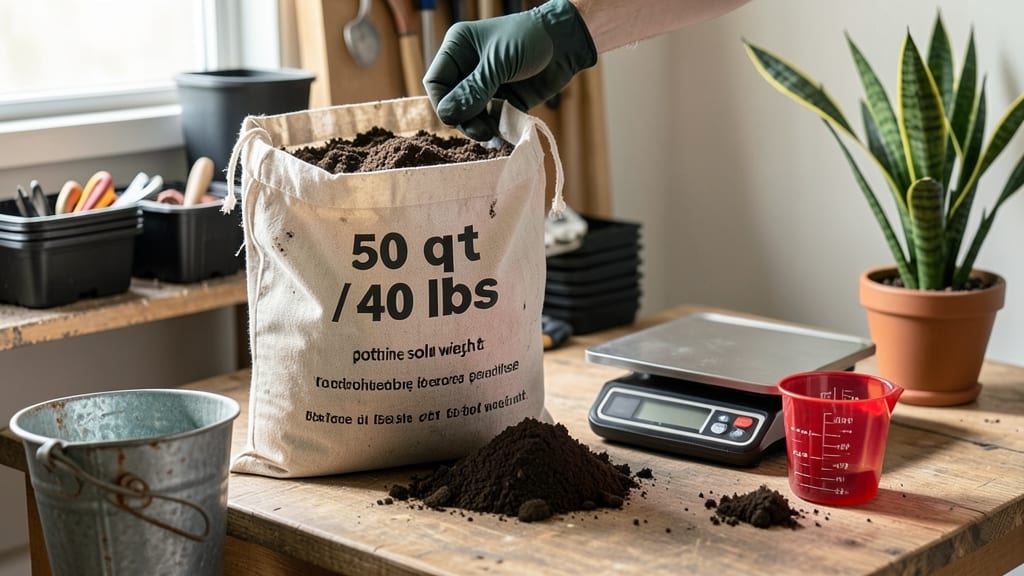
Knowing how much 50 quarts of potting soil weighs helps with container selection and structural support, as dry soil typically ranges from 25 to 35 pounds, while moistened soil can reach 35 to 45 pounds depending on organic content and moisture absorption.
Understanding potting soil weight is crucial for gardeners and DIY projects alike.
The difference between dry and wet soil comes down to water absorption—organic mixes like peat or coconut coir hold significantly more moisture, adding 5 to 10 pounds once saturated. 🌱 For example, a 50-quart bag of premium organic potting mix might weigh 32 pounds dry but swell to 40 pounds after watering.
This variation impacts everything from container stability to shipping costs, so always check the label for moisture content guidelines.
When planning large projects, like raised garden beds or heavy planters, I recommend adding an extra 10-15% to your weight estimate to account for compaction and settling. Mineral-heavy mixes (like perlite or vermiculite blends) stay lighter even when wet, while compost-based soils gain the most weight.
Always verify with your supplier—they often provide specific density ranges for their products.
💡 In This Article
- Potting Soil Weight Factors: Density and Moisture Impact
- Calculating Potting Soil Weight for Heavy Planters and Containers
Potting soil weight factors: density and moisture impact
Potting soil weight varies dramatically based on its composition and moisture content. Organic mixes like peat moss, coconut coir, or compost-based blends contain high moisture retention rates—up to 50-70% of their dry weight in water.
For example, a 50-quart bag of pure peat moss weighs about 20-25 pounds dry but can absorb 10-15 pounds of water, nearly doubling its weight when saturated. This is why premium organic mixes often feel deceptively light before watering but become surprisingly heavy afterward. 🌱
The density differences come down to particle structure. Inorganic components like perlite or vermiculite have porous, lightweight structures that resist compaction, while organic matter compresses more easily.
A mineral-heavy mix might weigh 22-28 pounds dry for 50 quarts, but adding 30% compost increases weight to 30-35 pounds dry—and another 8-12 pounds when moistened. The key factor is porosity: smaller particles (like silt) pack tightly, while larger aggregates (like bark chips) stay loose.
Moisture absorption isn't just about water—it's about how the soil holds onto it. Organic materials use capillary action to draw water upward, creating a sponge-like effect.
This is why coconut coir, with its fibrous structure, can hold 3-4 times its dry weight in water, making it one of the heaviest options when wet. In contrast, mineral-heavy mixes might only gain 20-30% of their dry weight when moistened.
Always check product labels for "moisture content" specifications—they often list both dry and saturated weights.
Compaction plays a surprising role too. When you pack soil into containers, the air pockets collapse, increasing density by 15-20%. This is why a loose bag of soil might weigh 30 pounds when poured, but the same volume in a tightly packed planter could weigh 35 pounds.
For large projects, I recommend testing your specific mix by weighing a 5-quart sample dry and after saturation—then scale up proportionally. This method gives you precise numbers for your exact blend.
Here's a quick comparison of common soil components and their weight impacts:
- Peat moss: 1.2-1.5 lbs/quart dry, absorbs 3-5 lbs/quart when wet
- Coconut coir: 1.0-1.3 lbs/quart dry, absorbs 3-4 lbs/quart when wet
- Perlite/vermiculite: 0.5-0.8 lbs/quart dry, absorbs 0.2-0.5 lbs/quart when wet
- Compost: 1.5-2.0 lbs/quart dry, absorbs 2-3 lbs/quart when wet
The takeaway? Always account for both your soil's organic content and how much you plan to water it.
A 50-quart bag might feel manageable at 30 pounds dry, but after adding plants and water, you could be dealing with 50+ pounds**—which makes a huge difference for container stability and lifting. 💪