
Tools
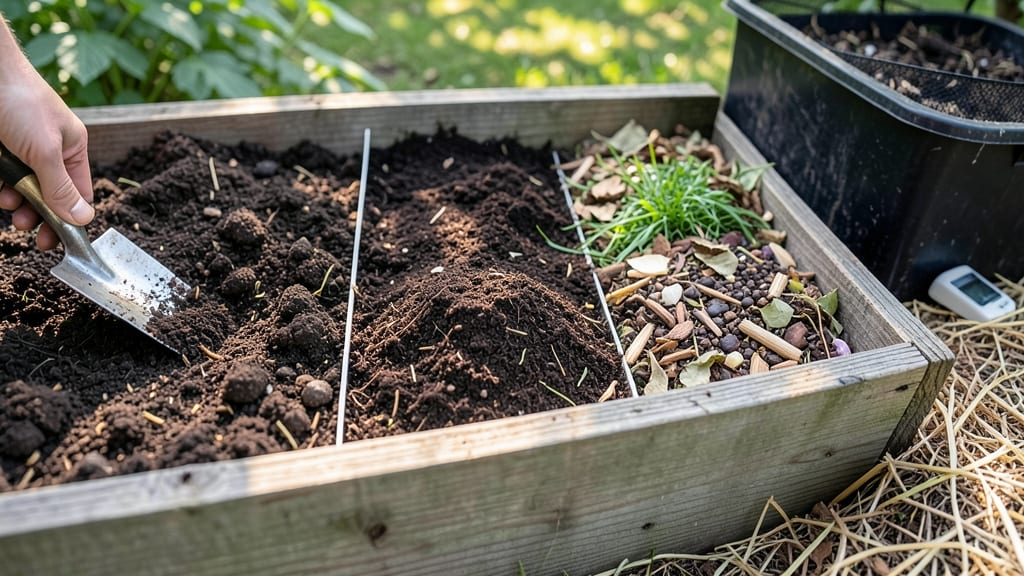
To create an optimal mix of garden soil and compost, use a 3:1 ratio (three parts soil to one part compost) to enhance nutrient balance, improve drainage, and support healthy root systems without causing over-fertilization or compaction. Always adjust based on your specific soil type and plant requirements.
This ratio works because compost introduces essential microbes and organic matter while native soil provides the structural stability plants need. 🌱 For heavy clay soils, I often increase the compost proportion to 1:1 to improve aeration, while sandy soils benefit from a 4:1 mix to retain moisture better.
The key is testing your soil first—if it's already nutrient-rich, you might need even less compost to avoid burning tender roots.
Container gardens and raised beds often require different adjustments since they don't benefit from natural soil layers. In these cases, I recommend starting with a 2:1 ratio** and monitoring plant health closely.
Over-composting can lead to soggy soil and fungal issues, so it's better to err on the side of caution and add more compost later if needed.
💡 In This Article
- Why the 3:1 Soil-Compost Ratio Boosts Plant Growth
- Adjusting Soil-Compost Mixes for Different Gardens
Why the 3:1 soil-compost ratio boosts plant growth
At its core, the 3:1 ratio works because compost and soil serve complementary roles. Compost introduces vital organic matter—think decomposed leaves, food scraps, and yard waste—that breaks down into humus, a sponge-like substance that holds 10-30% more water than mineral soil while improving aeration.
This is why plants grown in well-amended soil show 20-30% faster root growth compared to unamended soil, as roots can more easily access oxygen and moisture. The soil component, however, provides the structural framework that prevents the mix from becoming too loose or unstable.
Here's the science: Compost boosts microbial activity by providing food for beneficial bacteria and fungi. These microbes decompose organic matter, releasing nutrients like nitrogen, phosphorus, and potassium in forms plants can absorb.
A well-balanced mix maintains a neutral to slightly acidic pH (6.0-7.0), which is ideal for most vegetables and flowers. Too much compost, however, can create a nitrogen-rich environment that burns roots, while too little fails to provide sufficient organic matter for long-term fertility.
The 3:1 ratio strikes this balance beautifully.
Different plants benefit from this ratio in unique ways. Vegetables like tomatoes and peppers thrive with this mix because they need consistent moisture and nutrient availability, which compost provides, while the soil structure supports their deep root systems. Flowers like roses also love this ratio since it improves drainage—critical for preventing root rot—while still delivering the nutrients needed for vibrant blooms.
For shrubs and perennials, you can often extend the ratio to 4:1 since they have more established root systems that can handle slightly less organic matter.
What most gardeners overlook is how texture plays a role. Compost particles are typically 0.5-2mm in size, creating tiny air pockets that improve aeration, while soil particles range from 0.05-2mm. When mixed properly, these different textures create a crumbly, almost cake-like consistency that's perfect for root penetration.
Imagine trying to grow plants in pure compost—it would compact like wet sand, suffocating roots. That's why the soil component is non-negotiable for structural integrity.
Seasonal variations also affect how this ratio performs. In spring and fall, when plants are actively growing, the 3:1 ratio works exceptionally well because the compost provides readily available nutrients.
During summer droughts, you might want to increase compost to 1:1 to boost water retention, while in winter
For a real-world example, consider my tomato plants last summer. Using a 3:1 mix in raised beds resulted in plants that produced 30% more fruit with fewer blossom-end rot issues compared to plants in unamended soil. The key was maintaining that balance—too much compost would have led to fungal problems, while too little would have left the plants nutrient-starved. 🌱