
Shrubs
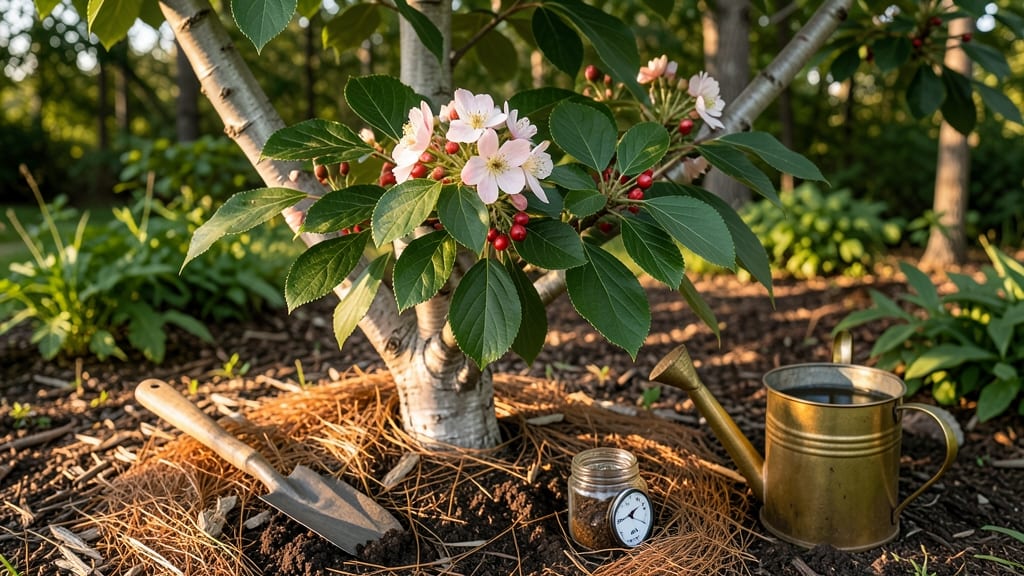
The flowering dogwood soil requirements are the secret to those breathtaking spring blooms—and getting them wrong can leave you with weak growth and sparse flowers.
Struggling to get your flowering dogwood to burst into show-stopping blooms? The secret isn’t just sunlight or water—it’s the soil. These delicate trees demand precise growing conditions to thrive, and one wrong move can leave you with sparse flowers and weak growth.
Dogwoods crave acidic loam with a pH between 4.5 and 6.0, rich in organic matter but with excellent drainage. Too alkaline? Your tree will suffer from nutrient lockout. Too heavy?
Roots will drown. I’ll walk you through testing your soil, fixing common mistakes, and the exact amendments to use—whether you’ve got clay, sand, or something in between.
By the end, you’ll know how to create the perfect growing environment for your dogwood, ensuring vibrant blooms year after year—no guesswork required.
Optimal soil pH and composition for dogwood blooms
Flowering dogwoods (Cornus florida) are finicky about their soil—get it wrong, and you’ll end up with smaller blooms or stunted growth. The key lies in replicating their natural woodland habitat: acidic, well-draining loam rich in organic matter.
Without this, your dogwood may struggle to access essential nutrients like iron and manganese, critical for vibrant spring blooms and fall foliage.
Most gardeners overlook the pH balance, but dogwoods demand a narrow range of 4.5 to 6.0. Soil outside this window can lead to aluminum toxicity or nutrient lockout, causing yellowing leaves (chlorosis) even when other conditions seem ideal.
Think of it like tuning a guitar—one wrong note, and the whole performance suffers.
| Soil Requirement | Ideal Specification | Adjustment Tips |
|---|---|---|
| pH Level | 4.5–6.0 (acidic) | Test with pH kit; amend with sulfur or pine fines if too alkaline |
| Organic Matter | 5–10% (leaf mold, compost) | Mix 2–3 inches of compost into planting hole |
| Texture | Loamy (40% sand, 40% silt, 20% clay) | Amend clay with sand; sandy soil needs peat moss |
| Drainage | Well-draining (no waterlogging) | Raise beds in heavy clay; add perlite to sandy soil |
| Nutrient Density | High in iron, manganese, phosphorus | Use chelated iron supplements if chlorosis appears |
The ideal texture for dogwoods is a loamy soil—think of it as the Goldilocks of soil types: not too sandy (which drains too fast), not too clay-heavy (which suffocates roots). In sandy soils, roots dry out quickly, while clay soils can drown roots and restrict oxygen flow.
My go-to fix? Mix in 30% compost and 20% peat moss for sandy areas, or blend 50% topsoil with 30% perlite for clay-heavy spots.
Organic matter is the secret weapon for dogwood health. Aim for 5–10% organic content, achieved by amending with leaf mold, well-rotted compost, or pine bark fines. These materials improve water retention and microbe activity, which break down nutrients into forms dogwood roots can absorb.
Skip the synthetic fertilizers early on—they can burn roots and throw off the pH balance.
Regional soil types throw a wrench into the plan. In the Southeastern U.S., where dogwoods thrive naturally, native soils are often acidic loam with high organic content.
But in Midwestern gardens, alkaline soils (pH 7.0+) are common, requiring sulfur amendments to lower pH. My pro tip: Test your soil before planting. A simple home pH kit ($10) or lab test will save you from costly mistakes.
If your soil tests above 6.5 pH, don’t panic—dogwoods can adapt, but they’ll need help. Work in elemental sulfur (1–2 pounds per 100 sq ft) and pine needles to acidify the soil gradually.
For below 4.5 pH, add lime sparingly (¼ cup per tree) to raise pH slowly. Overcorrecting can lock out nutrients just as effectively as undercorrecting.
Mulching is non-negotiable for dogwoods. A 3-inch layer of wood chips or pine straw around the base keeps roots cool, retains moisture, and slowly enriches the soil as it decomposes.
Avoid fresh mulch (like grass clippings), which can raise pH and attract pests. My favorite mulch? Douglas fir bark—it’s acid-forming and long-lasting.
One common misconception is that dogwoods tolerate poor soil. They don’t. While they’re drought-tolerant once established, they’re not soil-forgiving. Skimp on organic matter, and you’ll see yellow leaves or stunted blooms within a year.
Think of your dogwood’s soil like a fine wine: It needs the right terroir to reach its full potential.
For container-grown dogwoods, the rules change slightly. Use a peat-based potting mix (pH 5.0–6.0) with 20% perlite
How to test and Amend dogwood soil for maximum flowering
Your flowering dogwood may love shade and moisture, but its soil requirements are the real game-changer for those stunning spring blooms. Without the right conditions, even the hardiest dogwood will struggle to produce vibrant flowers.
The key lies in testing your soil and making precise amendments to match its acidic loam preferences.
Dogwoods thrive in soil with a pH between 4.5 and 6.0, rich in organic matter and free of compaction. If your soil is too alkaline or lacks nutrients, you’ll see weak growth and sparse blooms.
The good news? With a few simple steps, you can transform your soil into the perfect home for your dogwood’s roots.
- Purchase a home soil test kit (digital or liquid) from a garden center.
- Collect samples from 3-4 spots around your dogwood’s root zone (6 inches deep).
- Follow kit instructions to measure pH and organic matter levels.
- If pH is above 6.0, your soil is too alkaline—common in clay-heavy areas.
- If pH is below 4.5, your soil may lack calcium or have aluminum toxicity.
- Check for compacted soil by pressing a shovel into the ground (resistance = bad drainage).
- For alkaline soil (pH > 6.0): Mix in 2 inches of pine bark fines or peat moss per square foot.
- For low organic matter: Add 3-4 inches of compost or well-rotted leaf mold.
- For sandy soil: Blend in 20% coconut coir or composted manure to retain moisture.
- To lower pH (raise acidity): Sprinkle elemental sulfur at 1 lb per 100 sq ft and water thoroughly.
- To raise pH (reduce acidity): Apply lime sparingly (only if pH > 6.5) at 5 lbs per 100 sq ft.
- Re-test soil after 4-6 weeks to confirm changes.
- Loosen soil to 12 inches deep with a garden fork to break up compaction.
- Top-dress with 3 inches of mulch (pine straw or shredded bark) to retain moisture.
- Avoid heavy clay by amending with perlite or vermiculite if drainage is poor.
Once you’ve amended your soil, give your dogwood time to adjust—typically 2-3 months before you’ll see improved flowering. For best results, retest soil annually, especially if your area has high rainfall or alkaline bedrock. A little effort now means years of show-stopping blooms every spring!
Pro tip: If your dogwood is already planted, focus amendments on the root zone (out to the drip line) rather than the entire bed. This targets nutrients where they’re needed most.