
Plants
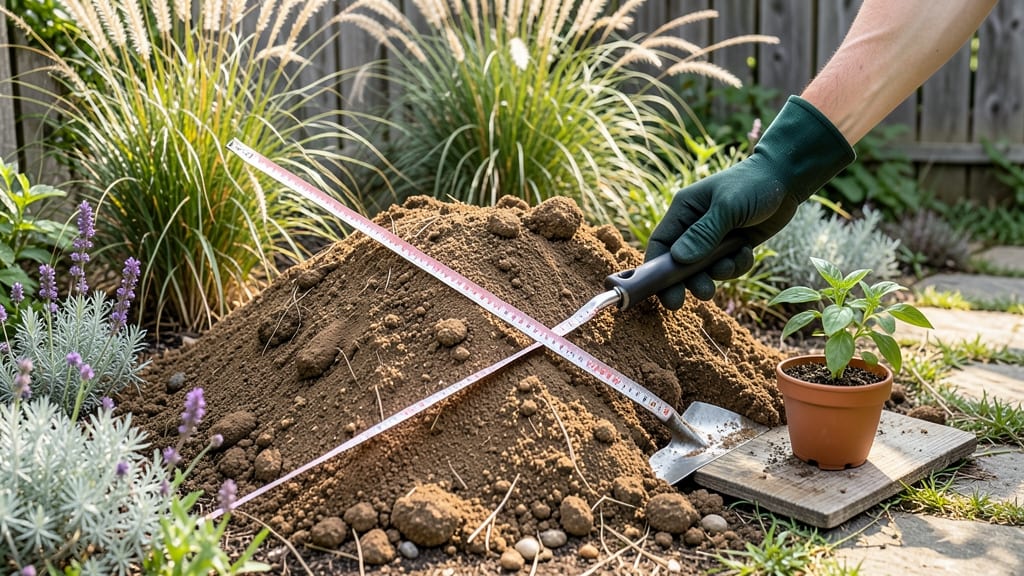
A yard of soil looks like a loose, irregular pile measuring 3 feet in each dimension—about the size of a small refrigerator. Its appearance varies from dark brown to black, often with visible organic debris, clay chunks, or crumbly texture depending on its composition.
A yard of soil's visual presentation changes dramatically based on its type. Sandy soil appears gritty and light-colored, while clay soil forms dense, sticky clumps that hold their shape when squeezed. Loamy soil, considered ideal for gardening, looks dark brown with a crumbly texture that crumbles easily between fingers.
The moisture content also plays a huge role—dry soil appears powdery, while wet soil forms heavier, more cohesive mounds. 🌱
When purchasing soil for projects, always verify the volume by comparing it to standard measurements like a wheelbarrow (typically holds about 2 cubic feet). Compacted soil will take up less space than loose topsoil, so account for this when estimating quantities.
Visual cues like color intensity and particle size can help you quickly assess quality before digging in.
💡 In This Article
- Visual Characteristics of Different Soil Types in a Yard
- How to Estimate and Measure a Yard of Soil for Landscaping
Visual characteristics of different soil types in a yard
Soil isn't one-size-fits-all—its appearance changes dramatically based on particle size and organic content. Sandy soil looks coarse and light tan, almost like fine gravel, because its particles (0.05-2mm) don't stick together.
When you squeeze it, it crumbles instantly—this high porosity means water drains through it like a sieve. Clay soil, on the other hand, forms dense, glossy black or gray chunks that hold their shape when pressed, thanks to its microscopic (less than 0.002mm) plate-like particles that pack tightly together.
The gold standard for gardeners, loamy soil, appears dark brown with a crumbly texture that breaks apart easily between fingers.
This ideal mix contains roughly 40% sand, 40% silt, and 20% clay, plus organic matter that gives it a rich, earthy aroma. Peat soil, often used in potting mixes, looks fibrous and spongy—almost like damp, dark brown sponge—because it's made of partially decomposed plant material that holds moisture like a water reservoir.
Moisture content transforms soil's appearance dramatically. Dry soil forms loose, powdery piles that scatter easily, while saturated soil becomes heavy and sticky, forming smooth, cohesive mounds that can even drip water. Organic-rich soils often have visible bits of decomposed leaves, twigs, or even worm castings, giving them a speckled look.
The color spectrum ranges from pale yellow (sandy) to deep black (organic), with red or brown hues indicating iron oxide presence.
Here's how to spot the differences quickly:
- Texture test: Rub a handful between fingers—sandy feels gritty, clay feels smooth and sticky, loam feels crumbly
- Water test: Add water to a sample—sandy drains instantly, clay stays clumped, loam absorbs then drains moderately
- Color clue: Darker colors (black/brown) indicate higher organic content; lighter colors (tan/gray) mean more minerals
The particle size distribution creates these visual differences because smaller particles pack more tightly, reducing air pockets and changing how light reflects off the surface. Clay particles, for example, align in parallel layers that create a shiny, almost metallic sheen when wet, while sandy particles scatter light in all directions, giving that dull appearance.
Understanding these visual cues helps gardeners select the right soil type for their needs. For instance, clay's dense appearance warns of poor drainage, while loam's crumbly texture signals excellent plant growth potential. The right soil type can transform your garden's health—just look closely at what you're working with! 🌱