
Shrubs
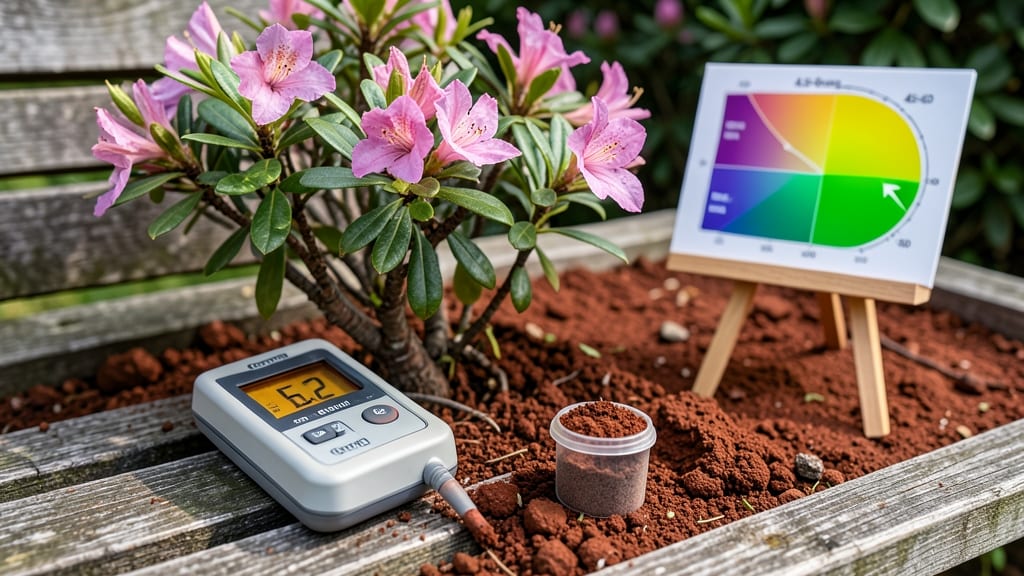
Red clay soil is acidic to slightly acidic, with pH levels typically ranging between 5.0 and 6.5, though regional differences and mineral content can shift this range. Understanding your soil's pH is essential for selecting the right plants and amendments.
This acidity comes from the high iron oxide content that gives red clay its signature color. 🌱 The iron compounds break down over time, releasing hydrogen ions that lower pH. Unlike sandy soils, clay holds onto these acids longer, which is why testing becomes especially important before planting acid-sensitive shrubs like azaleas or blueberries.
Many gardeners discover their red clay's true nature only after plants struggle to thrive despite regular watering.
What makes this soil type tricky is its density—water drains slowly, trapping acids near the surface where roots access nutrients. This creates a double challenge: both the acidity itself and the poor drainage it contributes to. 💫 The good news?
Once you know your exact pH, you can make targeted adjustments with lime (to raise pH) or sulfur (to lower it further), though organic amendments often work more gently for delicate shrubs.
💡 In This Article
- How Red Clay Soil Forms and Its Natural pH Range
- Adjusting Red Clay Soil pH for Different Plants
How red clay soil forms and its natural pH range
The signature red hue of this soil comes from iron oxide (hematite) content, which forms when iron-rich rocks weather over centuries.
As these minerals break down, they release hydrogen ions that naturally lower the pH, creating that characteristic acidic profile. 🌿 The process starts with parent rock—granite or shale—whose mineral composition determines how acidic the resulting clay will be.
For example, granite-derived clays often test between 4.5-5.5, while shale-based varieties may reach 5.5-6.5.
This acidity isn't just surface-level—it extends deep due to clay's dense structure. The tiny particles hold onto hydrogen ions like a sponge, preventing them from washing away quickly.
In the Southeast US, where red clay is most common, rainfall patterns further influence pH. Areas with 50-60 inches of annual precipitation (like Georgia or Alabama) tend to have slightly more acidic soils (5.0-5.5) than drier regions (5.5-6.5).
The iron oxides also react with organic matter, creating additional organic acids that contribute to the low pH.
What's fascinating is how this acidity affects plant roots. The hydrogen ions compete with essential nutrients like phosphorus and calcium, making them less available to plants.
This is why many native shrubs (like wax myrtle) thrive here—they've adapted to extract nutrients efficiently in these conditions. 🌱 However, non-native plants often struggle because their root systems aren't equipped to handle the nutrient competition caused by the persistent acidity.
Regional variations create another layer of complexity. In Florida's red clay regions, the pH can drop as low as 4.8 due to high organic matter decomposition, while Texas red clay often stays in the 5.5-6.0 range thanks to different parent materials.
These variations explain why what works in one garden might fail spectacularly in another just a few hundred miles away. The key is understanding your specific soil's mineral makeup and how it interacts with local climate.
Here's what most gardeners miss: the acidity isn't static. Seasonal changes in moisture and temperature can shift pH by 0.5-1.0 points. Wet springs often make clay more acidic as water accelerates mineral breakdown, while dry summers can temporarily raise pH slightly.
This seasonal fluctuation is why single pH tests can be misleading—you need multiple readings across seasons to truly understand your soil's behavior. 🔍
The iron oxides also play a surprising role in nutrient availability. While they contribute to acidity, they also create tiny pockets where beneficial microbes thrive. These microbes help break down organic matter, releasing nutrients that might otherwise be locked away.
This dual nature—both challenging and supportive—is what makes red clay soil such a complex growing medium. The challenge for gardeners becomes balancing these natural processes to create optimal growing conditions for their chosen plants.