
Tools
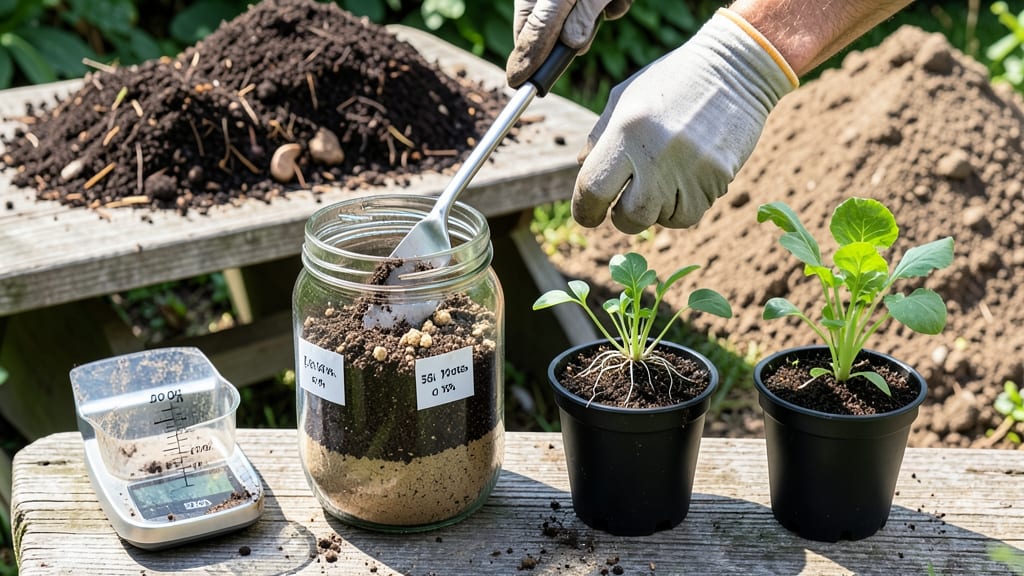
For a thriving vegetable garden, use 3 parts soil to 1 part compost as your baseline ratio, but adjust based on plant type—root vegetables like carrots and beets need a 4:1 mix to prevent rot, while leafy greens and herbs perform best with a 2:1 ratio. Always blend thoroughly and fine-tune based on your soil's existing health.
This ratio isn't just about numbers—it's about creating the perfect balance for your plants' roots to thrive. 🌱 Compost introduces essential microbes and nutrients while maintaining soil structure, but too much can lead to fungal issues or nutrient imbalances.
I've found that sandy soils often need more compost to retain moisture, while clay-heavy soils benefit from a slightly higher soil-to-compost ratio to improve drainage. Testing your soil's pH and organic matter content first can help you dial in the perfect mix for your specific garden conditions.
💡 In This Article
- How Compost Improves Vegetable Garden Soil Chemistry
- Adjusting Compost Ratios by Vegetable Type and Soil Condition
How compost improves vegetable garden soil chemistry
Compost works like nature's multivitamin for soil, boosting microbial activity that breaks down organic matter into plant-accessible nutrients. A well-aged compost contains 5-10% organic matter by volume, which improves soil structure by creating aggregates that hold 20-30% more water than bare soil while maintaining aeration.
These microbes also produce enzymes that help decompose complex organic compounds into simpler forms roots can absorb, like nitrogen, phosphorus, and potassium.
The magic happens at the microbial level—compost introduces 10,000-100,000 bacteria per gram and 100-1,000 fungi per gram, creating a thriving ecosystem that outcompetes pathogens. This microbial activity also helps stabilize soil pH, typically keeping it between 6.0-7.0, which is ideal for most vegetables.
Unlike synthetic fertilizers that provide quick but short-lived nutrients, compost releases nutrients slowly as microbes break it down, feeding plants consistently throughout the growing season.
For heavy clay soils, compost improves drainage by creating 10-15% larger pore spaces between particles, while sandy soils benefit from compost's ability to hold 3-5 times more water per volume.
The ideal organic matter percentage varies by plant type—leafy greens like spinach and kale thrive with 5-8% organic matter, while root vegetables prefer 3-5% organic matter to prevent excessive moisture around their roots. 🌱
Common soil amendments like peat moss or coconut coir work differently than compost. Peat moss, for example, has a pH of 3.3-4.5 and doesn't provide nutrients, while compost typically ranges from 6.0-8.5 pH and contains essential nutrients.
Coconut coir improves water retention but lacks the microbial diversity of compost. The key difference is that compost actively improves soil health over time, while other amendments primarily modify physical properties.
Here's what happens when you get the ratio wrong: Too much compost (over 25% by volume) can create anaerobic conditions that produce foul-smelling ammonia and inhibit root growth. Too little (5% organic matter) leaves plants nutrient-starved and vulnerable to stress.
The 3:1 ratio strikes the perfect balance for most vegetables, but adjustments are needed based on your specific soil type and plant requirements.
For example, tomatoes—heavy feeders—benefit from a 2:1 ratio during planting and an additional 1-2 inches of compost as mulch during fruiting to support their high nutrient demands. Brassicas like broccoli and cabbage, on the other hand, prefer a 3:1 ratio to prevent excessive moisture that can lead to rot.
Always mix compost thoroughly into the top 6-12 inches of soil to ensure even distribution of nutrients and microbes.