
Vegetables
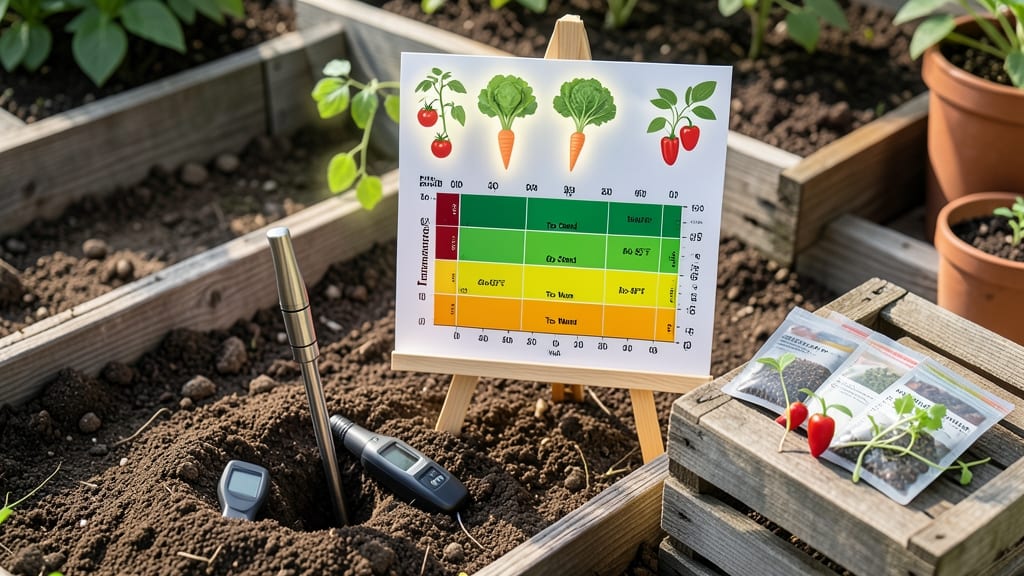
A soil temperature chart for planting vegetables shows ideal ranges between 40°F and 95°F, with cool-season crops like lettuce and peas thriving at 40–50°F while warm-season favorites such as tomatoes and peppers need 70–95°F for best germination and growth. Always reference a crop-specific chart for precise timing by variety and your local climate zone.
Understanding this chart isn't just about numbers—it's about timing. Cooler temperatures trigger germination in hardy greens and root vegetables, while warmer soils activate enzymes that help tender crops like cucumbers and basil break dormancy. 🌱 I've found that even a 10°F difference can mean the difference between a thriving seedling and one that never emerges.
Most gardeners use a soil thermometer to track daily fluctuations, especially in transitional spring/fall months when temperatures swing wildly.
For practical application, I recommend starting with your USDA hardiness zone as a baseline, then adjusting for microclimates (like sunny south-facing beds warming faster). University extension offices often provide free downloadable charts that include local frost dates and heat tolerance thresholds—these are goldmines for planning.
Pro tip: If your soil runs cooler than ideal, consider black plastic mulch or row covers to create a warmer microclimate for heat-loving plants.
💡 In This Article
- How Soil Temperature Affects Vegetable Germination and Growth
- Best Soil Temperature Charts for Vegetable Planting by Region
How soil temperature affects vegetable germination and growth
Soil temperature acts like a biological trigger for seeds—cool-season vegetables like spinach and kale require 40–50°F soil to activate germination enzymes, while warm-season crops such as peppers and eggplants need 75–95°F to break dormancy.
The science lies in enzymatic activity: at 40°F, the enzymes in cool-season seeds become active, but they shut down below 32°F, preventing germination even if moisture is present. Conversely, warm-season seeds contain chemical inhibitors that only degrade at higher temperatures, typically above 60°F.
Root development is another critical factor—cool-season crops like broccoli and cabbage establish roots best at 50–60°F, while warm-season tomatoes and cucumbers need 70–85°F for optimal root growth. The difference comes down to microbial activity: warmer soils contain more beneficial bacteria that help decompose organic matter, releasing nutrients faster.
For example, a 10°F increase from 60°F to 70°F can double microbial activity, accelerating nutrient availability for heat-loving plants. 🌱
What most gardeners overlook is how temperature affects seedling vigor. Cool-season crops grown in warm soil (65°F+) often bolt (go to flower) prematurely, producing bitter leaves.
Meanwhile, warm-season seeds planted in cool soil (55°F) may rot in the ground because their metabolic processes slow to a crawl. This is why timing matters—planting too early or too late can turn a thriving garden into a disappointment.
Soil texture plays a hidden role too. Sandy soils heat up faster but lose moisture quickly, while clay soils retain heat longer but can become waterlogged. For instance, in my zone 6 garden, sandy beds reach 70°F by mid-April, while clay beds lag behind by 2–3 weeks.
This variation explains why some gardeners swear by raised beds—amended soil warms 10–15°F faster than native soil, giving heat-loving crops a head start.
Temperature also influences transplant shock. Seedlings grown in 60°F soil but transplanted to 80°F ground may wilt because their roots can't absorb water fast enough. This is why many gardeners use row covers or shade cloth to gradually acclimate plants to temperature shifts.
The key takeaway? Matching soil temperature to the crop's native climate zone—whether Mediterranean (cool nights/warm days) or tropical (consistent warmth)—is the secret to success.
For real-world examples, consider peas vs. tomatoes: peas thrive in 40–50°F soil because their ancestors evolved in temperate climates, while tomatoes originated in South America's 75–90°F soils. Planting them at the wrong temperature is like putting a desert cactus in a freezer—it simply won't survive. 🌡️