
How To
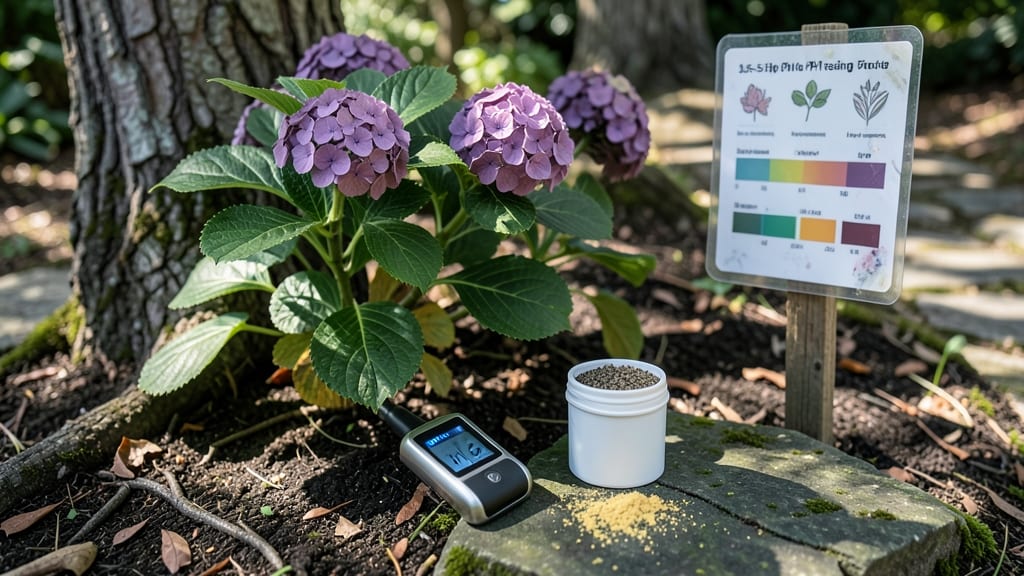
Determining the recommended soil pH depends on your plants: most vegetables prefer a neutral range of 6.0–7.0, while acid-loving blueberries thrive at 4.5–5.5, and azaleas do best in slightly acidic soil at 5.0–6.0. You can test your soil's pH with a simple meter or kit, then adjust it using lime to raise levels or sulfur to lower them for optimal plant health.
Soil pH isn't just a number—it directly controls which nutrients your plants can access.
For example, iron becomes available only in acidic conditions, while phosphorus dissolves best in slightly alkaline soil. 🌱 I've seen gardens struggle with yellowing leaves because the soil was too alkaline for the plants to absorb iron properly.
Testing your soil's pH regularly helps you catch these issues early and make small adjustments before plants show stress signs.
Most home gardeners can get accurate results with a basic pH test kit, but for precise adjustments, I recommend checking your soil every 6–12 months, especially after applying amendments. The key is patience—changing soil pH takes time, and overcorrecting can harm beneficial microbes that keep your plants healthy.
Start with small amounts of lime or sulfur and monitor changes before making bigger adjustments.
💡 In This Article
- How Soil pH Affects Nutrient Availability for Plants
- Best Soil pH Testing Methods and Adjustment Tips
How soil pH affects nutrient availability for plants
Soil pH determines which nutrients your plants can absorb by altering their chemical forms. For instance, iron—a crucial nutrient for chlorophyll production—becomes water-soluble only in acidic soil (pH < 7.0), while phosphorus dissolves best in slightly acidic to neutral conditions (pH 6.0–7.5).
When soil pH strays too far from a plant's ideal range, these nutrients either become locked away or leach out, causing deficiencies like yellowing leaves (iron deficiency) or stunted growth (phosphorus deficiency). 🌱 Think of soil pH as a lock-and-key system: the right pH unlocks nutrients, while the wrong pH leaves plants starving even in fertile soil.
The pH scale measures hydrogen ion concentration, where 0–6.9 is acidic, 7.0 is neutral, and 7.1–14 is alkaline.
Most plants prefer the 6.0–7.0 range because it balances nutrient availability—calcium and magnesium (needed for strong cell walls) are abundant in neutral soil, while nitrogen (critical for leaf growth) remains accessible in slightly acidic conditions.
For example, tomatoes thrive at pH 6.0–6.8, where nitrogen and phosphorus are optimal, but struggle in alkaline soil where iron becomes unavailable, leading to yellowing between leaf veins.
Microbial activity in soil also hinges on pH. Beneficial bacteria and fungi that break down organic matter and fix nitrogen prefer slightly acidic to neutral conditions (pH 6.0–7.0). When soil becomes too alkaline (pH > 7.5), these microbes decline, reducing nutrient cycling and plant health.
I've seen gardens with pH 8.0+ where earthworms disappear—these soil engineers need acidic conditions to thrive, and their absence means poorer soil structure and fewer nutrients for plants. 🐛 The microbial ecosystem acts like a living filter, converting organic matter into plant-available forms, but only when pH is balanced.
Even small pH shifts can drastically change nutrient dynamics. For example, in acidic soil (pH 5.0), aluminum and manganese become toxic to plants, while in alkaline soil (pH > 7.5), calcium and boron may precipitate out of solution, making them unavailable.
This is why blueberries—native to acidic bogs—require pH 4.5–5.5 to access iron and other micronutrients. Without this acidity, their leaves turn yellow and growth stalls, despite having all other growing conditions met. The lesson?
Soil pH isn't just about the number—it's about creating the right chemical environment for your plants to thrive.
Here’s how pH impacts key nutrients:
- Iron (Fe): Available only in acidic soil (pH < 7.0); deficiency causes yellowing between leaf veins
- Phosphorus (P): Best absorbed at pH 6.0–7.5; becomes locked in alkaline soil
- Calcium (Ca): More available in neutral to slightly alkaline soil (pH 6.5–8.0)
- Nitrogen (N): Optimal in slightly acidic soil (pH 5.5–7.0)
Testing your soil’s pH isn’t just about hitting a target number—it’s about unlocking the right nutrients for your plants. For example, if your soil tests at 7.5 but you’re growing blueberries, you’ll need to lower the pH by 2.0–3.0 points to reach their ideal range.
This requires patience and careful monitoring, as large pH shifts take time and can disrupt the soil ecosystem. Start with small amendments and retest every 2–3 months to avoid overshooting. 💫