
Neem Oil
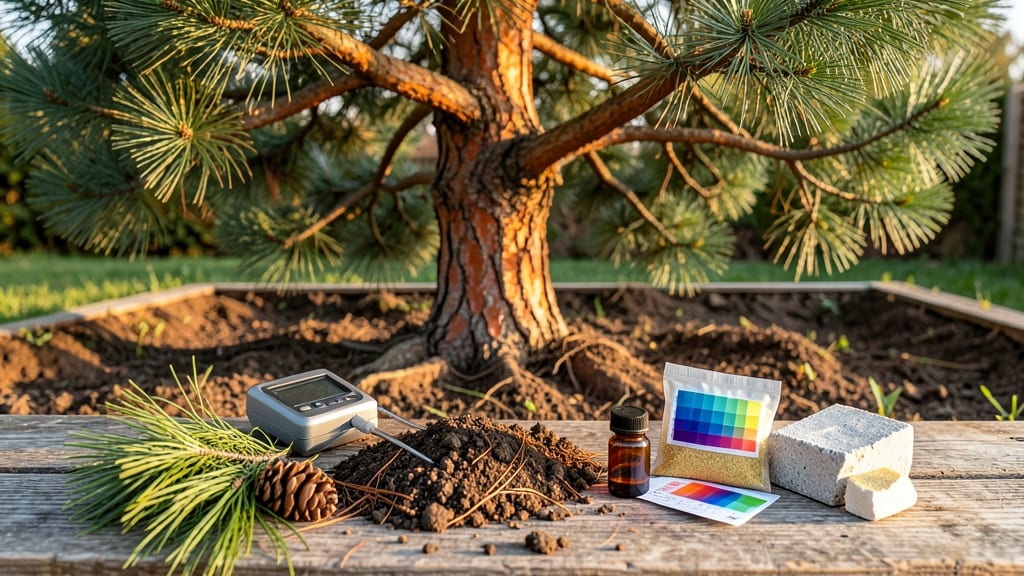
Your pine tree 🌲 thrives when soil pH stays between 4.5 and 6.0—too high or low, and you’ll see stunted growth, yellowing needles, or even death.
Struggling to grow towering pine trees that stay healthy year after year? The secret lies in your soil’s acidity—get it wrong, and even the hardiest pines will suffer. Most gardeners overlook this critical factor, assuming their soil is fine, only to watch their trees fight for nutrients.
Pine trees are acid-loving plants, meaning they crave slightly acidic soil to absorb essential nutrients like nitrogen, phosphorus, and iron. Without the right pH, these nutrients become locked away, leaving your pine 🌲 weak and vulnerable to pests and disease.
In this guide, I’ll break down the ideal pH range for different pine species, how to test your soil, and the simple steps to adjust it—whether you need to lower acidity with sulfur or raise it with lime. Let’s get your soil working for your trees, not against them.
Ideal pine tree soil pH levels: the acidic range for maximum growth
Pine trees thrive when their soil pH stays within an acidic range of 4.5 to 5.5—this is non-negotiable for their health. Most pine species, like the Eastern White Pine or Loblolly Pine, struggle outside this window.
The right pH ensures they absorb essential nutrients like iron, zinc, and manganese, which are critical for their iconic needle growth and sturdy trunks.
If your soil pH drifts toward neutral (7.0) or alkaline (above 7.0), your pine trees will show signs of distress: yellowing needles, stunted growth, and even death in severe cases.
This isn’t just about aesthetics—incorrect pH disrupts nutrient uptake, leaving your trees vulnerable to diseases like pine wilt or needle blight.
Testing your soil’s pH is the first step. Use a digital pH meter or home test kit (available at garden centers) for accuracy. For a quick DIY method, mix 1 part soil with 2 parts distilled water, stir, and use pH strips—though these are less precise.
Aim to test spring and fall, as seasonal changes can shift pH levels.
| Pine Species | Ideal pH Range | Signs of Wrong pH | Adjustment Needed |
|---|---|---|---|
| Eastern White Pine | 4.5–5.5 | Yellow needles, slow growth | Add sulfur or pine needles |
| Loblolly Pine | 4.8–5.5 | Brown tips, weak branches | Peat moss or aluminum sulfate |
| Scotch Pine | 4.0–5.0 | Needle drop, poor cone production | Elemental sulfur granules |
| Ponderosa Pine | 5.0–6.0 | Chlorotic (yellow) new growth | Composted pine bark |
| Dwarf Mountain Pine | 4.5–5.2 | Stunted dwarf growth | Sphagnum peat moss |
Even slight deviations from the ideal pH range can trigger nutrient deficiencies. For example, a pH above 6.0 locks out iron, causing chlorosis (yellowing between needle veins).
Meanwhile, a pH below 4.0 can leach essential nutrients like calcium and magnesium, weakening the tree’s immune system. Regularly monitor your soil to catch shifts early.
If your soil tests too alkaline, organic matter like pine needles, oak leaves, or peat moss can gradually lower pH over time. For quick fixes, apply elemental sulfur (follow package rates) or aluminum sulfate.
These amendments break down to release acidity, but avoid overdoing it—too much sulfur can harm beneficial soil microbes.
Mulching with wood chips or pine bark also helps maintain acidity by slowly decomposing and releasing organic acids. Spread a 3-inch layer around the tree’s drip line (the area under the outer branches), but keep mulch 6 inches away from the trunk to prevent rot.
This mimics the natural forest floor where pines thrive.
For container-grown pines, use a pre-mixed acidic potting soil (look for labels with peat moss or pine bark). Repot every 2–3 years with fresh soil, as containers drain nutrients faster. Always include drainage holes—waterlogged roots in alkaline soil are a deadly combo for pines.
Remember, pines are long-term investments. A young seedling planted in the wrong pH soil may never recover, while a mature tree can tolerate slight adjustments if corrected gradually. Start with the right conditions, and your pines will reward you with vibrant greenery and towering growth for decades.
How to lower soil pH for pine trees: organic and chemical methods compared
Pine trees thrive in acidic soil with a pH range of 4.5–6.0. If your soil test shows higher pH levels, your pines may struggle with nutrient deficiencies or slow growth.
The good news? You can safely lower pH using either organic or chemical methods, depending on your goals and timeline.
Organic methods like pine needles or elemental sulfur take longer but improve soil health naturally. Chemical solutions like aluminum sulfate work faster but require careful handling. Let’s compare both approaches so you can choose what’s best for your pine forest.
Organic Methods
- ✅ Slow but sustainable – Improves soil structure over time
- ✅ Safe for plants – No risk of over-acidification
- ✅ Cost-effective – Uses natural byproducts (pine needles, peat)
- ❌ Takes 3–6 months to see results
- ❌ Limited pH drop – Best for minor adjustments
Chemical Methods
- ✅ Fast results – Lowers pH in weeks
- ✅ Precise control – Adjust pH by exact increments
- ❌ Risk of over-acidification – Requires careful dosing
- ❌ Higher cost – Purchasing chemicals adds up
- ❌ Potential plant stress – Improper use can harm roots
For organic acidification, spread 2–3 inches of pine needles around your pine tree’s base every 6 months. These decompose slowly, releasing natural acids. Alternatively, mix elemental sulfur into the top 6–12 inches of soil at a rate of 1–2 pounds per 100 sqft.
This method is ideal if you prefer long-term soil health over quick fixes.
If you need rapid results, turn to aluminum sulfate, a fast-acting chemical. Apply 5–10 pounds per 100 sqft and water it in thoroughly. Test soil pH again in 4–6 weeks to avoid over-acidifying. Always follow label instructions for safety.
For container-grown pines, use peat moss or sphagnum moss mixed into potting soil. These materials naturally lower pH while improving drainage. Replenish every 6–12 months to maintain ideal conditions. Avoid lime or wood ash—these raise pH and harm acid-loving pines.
Remember: Test soil pH annually to monitor changes. Use a digital pH meter or send a sample to a local extension office for accurate results. With the right approach, your pine trees will thrive in their perfect acidic home.