
Diseases
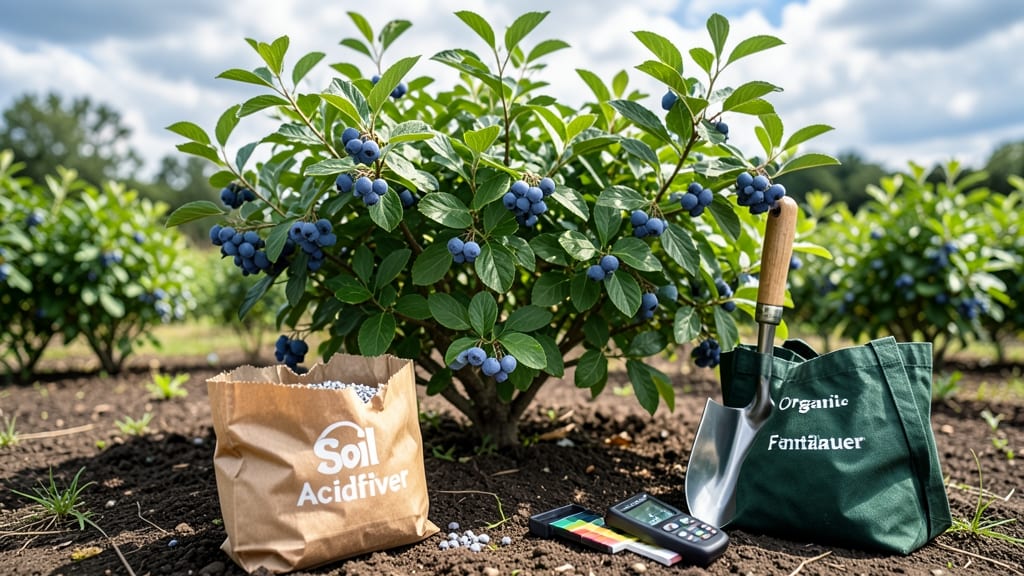
Soil acidifier is not a fertilizer—it adjusts soil pH to help plants absorb nutrients, but lacks essential macronutrients like nitrogen, phosphorus, or potassium that fertilizers provide. Use it to correct acidic conditions before adding fertilizer for optimal growth.
Soil acidifiers focus solely on altering soil chemistry to create the right environment for nutrient uptake, not supplying nutrients themselves. 🌱 Think of it like adjusting the pH of your coffee to taste better—it doesn’t add flavor, but it lets the existing flavors shine.
For example, blueberries need soil with a pH between 4.5 and 5.5, while tomatoes thrive in slightly acidic to neutral soil (6.0-6.8). Without the right pH, even the best fertilizer won’t help because plants can’t access the nutrients locked away in the soil.
Many gardeners mistakenly skip acidifiers when their plants show signs of nutrient deficiencies, like yellow leaves or slow growth. A simple DIY test using a pH meter or test kit can reveal whether your soil needs adjustment.
Once balanced, you can then apply a complete fertilizer to give your plants the nitrogen, phosphorus, and potassium they need to grow strong. It’s like tuning a guitar—you adjust the strings (pH) before playing the right notes (nutrients).
💡 In This Article
- How Soil Acidifiers Work to Improve Plant Nutrition
- When to Use Soil Acidifier vs. Fertilizer for Garden Health
How soil acidifiers work to improve plant nutrition
The core function of soil acidifiers is to lower pH levels by introducing hydrogen ions (H+) into the soil matrix. When you apply sulfur-based acidifiers, they oxidize in the soil to form sulfuric acid, which dissociates into H+ ions and sulfate ions.
These H+ ions replace calcium, magnesium, and potassium ions bound to soil particles, effectively reducing the pH. For example, elemental sulfur lowers pH by about 1 unit per 1,000 pounds per acre per year—a precise adjustment for plants like blueberries that demand pH 4.5-5.5.
Organic acidifiers like aluminum sulfate or peat moss work differently—they release organic acids that gradually acidify the soil. The key difference lies in their speed: sulfur takes 2-4 months to fully activate, while aluminum sulfate can drop pH within 1-2 weeks.
This chemical process unlocks nutrients like iron and manganese, which become unavailable to plants in alkaline soils. Without proper pH, even nutrient-rich soil can starve plants because their root systems can't access critical elements. 🌱
Consider azaleas, which show yellowing leaves when soil pH exceeds 6.0—a classic sign of nutrient lockout. The acidifier doesn't add nutrients; it creates the right environment for existing nutrients to become plant-available.
Think of it like adjusting the temperature of a swimming pool: you can't add more water, but you can optimize the conditions for what's already there. For tomatoes, which prefer pH 6.0-6.8, the same principle applies—too acidic, and nutrients like phosphorus become toxic.
Most acidifiers contain 90-95% sulfur or 15-20% aluminum, with minimal nutrient content. The active ingredients are purely chemical modifiers, not fertilizers. This is why you'll never see terms like "NPK" (nitrogen-phosphorus-potassium) on acidifier labels—they're designed for soil chemistry, not plant feeding.
The confusion often arises because gardeners see both products in the same aisle, but their roles are fundamentally different.
For visual learners, imagine soil as a sponge: fertilizers add water (nutrients), while acidifiers adjust the sponge's tightness to let that water flow where it's needed. Without the right pH, even the richest fertilizer sits like a dry sponge—useless until the conditions are right. 💧
Advanced gardeners often use a two-step approach: first, acidify the soil to the ideal range for their plants, then apply a balanced fertilizer. This sequence ensures maximum nutrient uptake.
For example, hydrangeas need pH 5.0-6.0 to produce vibrant blue flowers—without proper acidification, their nutrients are wasted, and the blooms turn pink.
Remember: acidifiers don't replace fertilizers, but they make fertilizers work better. It's the difference between serving a meal on a dirty plate versus a clean one—the food is the same, but the experience changes completely. 🍽️