
How To
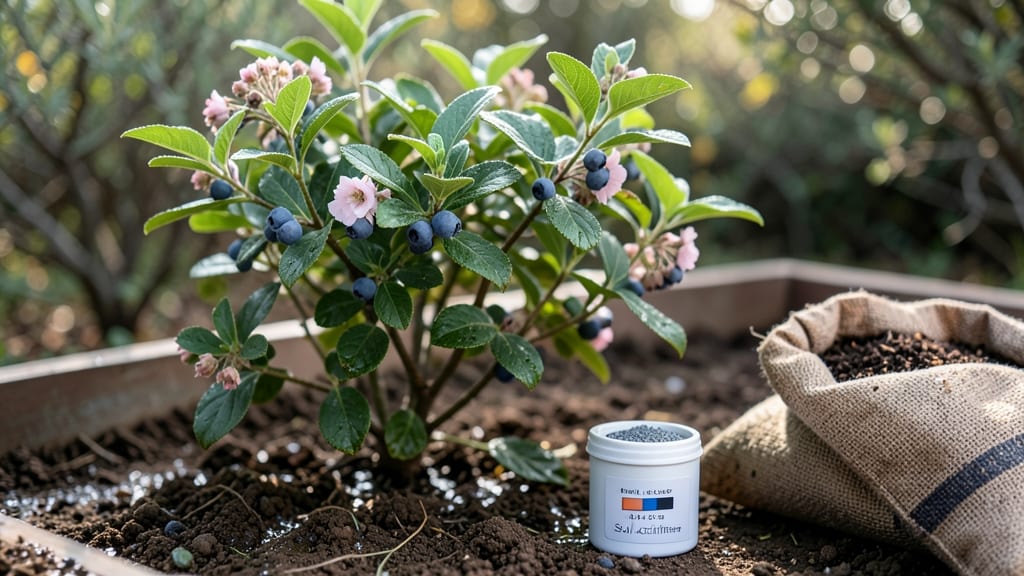
Clay soil is rarely acidic by nature but often becomes acidic over time due to organic matter decomposition, poor drainage, and mineral leaching, typically registering between pH 5.0 and 7.0 unless heavily amended or contaminated. Testing is key for plant suitability.
Clay soil's natural mineral composition—like aluminum and iron oxides—actually helps resist acidity, but its dense structure traps organic debris that decomposes into acids over time. 🌱 This is why many gardeners find their clay soil starts neutral (around pH 6.5) but drifts lower as seasons pass, especially in wetter climates where poor drainage accelerates the process.
The good news? A simple pH test (available for under $20) reveals whether your soil needs lime to raise its pH or sulfur to lower it—critical knowledge before planting acid-loving crops like blueberries or acid-sensitive ones like tomatoes.
What's interesting is how regional factors play into this. In tropical areas, clay soils often stay closer to neutral because frequent rainfall washes away acids faster, while temperate zones see more seasonal pH swings.
I've found that even a 0.5 pH shift can dramatically affect nutrient availability—something most gardeners overlook until their plants start yellowing unexpectedly.
💡 In This Article
- Understanding Clay Soil pH Chemistry and Natural Variations
- Adjusting Clay Soil pH for Optimal Plant Growth
Understanding clay soil pH chemistry and natural variations
Clay soil's mineral composition—particularly aluminum and iron oxides—acts as a natural buffer against extreme acidity. These minerals create negatively charged sites that bind positively charged hydrogen ions (H+), preventing rapid pH drops. However, this buffering isn't perfect.
When organic matter like leaves or grass clippings decompose in clay's dense structure, they release organic acids that gradually lower the pH over months or years. This is why clay soils often start near neutral (pH 6.5) but can drift toward 5.0-5.5 without intervention. 🌱
The dense, compact nature of clay soil plays a crucial role in acidity development. Unlike sandy soils that drain quickly, clay's tiny particles trap moisture and organic debris, creating anaerobic conditions where decomposition produces more acidic byproducts.
For example, in a 10-inch deep clay soil profile, you might find pH levels 0.5-1.0 units lower at the bottom due to waterlogging and slower microbial activity. This vertical pH gradient explains why some plants thrive at the surface while struggling deeper down.
Regional climate patterns significantly influence clay soil acidity. In tropical climates, frequent heavy rainfall washes away acids faster, keeping pH levels closer to neutral (around 6.0-6.5). Meanwhile, temperate zones experience seasonal swings—spring rains often acidify soils temporarily, while summer droughts can raise pH slightly.
I've observed that clay soils in humid continental climates (like the Midwest) tend to stay 5.5-6.0, while those in Mediterranean climates (like California) often remain more neutral due to less organic buildup.
Another key factor is the soil's cation exchange capacity (CEC). Clay soils typically have high CEC (10-30 meq/100g), meaning they can hold more nutrients but also more acidic ions.
When these sites become saturated with aluminum or hydrogen ions (common in acidic conditions), plant roots struggle to access essential nutrients like calcium and magnesium. This nutrient lockout often manifests as stunted growth or yellowing leaves—symptoms gardeners often mistake for general poor soil quality rather than pH-related issues.
Consider this comparison: A clay soil in a forest understory might maintain pH 4.5-5.0 due to constant leaf litter input, while the same soil in an agricultural field (with regular lime applications) could stay at 6.5-7.0.
The difference lies in human intervention versus natural ecological processes. Even small changes in land use can shift pH dramatically over time.
What most gardeners don't realize is that clay soil's acidity often correlates with its texture. The finer the clay particles (0.002mm diameter or smaller), the more surface area exists for chemical reactions—and thus more potential for acidity development.
This is why some clay soils in glacial till regions remain more stable in pH compared to those formed from weathered shale, which contains more acid-producing minerals like pyrite.
The takeaway? Clay soil's acidity isn't static—it's a dynamic balance between mineral buffering, organic input, and environmental conditions. Testing at multiple depths and seasons can reveal patterns that explain why some plants thrive while others struggle in the same soil. 🌿