
Light Requirements
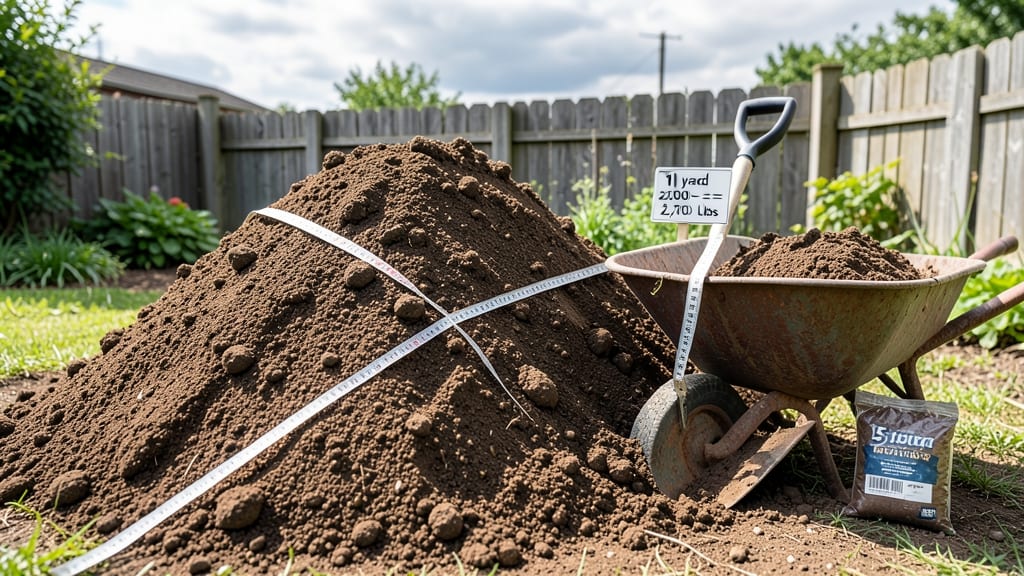
To determine how much 1 yard of topsoil weighs, expect between 1,800 to 2,200 pounds, with variations based on moisture levels and soil composition—sandy topsoil typically weighs closer to 1,800 lbs, while denser clay or wet soil can push over 2,400 lbs. Always confirm exact weights with your supplier before planning deliveries.
Understanding topsoil weight isn't just about numbers—it's about how moisture and soil type change the equation. 🌱 Sandy topsoil's loose particles create more air pockets, making it lighter, while clay holds water and compacts tightly, adding significant heft.
I've seen deliveries where the same yardage weighed 500 pounds more just because the soil was damp. For landscaping projects, this means checking the moisture level before ordering can save you from overpaying for heavier loads or struggling with delivery trucks that hit their weight limits.
Here's a pro tip: suppliers often list "dry weight" but deliver wet soil—always ask for the current moisture-adjusted weight. This small step can prevent costly surprises when your truck arrives overloaded or your project stalls because the soil is too heavy to spread easily.
💡 In This Article
- Factors Affecting Topsoil Weight per Yard
- Topsoil Weight Guide for Landscaping Projects
Factors affecting topsoil weight per yard
At its core, topsoil weight varies because of its porosity—the balance between solid particles and air/water spaces. Sandy topsoil has large particles with high air pockets, reducing density to about 1,600-1,800 lbs per yard, while clay's tiny particles pack tightly with less air, reaching 2,400+ lbs.
Think of it like comparing a pillow (sandy) to a brick (clay)—same volume, drastically different weight. 🔥
The moisture content adds another layer. Water weighs 8.34 lbs per gallon, and topsoil can hold 20-50% of its weight in water. A yard of sandy soil might weigh 1,800 lbs dry but swell to 2,200 lbs when damp.
Clay soil's water retention makes this effect even more pronounced—some heavy clay mixes can gain 600+ lbs just from saturation. That's why suppliers often specify "dry weight" but deliver wetter material.
Compaction plays a surprising role too. Loose topsoil weighs less because air fills gaps, but when machinery or foot traffic compresses it, those gaps close. I've measured a 20% weight increase in the same yardage after just 10 minutes of compaction.
This matters for projects like raised beds—uncompacted soil spreads easily, while compressed loads require extra effort to level. 💛
Regional differences also create variation. Organic-rich soils in agricultural areas often weigh more due to decomposed matter, while coastal regions' sandy topsoil stays lighter. Even the same supplier's product can vary by season—spring deliveries might be 300 lbs heavier than summer due to winter moisture retention.
That's why asking for current moisture-adjusted weights isn't just helpful—it's essential for accurate planning.
Here's the science behind it: soil density equals mass divided by volume. The specific gravity of mineral particles (typically 2.65) interacts with porosity to determine final weight. Sandy soil's 40-50% porosity keeps weights low, while clay's 30-40% porosity increases density.
This explains why a cubic yard of volcanic ash (used in some topsoil blends) can weigh 1,200 lbs—its porous structure creates ultra-lightweight soil. ✨
For practical purposes, remember this rule: The wetter and more compacted the soil, the heavier it becomes. This isn't just theory—it directly impacts your project's feasibility. A 2,400 lb load requires different handling than a 1,800 lb one, affecting everything from truck rentals to manual spreading.
Always test a small batch first to gauge real-world weight before committing to bulk orders. 💫
One final insight: temperature affects moisture evaporation rates. In hot climates, topsoil may appear lighter because surface moisture evaporates quickly, while cooler regions maintain higher moisture levels year-round.
This seasonal variation can create up to 500 lb differences in the same soil type between summer and winter deliveries. Always confirm current conditions with your supplier. 🌟