
Light Requirements
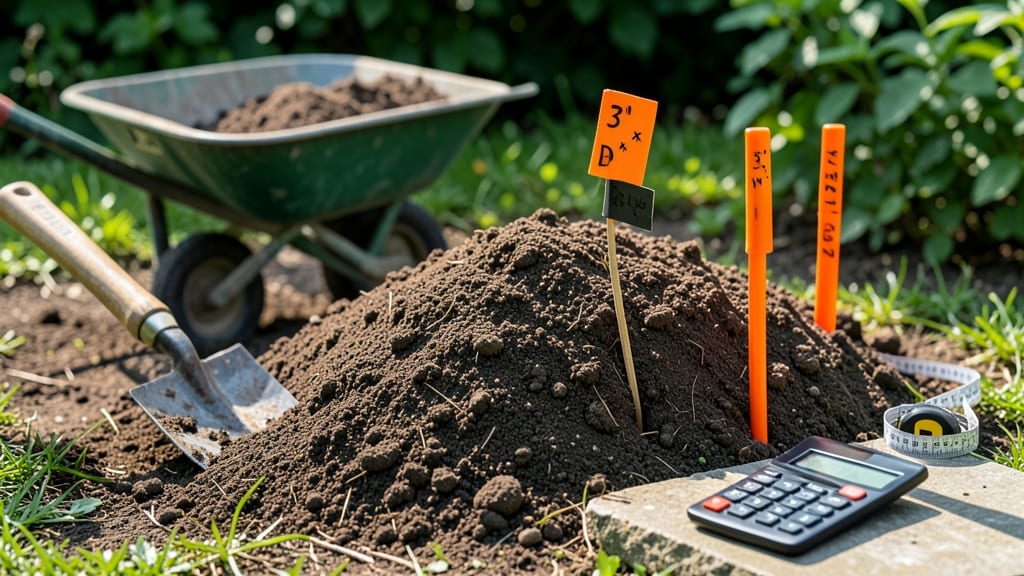
To determine how many yards of soil you need, calculate your garden's volume in cubic feet (length × width × depth) and divide by 27. For instance, a 10×10-foot garden filled 6 inches deep requires 2.22 cubic yards of soil.
This simple formula works because one cubic yard equals 27 cubic feet—a standard measurement for bulk soil. 🌱 For example, if you're planning a 5×10-foot raised bed filled 12 inches deep, you'll need about 2.22 cubic yards of topsoil, but add 10-20% extra if your bed has deep frames or you're mixing in compost.
Soil type also matters: lighter compost blends may require 10-15% more volume than dense topsoil due to air pockets.
Pro tip: Always round up to the nearest quarter-yard when ordering—soil deliveries rarely allow partial loads. And if your garden has slopes or uneven terrain, consider breaking the area into smaller rectangles to calculate more accurately. This method ensures you avoid shortages while minimizing waste.
💡 In This Article
- Soil Volume Calculator: Formula and Key Variables
- Adjusting Soil Order for Raised Beds and Uneven Gardens
Soil volume calculator: formula and key variables
The cubic yard formula—length × width × depth ÷ 27—works because one cubic yard equals exactly 27 cubic feet. This conversion comes from standard bulk soil measurements, where suppliers sell in whole or partial yards.
For example, a 10×10-foot garden filled 6 inches deep (0.5 feet) needs 50 cubic feet of soil (10 × 10 × 0.5). Dividing by 27 gives you the 1.85 cubic yards needed—round up to 2 cubic yards for practical ordering.
Depth is the most variable factor—6 inches of soil is standard for most vegetables, but root crops like carrots or potatoes need 12 inches, doubling your soil volume.
A 5×10-foot garden at 12-inch depth requires 2.22 cubic yards, while a 4×8-foot container garden at 8-inch depth needs just 0.92 cubic yards. Always measure depth from the bottom of your planting area to the finished soil level, not the container's top edge.
Soil type dramatically affects volume due to density differences. Topsoil, which is 60-70% minerals, packs tightly, while compost—40-50% organic matter—has more air pockets, requiring 10-15% more volume for the same coverage.
For instance, mixing 50% topsoil and 50% compost in a 3×6-foot raised bed (12-inch depth) might need 1.5 cubic yards instead of 1.33 cubic yards of pure topsoil. Weighing these blends beforehand can save costly over-ordering.
Another critical variable is compaction. Freshly delivered soil settles 10-20% after watering or rain, so always account for this "settle factor." For example, a 20×20-foot vegetable patch at 8-inch depth (requiring 11.11 cubic yards) should actually order 13.33 cubic yards to avoid running short.
This rule applies especially to clay-heavy soils, which compact more than sandy or loamy mixes.
For precision, break irregularly shaped gardens into geometric sections (rectangles, triangles) and calculate each separately. A kidney-shaped garden might be divided into a 10×10-foot square and two 5×5-foot triangles.
The square needs 3.7 cubic yards at 6-inch depth, while each triangle (area = 12.5 square feet) requires 0.46 cubic yards—totaling 4.62 cubic yards before rounding up.
Pro tip: Use a soil calculator tool or spreadsheet to automate these calculations. Input your garden's dimensions, desired depth, and soil type, and the tool will generate the exact cubic yardage—including adjustments for compaction and amendments.
This eliminates guesswork and ensures you order the perfect amount, whether you're filling a small herb garden or a large vegetable plot.