
Pruning
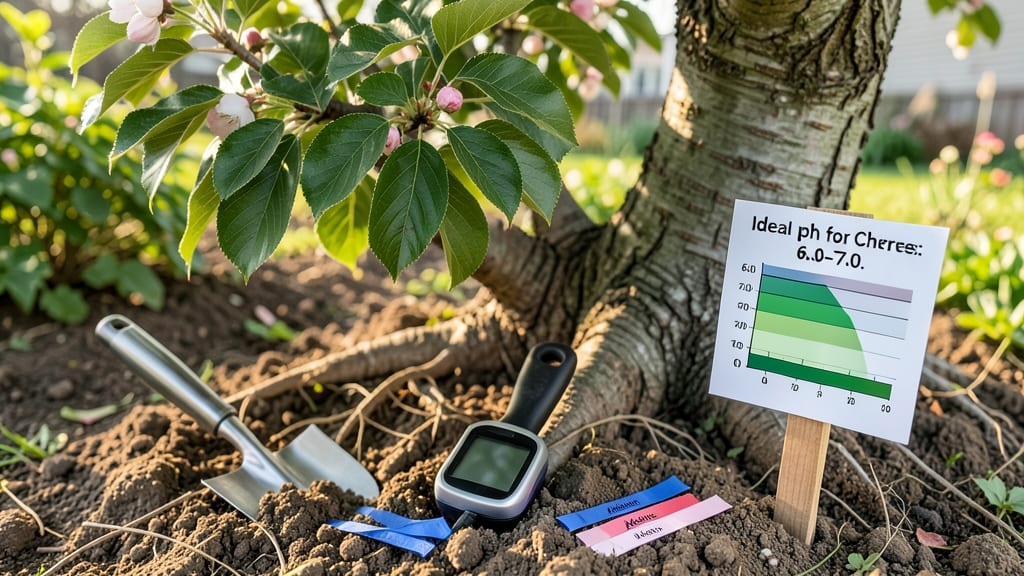
Growing a thriving cherry tree 🍒 depends on getting the soil pH just right—sweet and sour varieties both demand an acidic range between 4.5 and 6.5 to unlock their full potential.
Struggling to grow sweet, juicy cherries? The secret might be hiding in your soil’s pH—cherry trees thrive only in specific acidic conditions that most gardeners overlook. Without the right balance, your tree could be starving for nutrients, even if you’re watering and fertilizing like clockwork.
Too alkaline, and your cherry tree won’t absorb essential micronutrients like iron or manganese, leading to yellowing leaves and stunted fruit. Too acidic, and you risk locking out phosphorus, which is critical for root and flower development.
The good news? Testing and adjusting your soil’s pH is simpler than you think—and it could mean the difference between a sparse harvest and a bounty of ripe cherries.
In this guide, I’ll walk you through how to test your soil’s acidity, the best organic amendments to fine-tune your pH, and the regional tweaks that can make all the difference in your growing zone. Let’s get your cherry tree’s soil in tip-top shape for next season’s harvest.
Optimal soil pH range for cherry trees: why acidic soil matters
If you’ve ever planted a cherry tree only to watch it struggle with yellowing leaves or poor fruit production, your soil’s pH level might be the culprit. Cherry trees—both sweet and sour varieties—thrive in acidic soil, with an ideal pH range of 4.5 to 6.5.
This acidic environment isn’t just a preference; it’s essential for unlocking the nutrients your tree needs to grow strong roots, vibrant foliage, and those coveted juicy cherries.
Most gardeners overlook soil pH because it’s invisible, but it directly impacts how your cherry tree absorbs iron, manganese, and zinc—micronutrients critical for photosynthesis and fruit development.
When the pH strays too high (alkaline) or too low (extremely acidic), your tree can’t access these nutrients, leading to stunted growth, leaf discoloration, and even tree decline. Understanding this balance is the first step to growing a thriving cherry tree that produces bountiful harvests year after year.
Regional soil variations play a huge role in cherry tree success. For example, Pacific Northwest soils often lean naturally acidic, making them ideal for cherries, while Midwestern soils tend to be more alkaline and may require adjustments.
Even within your own backyard, soil pH can vary by just a few feet, so testing is key. Without the right conditions, your cherry tree might look healthy on the surface but suffer silently below ground, setting you up for disappointment when harvest time rolls around.
Let’s break down the ideal pH range for cherry trees and why it matters so much for nutrient uptake, growth, and fruit production. Whether you’re planting a new tree or troubleshooting an existing one, this guide will help you create the perfect acidic environment for your cherries to thrive.
🌱
Your cherry tree’s ability to absorb essential nutrients hinges on soil pH. In the ideal range of 4.5–6.5, micronutrients like iron and manganese become available, fueling lush green leaves and robust fruit development.
When pH drifts too high (alkaline), these nutrients bind to soil particles and become locked away, causing chlorosis—a telltale yellowing between leaf veins. Conversely, if pH drops below 4.5, the soil becomes too acidic, leaching nutrients and stressing the tree’s root system.
For sweet cherries, the sweet spot is 5.0–6.5, while sour cherries prefer a slightly more acidic range of 4.5–6.0. This difference explains why some varieties thrive in your neighbor’s yard but struggle in yours—even a 0.5 pH shift can make all the difference.
Regional soil chemistry also plays a role; for example, Pacific Northwest gardeners often need less intervention because their native soils are naturally acidic, whereas Midwestern soils may require sulfur amendments to lower pH.
One of the most frustrating signs of pH imbalance is yellowing leaves that refuse to green up, even with fertilizer. This is your tree’s way of screaming, “I can’t access my nutrients!”
Other red flags include small, underdeveloped fruit, weak stems, and poor flowering—all symptoms of nutrient starvation. If you’ve been adding fertilizer with no improvement, your soil pH is likely the missing piece of the puzzle.
Testing your soil is the only way to diagnose the issue accurately and take corrective action before it’s too late.
Adjusting soil pH isn’t just about adding amendments—it’s about creating a long-term balance. Organic matter like compost or pine needles can help buffer pH naturally, while elemental sulfur lowers pH for alkaline soils.
The key is patience; changing pH takes time, and overcorrecting can harm your tree’s roots. Start with small adjustments, monitor your tree’s response, and retest soil every 6–
How to test and adjust cherry tree soil pH for maximum fruit production
Your cherry tree might be struggling not because of pests or disease, but because the soil pH is off. Sweet and sour cherries both need slightly acidic soil—typically between 4.5 and 6.5—to absorb essential nutrients like iron, manganese, and zinc.
Without the right pH, your tree may produce small, tart fruit or even fail to fruit altogether. Testing and adjusting your soil’s acidity is the key to unlocking those juicy, sweet cherries you’ve been dreaming of.
Before diving into adjustments, you’ll need to know your soil’s current pH. DIY test kits are affordable and easy to use, but for precise results, a lab test from your local cooperative extension service is worth the investment.
Once you have your pH reading, you can decide whether to lower (if too alkaline) or maintain (if already ideal) the acidity. The right approach depends on your soil’s current state and whether you prefer organic amendments or synthetic solutions.
Organic vs. Synthetic Soil Amendments for Cherry Trees
- Pros: Improves soil structure, adds nutrients, eco-friendly
- Cons: Slower to adjust pH, requires regular reapplication
- Pros: Fast-acting, precise pH adjustment
- Cons: Can harm soil microbes, risk of overapplication
- Sulfur (organic/synthetic)
- Peat moss (organic)
- Pine needles (organic)
- Aluminum sulfate (synthetic)
- Sour cherries (more acidic soil)
- Sweet cherries (slightly less acidic)
- Established trees (organic)
- New plantings (synthetic for quick results)
If your soil pH is above 6.5, you’ll need to lower it. Elemental sulfur is the most common and effective organic option—sprinkle 2-4 pounds per 100 square feet and water thoroughly. For faster results, use aluminum sulfate, but apply it carefully to avoid over-acidifying.
If your pH is below 4.5, you’ll need to raise it by adding lime (calcium carbonate) or wood ash, but do so sparingly—cherry trees are sensitive to overly alkaline conditions.
For long-term success, focus on soil health, not just pH. Mix in compost or well-rotted manure annually to improve soil structure and organic matter. Mulch with pine needles or oak leaves to slowly acidify the soil over time.
Avoid synthetic fertilizers high in nitrogen, which can disrupt the soil’s natural balance. Instead, opt for balanced organic fertilizers like 10-10-10 or fish emulsion to support your cherry tree’s growth without throwing off the pH.
Testing your soil’s pH every 2-3 years ensures you catch drift before it affects your tree’s health.
In northern climates, where soils tend to be naturally acidic, you may only need to monitor pH. In southern regions, where alkaline soils are common, regular adjustments with sulfur or peat moss will be key.
Remember, small changes over time are safer than drastic shifts—your cherry tree’s roots will thank you for patience and precision.
Once you’ve got the pH right, your cherry tree will reward you with bigger, sweeter fruit and lush foliage. The secret to success? Test, adjust, and monitor—your future harvests depend on it. 🍒