
Container Gardens
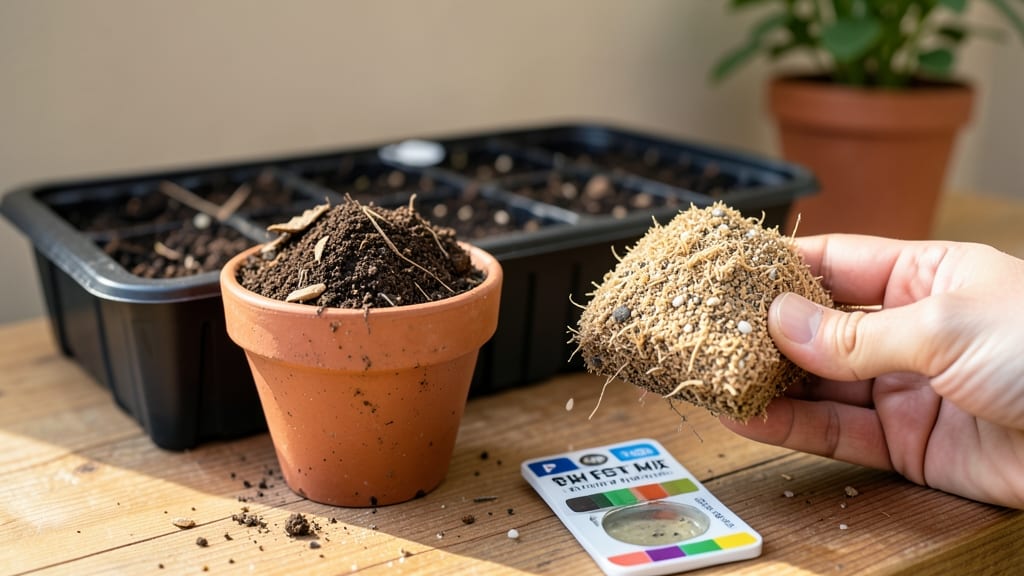
You can use garden soil for potting only if you properly amend it, since it compacts easily, drains poorly, and often contains weeds, pests, or pathogens. Mix it with perlite, compost, and sand to improve aeration and drainage before using it in containers.
Garden soil simply wasn't designed for containers—its heavy clay content smothers roots, while organic matter breaks down too quickly, leaving plants thirsty for nutrients. 🌱 The real issue is its unpredictable composition: one batch might be perfect, while another could be packed with weed seeds or harmful microbes.
Even if you sterilize it, the lack of proper drainage can lead to root rot within weeks. For best results, I recommend using a commercial potting mix as your base, then only adding garden soil as a small component (no more than 25%) to preserve its benefits without the drawbacks.
When you do amend garden soil, focus on creating a looser, more breathable medium. Adding coarse perlite or vermiculite (about 20% by volume) prevents compaction, while well-aged compost (10-15%) replenishes nutrients lost during mixing. For sandy soils, work in coconut coir to retain moisture without suffocating roots.
The key is balance—too much garden soil defeats the purpose, but a thoughtful blend can actually improve your mix's water retention and microbial activity.
💡 In This Article
- Why Garden Soil Fails in Potted Plants
- How to Safely Amend Garden Soil for Potting
Why garden soil fails in potted plants
Garden soil's heavy clay particles pack tightly when watered, creating a dense matrix that suffocates roots by restricting oxygen flow.
This compaction happens because clay particles (typically 20-30% of garden soil) have negative charges that attract water molecules, forming a sticky, airless environment. 🌱 Commercial potting mixes, however, contain 20-30% perlite or vermiculite by volume to prevent this—think of it like adding tiny air pockets to prevent suffocation.
The drainage issue stems from garden soil's natural structure: it holds water in its pores through capillary action, but these pores collapse under the weight of potted plants.
A 10-inch container filled with unamended garden soil can take 3-5 days to fully drain, while a proper potting mix drains in 1-2 hours. This slow drainage creates anaerobic zones where roots rot—especially problematic for container plants that rely on frequent watering cycles.
Pathogen risks are another major concern. Garden soil often contains fungal spores, bacterial colonies, and weed seeds that thrive in the moist, warm conditions of containers.
For example, Phytophthora root rot can spread rapidly in unsterilized soil, while chlamydomonas algae (common in garden soil) creates a slimy layer that blocks oxygen. Commercial mixes undergo pasteurization to eliminate these threats, but garden soil requires sterilization via baking at 180°F for 30 minutes—a step most gardeners skip.
Nutrient imbalances also plague garden soil in containers. While it may contain organic matter initially, this breaks down quickly in confined spaces, leaving plants nutrient-starved within 4-6 weeks.
The nitrogen in garden soil often converts to unavailable forms (like nitrate) that plants can't access, while commercial mixes include slow-release fertilizers calibrated for container growing. This is why your tomato plants might show yellowing leaves after just 3 months in unamended garden soil.
Even the texture becomes problematic: garden soil's particles range from 0.002mm to 2mm in size, creating a fine, powdery consistency that cakes around roots. In contrast, potting mixes use coarser aggregates (3-5mm) that allow roots to spread freely.
This difference explains why container plants in garden soil often develop root-bound conditions 50% faster than those in proper mixes.