
Container Gardens
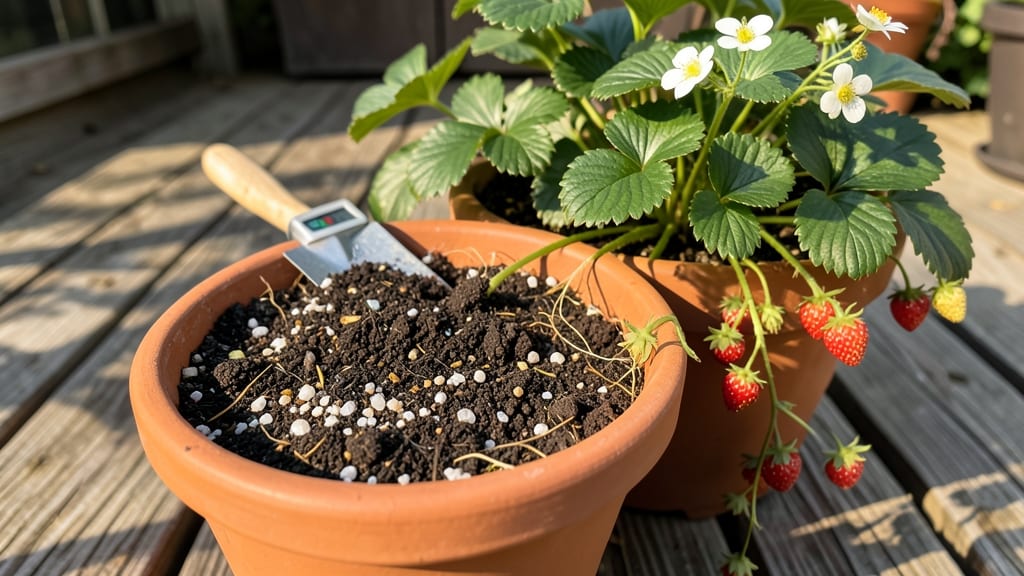
For strawberry plants in containers, the best soil blends 60% peat moss or coconut coir, 30% compost, and 10% perlite or sand to balance moisture retention, acidity (pH 5.5–6.5), and drainage while preventing root rot or nutrient loss.
Strawberries thrive in containers when their roots get the right balance of air, water, and nutrients. 🌱 The peat moss or coconut coir holds moisture without suffocating roots, while the perlite or sand ensures excess water drains quickly—critical for preventing fungal diseases.
I've found that adding a handful of worm castings to the compost boosts microbial activity, which helps break down organic matter faster. This mix also mimics the acidic forest floors where wild strawberries grow, giving your plants the ideal environment to develop strong root systems and produce sweeter fruit.
One common mistake is using garden soil alone—it compacts easily in containers and blocks airflow. Instead, think of this blend as a sponge: it soaks up water when needed but releases it gradually, keeping roots consistently happy.
For larger containers (12+ inches deep), you can even layer the mix with a 2-inch drainage layer of gravel at the bottom to further improve airflow.
💡 In This Article
- Why Strawberry Soil Needs Acidic, Well-Draining Mixes
- DIY Strawberry Potting Mix Recipes for Containers
Why strawberry soil needs acidic, well-draining mixes
Strawberries are finicky about their growing conditions, and their soil needs reflect their natural habitat. In the wild, they thrive in acidic, well-draining forest floors where organic matter decomposes slowly. This environment provides the perfect balance of moisture retention and aeration.
The acidic pH (5.5–6.5) is critical because strawberry roots struggle to absorb essential nutrients like iron and manganese in alkaline soils. Without these minerals, your plants may develop yellow leaves (chlorosis) or stunted growth, even if they look healthy above ground.
The organic matter in compost acts like a living ecosystem for your strawberries. It teems with beneficial microbes that break down nutrients into forms the roots can absorb. These microbes also compete with harmful pathogens, reducing the risk of diseases like gray mold (Botrytis cinerea).
When you add peat moss or coconut coir, you're creating a sponge-like structure that holds water near the roots while still allowing oxygen to circulate. This prevents the anaerobic conditions that lead to root rot—a common killer of container-grown strawberries.
Drainage isn't just about preventing soggy roots; it's about maintaining the right oxygen levels. Strawberry roots need 15-20% air space in their growing medium to function properly. When soil stays too wet, roots suffocate and can't absorb nutrients efficiently.
That's why the 10% perlite or sand in the mix is non-negotiable—it creates tiny air pockets that keep roots breathing. I've seen containers where garden soil was used instead, and within weeks, the roots turned black and mushy from poor drainage.
Another key factor is the texture contrast between components. Peat moss or coir provides fine particles that hold moisture, while perlite adds coarse granules that create drainage channels. This dual-layer effect mimics natural soil stratification, where different particle sizes work together.
For example, a 5-gallon container filled with this mix will drain water in about 10-15 minutes after watering, giving roots plenty of time to absorb what they need without drowning.
Seasonal changes also affect soil performance. In summer, containers dry out faster, so the moisture-retaining components become even more valuable. During winter, the mix stays warm enough to prevent cold damage to roots.
The compost's slow-release nutrients ensure your strawberries get a steady supply, while the acidic environment prevents nutrient lockout that occurs in alkaline soils. This is why professional growers often use this exact ratio—the science has been proven in both home gardens and commercial operations.
One common misconception is that more compost is always better. Too much can create a dense, anaerobic environment that suffocates roots. The 30% compost ratio is ideal because it provides enough organic matter without compacting the mix.
For containers larger than 12 inches deep, you might increase compost to 35% to support more root mass, but never exceed 40% or you risk poor drainage.
Remember: the goal is to create a soil environment where strawberry roots can explore freely, access nutrients efficiently, and stay disease-free. When you get this right, your plants will reward you with abundant, sweet fruit—proof that science and gardening can work beautifully together. 🌱