
Container Gardens
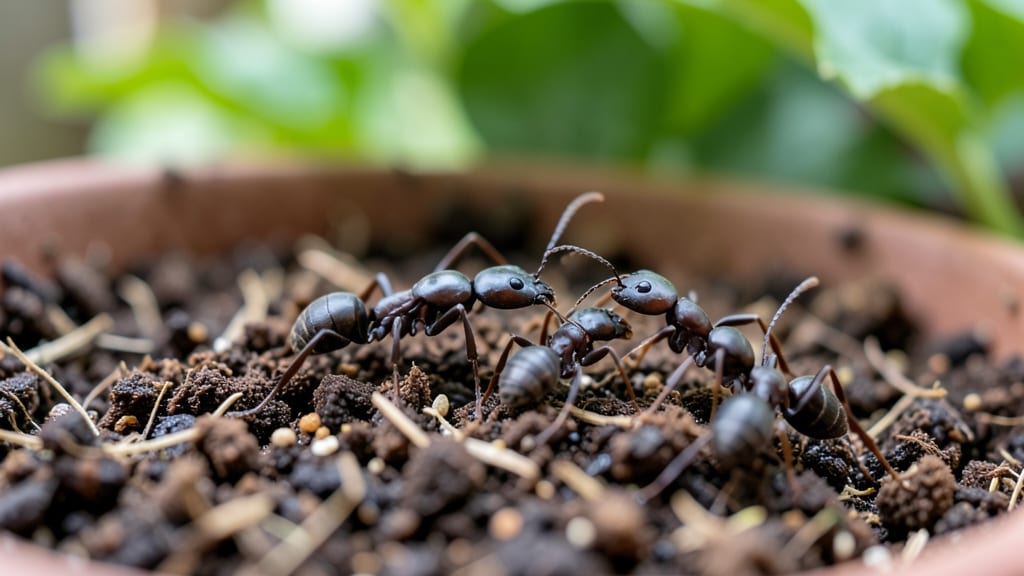
Ants in potted plant soil aren’t just annoying—they can damage roots and attract pests like aphids. 🐜 I’ve seen them turn thriving plants into stressed, struggling specimens, but a simple natural barrier method stops them cold in 24 hours without harming your plants or the environment.
The key is cutting off their access while keeping your greenery healthy.
These tiny invaders follow scent trails to moisture and sweet sap, often entering through cracks in containers or spilled soil. A common mistake? Using chemical sprays that kill beneficial insects along with ants.
Instead, we’ll focus on physical barriers and repellents that work fast and won’t disrupt your garden’s balance. Think of it as a fortress for your plants’ roots.
By tomorrow, you’ll see fewer ants scurrying around your pots, and within a week, your plants will show signs of recovery—fewer yellowing leaves, stronger stems, and healthier growth.
The best part? This method works for both indoor herbs and outdoor ornamentals, whether you’re dealing with sugar ants or pavement ants.
No more digging through soil or dealing with sticky traps—just a foolproof, chemical-free solution that keeps ants out while protecting your plants. Let’s get your containers back to being a sanctuary, not a smorgasbord for ants.
Root Causes of Soil Ants
Ants invading your potted plants aren’t just a nuisance—they’re often a sign of underlying conditions in your soil or environment. Understanding why they’re there is the first step to stopping them naturally.
Below, we break down the most common reasons, backed by science, so you can address the issue at its source.
---
Ants are drawn to moisture gradients in soil, where they can access both hydration and food sources. Here’s why your potted plants might be their perfect buffet:
- Overwatering creates a moist microclimate 💧 Excess water doesn’t just drown roots—it softens soil, making it easier for ants to tunnel. Moisture also attracts fungus and decaying organic matter, which ants love to farm (they’re essentially tiny agriculturalists!).
If your soil stays damp for more than a few hours after watering, you’re signaling to ants: “All you can eat here!”
- Dry soil cracks act as highways 🛣️ Paradoxically, overly dry soil can also invite ants. Cracks in hardened soil provide entry points, and ants follow moisture trails upward from deeper, wetter layers.
If your potted plant’s soil is bone-dry on top but soggy below, you’ve created a perfect ant magnet.
- Condensation from pots ❄️ Terracotta or unglazed pots sweat when temperature shifts occur (like moving from a cool porch to a warm indoor space).
This condensation mimics rain, tricking ants into thinking your soil is a perpetual water source. Pro tip: Use pots with drainage holes and avoid placing them on surfaces that trap heat (like black plastic trays).
---
Ants are scavengers, and your potted plant’s soil might be a five-star restaurant if it’s rich in decomposing matter. Here’s what’s likely luring them:
- Decaying plant matter 🍂 Dead leaves, fallen flowers, or rotting roots release sugars and proteins as they break down.
Ants farm these nutrients, often tending to fungi (like leafcutter ants) or directly consuming the decomposing material. Actionable fix: Remove all plant debris from the soil surface and top layer—even small amounts can sustain an ant colony.
- Over-fertilized soil 🌿 Synthetic fertilizers (especially those high in nitrogen) can create a temporary “sugar rush” in the soil as microbes break them down. This attracts ants, who follow the microbial activity. Switch to slow-release organic fertilizers or compost tea to avoid this pitfall.
- Mulch or compost that’s too fresh 🪴 Uncomposted mulch or manure releases volatile organic compounds (VOCs) that ants detect from meters away.
If you’ve recently amended your potted soil, that could be the reason for the invasion. Solution: Use fully composted materials and avoid piling mulch directly against the pot’s base.
---
Ants don’t wander randomly—they follow pheromone trails and scout for resources strategically. If your potted plants are near their main colony, they’ll treat your soil like a satellite outpost.
- Nearby ant nests 🏡 Most ant species nest in soil, and if your potted plants are within 10–15 feet of an established colony, they’ll inevitably explore (and claim) your soil as a food source. Tell-tale sign: Tiny mounds of soil or sawdust-like frass near the pot’s base.
- Bridging structures 🌉 Ants use plants, rocks, or even water droplets to create “living bridges” between their nest and food. If your potted plant touches the ground or leans against a wall, it’s a direct ant superhighway. Fix: Elevate pots on saucers or stands to break their access routes.
- Sweet sap or honeydew 🍯 Some plants (like citrus, ferns, or those infested with aphids) produce sticky sap or honeydew—a liquid goldmine for ants.
If your potted plant is exuding these, ants will farm them like a cash crop. Quick fix: Wipe sap with a damp cloth or introduce ladybugs to control aphids.
--- Ants are highly sensitive to their surroundings, and certain conditions make your potted plants irresistible.
- Warm, sheltered microclimates ☀️ Pots in sunny, protected spots (like under a deck or against a south-facing wall) retain heat, creating ideal nesting conditions. Ants prefer temperatures between 75–95°F (24–35°C)—if your soil hits this range, it’s a cozy invitation.
- Disturbed soil from repotting 🔄 When you repot or dig into the soil, you disrupt ant trails and accidentally relocate their food sources.
This triggers a “scout mission” to reclaim territory. Prevention: If repotting, do it in early morning or evening when ants are less active, and avoid disturbing the top 2 inches of soil.
- Seasonal swarming 🐝 In spring and summer, ant colonies send out winged reproductive ants (swarmers) to mate and establish new nests. If these land near your pots, they’ll assess the soil for suitability—often leading to permanent invasions. Watch for: Winged ants near your plants in late spring.
How to solve it
H2: Quick Fixes for Tiny Garden Invaders
Discovering ants in your potted plants’ soil can feel like an unwelcome houseguest—except these critters don’t tip their hats before crashing the party. 🐜 The good news? With a few targeted strategies, you can evict them fast and keep your plants thriving.
Below, we’ve mapped out practical solutions based on the most common causes of ant infestations, plus prevention tips to lock the door behind them.
---
If your potted plants are hosting aphids, mealybugs, or scale insects, ants are likely farming them for their sugary secretions. Break the cycle by targeting the pests first.
- 🍳 Step 1: Blast Away the Pests
- Spray infested leaves with a soapy water solution (1 tsp mild dish soap + 1 quart water). Test on a small area first!
- For stubborn bugs, use neem oil (1 tsp neem oil + 1 tsp soap + 1 quart water). Shake well and apply with a spray bottle.
- 👨🍳 Step 2: Disrupt the Ant Trail
- Wipe down stems and leaves with a vinegar-water mix (1:1 ratio) to erase scent trails ants use to navigate.
- Place diatomaceous earth (DE) (food-grade only!) around the pot’s base. Ants avoid crossing it—just reapply after watering.
- ⏰ Prevention Tip: Encourage ladybugs or lacewings (natural aphid predators) by planting companion flowers like marigolds or dill nearby.
---
Overwatered or poorly draining soil creates a cozy ant hotel. Dry them out and improve drainage to make your pots less inviting.
- 🔪 Step 1: Adjust Watering Habits
- Let the top 1–2 inches of soil dry out between waterings. Stick your finger in—if it’s damp, wait!
- Use a self-watering pot or add perlite to soil to improve aeration.
- 🌡️ Step 2: Create a Physical Barrier
- Line the pot’s drainage holes with copper mesh (ants hate the taste!) or coffee grounds (sprinkle a thin layer on top of soil).
- For outdoor pots, elevate them on bricks or saucers to prevent ants from crawling up from the ground.
- 🎯 Prevention Tip: Add a layer of coarse sand or gravel (¼ inch thick) on top of soil—ants avoid crossing it, and it reduces evaporation.
---
If ants are just passing through (or nesting) for shelter, make your pots less appealing with natural repellents and smart placement.
- 💡 Step 1: Use Natural Repellents
- Sprinkle crushed bay leaves, cinnamon, or cloves around the pot’s base. Reapply every few days.
- Place orange or lemon peels near the pot—ants dislike citrus oils.
- 🏡 Step 2: Relocate the Pot
- Move potted plants away from sidewalks, patios, or woodpiles—these are ant highways.
- If outdoors, position pots on decorative stones or metal stands to break their entry routes.
- 🔥 Prevention Tip: Keep your garden clean and mulch-free near pots. Ants love hiding in organic debris—remove it regularly!
---
Pro Move: Combine methods for faster results! For example, treat aphids (Step 1 above) while also adding diatomaceous earth (Step 2) to block reinforcements. Most infestations clear up in 24–48 hours with consistent effort.
Frequently asked questions
Why do ants suddenly appear in my potted plant soil?
Ants are drawn to moisture gradients and decomposing organic matter in soil. Overwatering creates damp conditions they love, while decaying plant debris acts like a buffet. They also follow scent trails from nearby ant colonies or sweet sap from plants like citrus. Check for aphids or sticky residues—these are common ant magnets.
Are ants harmful to my potted plants?
While ants themselves rarely harm roots, they can damage plants indirectly. They farm aphids (which suck plant juices) and may carry fungal spores. The bigger risk is soil disturbance from their tunnels, which can stress roots. However, they’re more of a nuisance than a serious threat to most healthy houseplants.
Will diatomaceous earth kill my plants if I use it around pots?
Food-grade diatomaceous earth (DE) is safe for plants when used correctly. Sprinkle it only around the pot’s base—not directly on soil or leaves. It dehydrates ants by damaging their exoskeletons but won’t harm your plants. Reapply after watering, as moisture reduces its effectiveness.
How can I prevent ants from returning after treatment?
Combine these three strategies: 1) Elevate pots on saucers or stands to block ground access, 2) Use a thin layer of coarse sand or gravel on soil surface (ants avoid crossing it), and 3) Keep garden areas clean of mulch/debris near pots. Regularly inspect soil for new ant activity.
Can I use vinegar to repel ants from potted plants?
Yes, but with caution. Mix equal parts white vinegar and water, then spray around (not on) the pot’s base and soil surface. The strong smell disrupts their scent trails. For best results, reapply every 3–4 days. Avoid spraying directly on leaves, as vinegar can cause leaf burn in sensitive plants.