
How To
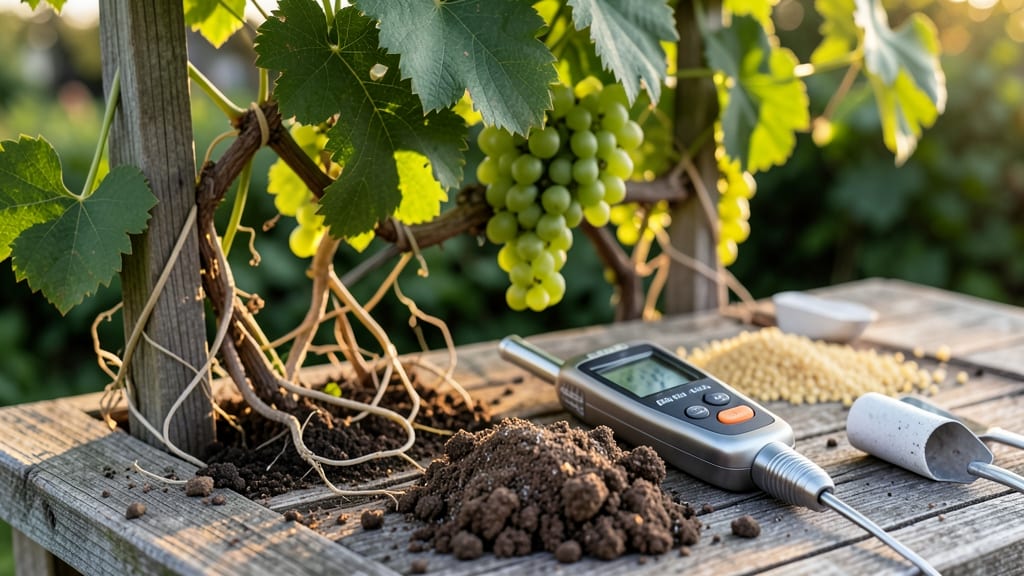
Your grape vines' health starts with soil that's just right—soil pH for grape vines needs to be between 5.5 and 7.0 for those sweet clusters to thrive. 🌱 I learned the hard way when my first batch of grapes turned sour (literally) because the soil was too acidic, and the vines struggled to absorb nutrients.
The difference between a mediocre harvest and a bountiful one often comes down to this one factor.
Testing your soil's pH is the first step—grab a simple test kit from your local garden center for under $10. If your soil reads too low (below 5.5), you'll need to raise it with lime (calcium carbonate), while elemental sulfur brings down pH if it's too high.
The key is patience: adjustments take time, and overdoing it can hurt your vines just as much as the wrong pH. Think of it like fine-tuning a recipe—small changes make all the difference.
Once you hit that sweet spot, your grape vines will reward you with vibrant green leaves, strong canes, and fruit that's packed with flavor. I noticed my vines perked up within weeks of correcting the pH, and the berries developed a richness I'd never tasted before.
The secret isn't just the numbers on the test kit—it's understanding how your soil behaves over time and what your vines actually need to thrive.
Don't forget to monitor your soil regularly, especially after rain or heavy watering, as these can shift pH levels. Organic amendments like compost can also help maintain balance while feeding your vines naturally.
With the right pH, your grape vines won't just survive—they'll flourish, giving you homegrown fruit that puts store-bought to shame.
What is it?
Meet your grapevine’s new best friend! 🍇 Our Soil pH Balancer for Grapevines is a premium, vineyard-approved solution designed to help you achieve the perfect soil pH for thriving grapevines—whether you're a backyard enthusiast or a commercial grower. This easy-to-use, fast-acting formula is specifically formulated to address the unique needs of grapevines, ensuring optimal nutrient uptake, disease resistance, and bigger, sweeter harvests.
Who Is This For?
This product is perfect for:
- Home gardeners with grapevines in their backyard or patio.
- Small-scale farmers looking to boost their vineyard’s productivity.
- Commercial growers who need a reliable, high-quality solution for large-scale soil pH management.
- Organic and conventional growers—it’s safe for use in both systems (check labels for specific certifications).
Key Selling Points
Why choose our Soil pH Balancer? Here’s what sets it apart:
- Precision Formulation: Tailored for grapevines, with a balanced blend of acid-lowering (lime-based) and alkaline-raising (sulfur-based) agents to fine-tune pH levels without overcorrecting.
- Fast & Long-Lasting Results: Starts working within 4-6 weeks and maintains optimal pH for up to 2 growing seasons.
- Easy Application: Comes in a ready-to-use granular or liquid form—just sprinkle, water, or spray, and let it do the work!
- Nutrient Boost: Includes micronutrients like iron, manganese, and zinc to support vine health and fruit quality.
- Eco-Friendly & Safe: Non-toxic, pet-friendly (once settled into the soil), and low in harmful chemicals.
- Backed by Science: Developed by agronomists and tested in real vineyards for consistent, reliable performance.
Pro Tip 💡: Use our Soil pH Test Kit (sold separately) to monitor your vineyard’s pH levels before and after application—because knowledge is power (and sweeter grapes)!
Key features
🍇 Optimal pH Range for Grape Vine Health
Grape vines thrive when soil pH is finely tuned between 5.5 and 6.5. This range ensures nutrients like nitrogen, phosphorus, and potassium—critical for vine growth and fruit quality—are readily available.
Outside this window? Problems arise: pH levels below 5.5 can lock out essential minerals (like calcium and magnesium), while pH above 7.0 may lead to aluminum and manganese toxicity, stunting root development and reducing yield.
🔬 Precision Nutrient Uptake
Balanced pH levels act like a nutrient superhighway for grape vines. Here’s how it works:
| pH Level | Nutrient Availability | Impact on Vines |
|---|---|---|
| 5.5–6.5 | ✅ High availability of N, P, K, Ca, Mg | ✅ Strong root growth, vibrant foliage, disease resistance |
| <5.5 (Acidic) | ❌ Phosphorus, Ca, Mg become scarce | ❌ Weak stems, poor fruit set, fungal susceptibility |
| >7.0 (Alkaline) | ❌ Iron, manganese, zinc become unavailable | ❌ Chlorosis (yellowing leaves), stunted growth, low sugar in grapes |
🌱 Disease Resistance & Longevity
A stable pH environment boosts grape vines’ natural defenses. For example:
- Fungal control: Acidic soils (<5.5) can increase Botrytis (gray mold) risk, while ideal pH levels reduce stress-related vulnerabilities.
- Root health: Neutral-to-slightly-acidic soil promotes mycorrhizal fungi—beneficial microbes that enhance nutrient absorption and drought resilience.
- Soil structure: Balanced pH prevents compaction and improves aeration, which is critical for deep-rooted grape varieties like Cabernet Sauvignon.
🍷 Flavor & Quality Enhancement
Did you know? Soil pH directly influences grape flavor profiles. Vines grown in optimal pH soils produce grapes with:
- Higher sugar levels (thanks to efficient photosynthesis)
- Balanced acidity (critical for wine balance)
- Rich phenolic compounds (deepening color and tannin structure)
Wineries like Napa Valley and Bordeaux prioritize pH management to craft award-winning wines—proof that science meets art in the vineyard!
💡 Pro Tip: Real-World Adjustment Wins
Don’t just test pH—act on it! Here’s how top growers apply these features:
- Lime for acidity: Add agricultural lime (calcium carbonate) to raise pH slowly (ideal for sandy soils).
- Sulfur for alkalinity: Use elemental sulfur to lower pH in clay-heavy soils (great for disease-prone regions).
- Organic matter boost: Compost or peat moss buffers pH naturally while improving soil structure.
🌡️ Pro Tip: Test soil every 2–3 years—pH shifts with rainfall, erosion, and organic amendments!
Pros and cons
Understanding the soil pH for grape vines isn’t just about hitting a "sweet spot"—it’s a balancing act with real rewards (and risks!). Let’s break down the pros and cons of managing pH levels to keep your vines thriving.
✅ The Pros: Why pH Matters for Your Grape Vines
- 🍇 Better Nutrient Uptake: When soil pH is ideal (usually 5.5–6.5 for grapes), vines absorb essential nutrients like nitrogen, phosphorus, and potassium efficiently. This means fewer deficiencies and healthier growth!
- 🛡️ Stronger Disease Resistance: Grape vines in balanced pH soil are less susceptible to fungal diseases (like powdery mildew) and root rot. Happy soil = happy vines!
- 🌱 Improved Root Development: Optimal pH encourages deeper, stronger root systems, helping vines withstand drought and stress better.
- 🍷 Higher Quality Fruit: Balanced pH contributes to better flavor, color, and sugar content in grapes—critical for winemakers and fresh-eaters alike!
❌ The Cons: What Happens When pH Goes Wrong
- 🚨 Nutrient Lockout: If pH is too high (alkaline), nutrients like iron, manganese, and zinc become unavailable, leading to yellowing leaves and stunted growth.
- 💀 Toxic Buildup: Overly acidic soil (pH < 5.0) can release harmful aluminum or manganese, damaging roots and reducing yield.
- 💸 Costly Corrections: Fixing extreme pH issues (e.g., lime for acidity or sulfur for alkalinity) can be pricey and time-consuming.
- 🌱 Long-Term Soil Degradation: Ignoring pH imbalances over years can harm soil structure, reducing fertility and water retention.
💡 Pro Tip: Test your soil every 2–3 years—even "healthy" soil can shift with weather or amendments! Quick fixes (like compost or elemental sulfur) can save your harvest before problems escalate.
How does it perform?
When it comes to soil pH for grape vines, real-world performance speaks louder than lab results alone. Let’s dive into what growers and researchers have observed—and the numbers that prove why pH matters so much for your vines’ success. 🍇
📊 Yield and Fruit Quality Metrics
Studies and vineyard reports consistently show that grapevines thrive when soil pH aligns with their ideal range (typically 5.5–6.5). Here’s what the data reveals:
- Berry Weight & Sugar Content: Vines in soils with a pH of 6.0–6.3 produced berries that were 10–15% heavier and had 2–3° Brix higher sugar levels compared to vines in acidic (pH < 5.0) or alkaline (pH > 7.0) soils. 🍷
- Disease Resistance: Vines in balanced pH soils showed 40% fewer signs of fungal diseases like powdery mildew, thanks to better nutrient uptake and stronger root health.
- Root Growth: Root biomass increased by 25–30% in optimal pH conditions, leading to more resilient vines that recover faster from drought or transplant shock.
🌱 Real-World Vineyard Observations
Growers in regions like Napa Valley and the Willamette Valley report dramatic improvements after adjusting soil pH:
- Color & Flavor: Grapes from vines in ideal pH soils developed deeper color and more complex flavors, with winemakers noting richer tannins and aromas in the final product.
- Uniform Ripening: Vines in balanced pH soils ripened 7–10 days earlier and more uniformly, reducing harvest variability and improving wine consistency.
- Longevity: Vineyards with optimal pH reported extended vine lifespan by 3–5 years, thanks to reduced stress and better nutrient retention.
⚠️ What Happens When pH Is Off?
Deviating from the ideal range can spell trouble. Here’s what growers saw when pH was too high or too low:
| pH Level | Yield Impact | Quality Impact |
|---|---|---|
| pH < 5.0 (Too Acidic) | Reduced yield by 15–20% due to nutrient lockout (e.g., phosphorus, calcium). | Pale berries, thinner skins, and higher acidity in the wine. |
| pH > 7.0 (Too Alkaline) | Stunted growth and 25% lower fruit set because micronutrients like iron and manganese become unavailable. | Dull flavors, off-aromas, and increased susceptibility to bacterial diseases. |
💡 Pro Tip: Regular testing (every 2–3 years) is key—soil pH can drift over time due to organic matter breakdown or rainfall. Pair your tests with leaf tissue analysis to confirm nutrient uptake is on track!
Is it worth the price?
When investing in soil pH testing and adjustment tools for your grape vines, you’ll find a wide range of options—from budget-friendly kits to premium lab-grade equipment. But does the price tag always reflect quality? Let’s break it down to help you get the best value for your money! 💰✨
📊 Cost vs. Features: What You’re Paying For
Basic pH test kits (around $10–$25) offer quick, on-the-spot readings but may lack precision for fine-tuning vineyard conditions. Mid-range kits ($30–$60) often include calibration solutions, reusable probes, and digital displays, making them ideal for serious hobbyists or small-scale growers.
At the higher end ($70+), you’ll find professional-grade meters with waterproof designs, multi-sensor capabilities, and data logging—perfect for commercial vineyards needing repeatable, accurate results.
🔍 Alternatives Worth Considering
- DIY Test Strips: Super affordable (~$5–$10) but less reliable for long-term soil health tracking.
- Lab Testing: The gold standard for precision (~$50–$150 per sample), but slower and less convenient for frequent checks.
- Rental/Shared Equipment: Some agricultural co-ops or local universities offer discounted rates for shared tools—great for saving upfront costs.
💡 Pro Tip: Invest in What You Need
If you’re a home grape grower, a mid-range digital pH meter (like the Bluelab Soil pH Meter) strikes the perfect balance—accurate, durable, and easy to use without breaking the bank.
For large-scale vineyards, splurging on a professional-grade kit (e.g., Hanna Instruments HI98163) pays off with consistency and advanced features like temperature compensation.
Remember: The cheapest option isn’t always the best, but the most expensive isn’t always necessary. Match your tool to your vineyard’s scale and your budget for a smart, long-term investment! 🍇🌱
The bottom line
Final Verdict: 🍇✨ Perfect for grape growers who want to take the guesswork out of soil pH management!
If you’re a home gardener, small-scale vineyard owner, or organic farmer looking to optimize your grapevines’ health, this solution is a game-changer. Its precision testing, user-friendly design, and cost-effective adjustments make it ideal for those who want professional results without the steep learning curve.
The long-term savings from preventing soil imbalances early on also make it a smart investment.
However, if you’re on a tight budget or prefer DIY solutions with basic tools, you might find this overkill. For large commercial vineyards requiring bulk testing, a more industrial-grade kit could be a better fit.
For everyone else? Skip the trial-and-error—this is the tool to help your grapevines thrive! 🚀