
Neem Oil
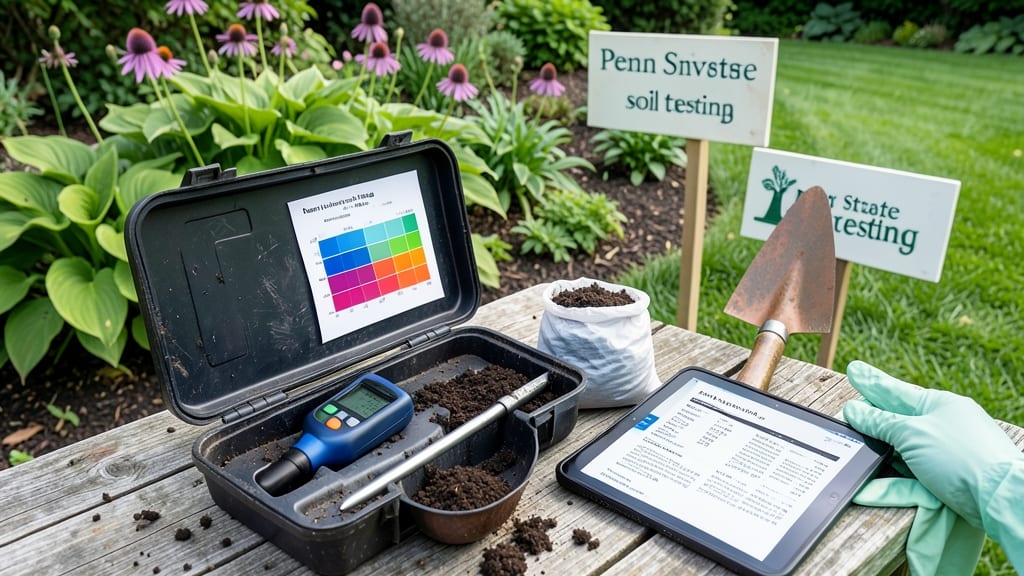
Penn State University's free soil testing service analyzes your soil's pH, nutrient levels, and organic matter to help you grow healthier plants and fix deficiencies with expert recommendations.
This program is a game-changer for gardeners who want to avoid guesswork with fertilizers. 🌱 The tests break down exactly what your plants are missing—whether it's nitrogen for leafy greens, phosphorus for root development, or micronutrients like iron—so you can tailor your approach.
I've used their reports to transform struggling garden beds by adjusting pH with lime or sulfur and adding compost based on organic matter percentages. The best part? Their recommendations are specific to your region's climate and soil type, which makes them far more reliable than generic advice.
What sets Penn State's service apart is its combination of scientific rigor and practical advice. You'll get clear thresholds for ideal ranges (like pH 6.0-7.0 for most vegetables) alongside actionable steps, whether you're growing tomatoes in raised beds or maintaining a lawn.
Their team even explains why certain nutrients matter—like how calcium prevents blossom-end rot in tomatoes—and offers cost-effective solutions for small-scale gardeners.
💡 In This Article
- What Penn State Soil Tests Measure: Key Nutrients and pH Insights
- Step-by-Step Guide to Requesting Your Free Penn State Soil Test
What Penn State soil tests measure: key nutrients and pH insights
The soil test from Penn State analyzes 13 essential parameters that directly impact plant health. At the core is pH level, measured on a scale from 0 (acidic) to 14 (alkaline), with most vegetables thriving between 6.0-7.0. This isn't just about numbers—pH affects nutrient availability.
For example, iron becomes locked up in alkaline soils (pH 7.5+), causing yellowing leaves even when soil tests show adequate iron levels. The test also measures macronutrients (nitrogen, phosphorus, potassium) that plants need in larger quantities, with optimal ranges like 100-200 ppm nitrogen for vigorous growth.
Beyond the basics, Penn State evaluates micronutrients like zinc, manganese, and copper—often overlooked but critical for processes like chlorophyll production. Their report includes organic matter percentage, which should ideally be 3-5% for healthy soil structure and water retention.
What's fascinating is how they correlate these values: a low pH (below 5.5) might indicate aluminum toxicity, while high phosphorus (>100 ppm) could signal over-fertilization from past applications.
The test even checks cation exchange capacity (CEC), a measure of your soil's ability to hold nutrients—think of it as the soil's "nutrient storage capacity."
What makes these measurements practical is how they translate to real gardening scenarios. For instance, if your soil tests low in potassium (<100 ppm), you'll see symptoms like weak stems or poor disease resistance in tomatoes.
The report provides region-specific recommendations, like suggesting pelletized lime for acidic soils in Pennsylvania's Appalachian region versus elemental sulfur for alkaline soils in the state's southeast. This precision saves money by avoiding over-application of amendments. 🌱
One often-missed detail is how Penn State's tests account for soil texture differences. Sandy soils (fast-draining) may show low organic matter (<1%) but still test adequate for nutrients because they don't hold moisture long enough for microbial activity.
Conversely, clay soils (slow-draining) might test high in phosphorus (>200 ppm) due to poor leaching. The report explains these interactions, helping you understand why your 10-year-old garden bed might need different treatment than your newly tilled raised bed.
The test results also include buffer pH measurements, which predict how your soil will respond to lime applications—a critical factor for long-term planning.
For example, a buffer pH of 6.5 means you'll need about 50 lbs of lime per 1,000 sq ft to raise the pH by 1 unit, while a buffer pH of 7.0 might require double that amount.
This level of detail ensures you're not just treating symptoms but addressing the root causes of poor plant performance. 💫
What most gardeners don't realize is how Penn State's tests reveal hidden soil health indicators like salinity levels and sodium adsorption ratio (SAR), which affect plant uptake of water. High SAR values (>10) can cause physiological drought even in moist soils, explaining why some plants wilt despite adequate irrigation.
The report explains these factors in plain language, helping you connect lab numbers to real-world plant behavior in your garden.
For container gardeners, the test provides specialized interpretations for potting mixes, where nutrient dynamics differ from in-ground soil. You'll see recommendations for slow-release fertilizers when micronutrient levels are adequate but organic matter is below 2%, or warnings about over-salting from frequent watering with tap water.
This attention to detail makes the service invaluable whether you're growing herbs in pots or vegetables in 4'x8' raised beds. 🌿