
Lawn
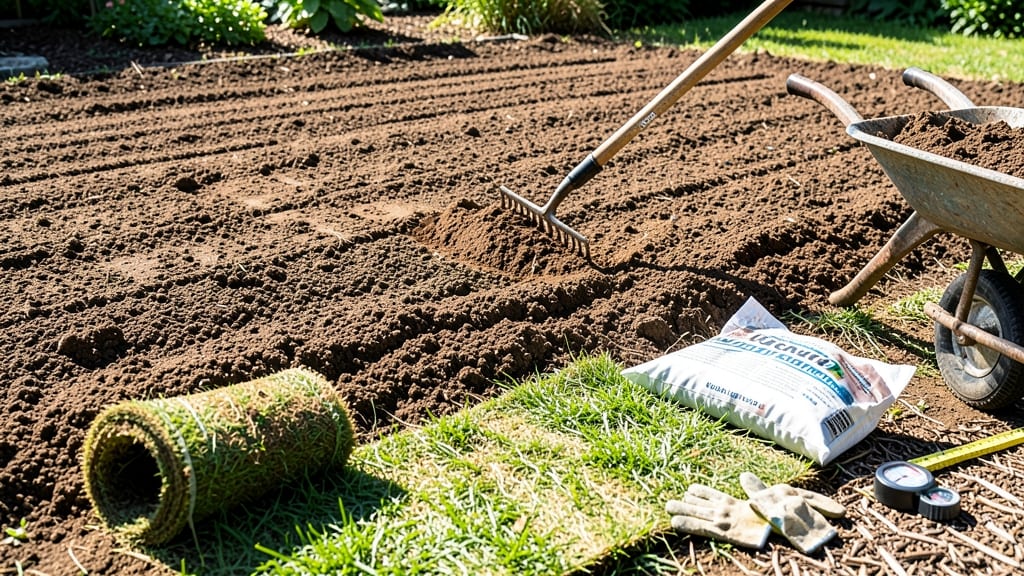
To determine how much topsoil for sod, spread 2 to 4 inches evenly over your prepared ground. This ensures proper root contact and drainage, with adjustments needed based on soil type—sandy areas may require 3–4 inches while clay-heavy soils benefit from 2–3 inches. Always level the surface before laying sod for best results.
When installing sod, the right amount of topsoil creates the foundation for healthy root growth. 🌱 A 2 to 4-inch layer provides the ideal balance between aeration and moisture retention, preventing both drought stress and waterlogging.
I've seen sod fail when homeowners skip this step entirely, only to discover roots struggling to penetrate compacted native soil. The key is working with your existing soil's texture—amending clay with sand or compost can help achieve those critical 2–4 inches without excessive depth.
For practical application, measure your yard's square footage and multiply by the desired depth (in feet) to calculate cubic yards needed. A 100-square-foot area with 3-inch topsoil requires about 0.25 cubic yards—always round up for bulk purchases.
Uneven terrain? Spread extra topsoil on slopes and compact lightly with a roller before laying sod. This prevents erosion and ensures consistent root contact across your entire lawn.
💡 In This Article
- Why Topsoil Depth Matters for Sod Root Establishment
- Calculating Topsoil Needs: Square Footage and Coverage Tips
Why topsoil depth matters for sod root establishment
Sod roots need a 2-4 inch topsoil layer because this depth creates the perfect balance between aeration and moisture retention. Shallow soil (1 inch) forces roots to compete with native soil for nutrients, while excessive depth (> 4 inches) delays root penetration and increases water evaporation.
The ideal depth mimics natural grassland conditions where roots can spread horizontally while accessing moisture from below.
The science behind this involves three critical factors: soil porosity, capillary action, and microbial activity. Loose topsoil with 30-40% pore space allows oxygen to reach roots while retaining 20-30% moisture—essential for enzymatic activity in root tips.
Clay soils naturally compact, reducing porosity to 10-20%, which is why they require shallower topsoil layers (2-3 inches) to prevent suffocation. Sandy soils, with 40-50% porosity, need deeper layers (3-4 inches) to hold moisture longer.
Seasonal variations also affect root establishment. In spring and fall, when temperatures average 60-75°F, roots grow 1-2 inches per week through loose topsoil. During summer heatwaves (> 85°F), shallow roots (1 inch deep) can dry out in 24 hours without proper moisture retention.
This is why topsoil depth becomes even more critical in hot climates—deeper layers act like natural irrigation reservoirs.
Visualize it like a sponge: 2-4 inches of topsoil creates a "sweet spot" where water can wick upward via capillary action while excess drains away. Too little topsoil means roots struggle to anchor, while too much creates a barrier that delays establishment.
The texture matters too—amending with 10-20% compost improves moisture retention in sandy soils, while gypsum can help break up clay compaction for better root penetration.
Here's what happens when you get it wrong: Sod laid on less than 2 inches often shows yellowing within 2 weeks as roots suffocate. Overly deep topsoil (> 5 inches) can delay rooting by 3-4 weeks as roots search for stable soil.
The 2-4 inch range gives roots the perfect environment to establish within 2-3 weeks during optimal growing conditions.
Pro tip: Use a soil probe to check depth after spreading—press it into the soil until you hit the native layer. The probe should meet resistance at 2-4 inches for ideal conditions. This simple test saves time and ensures your sod gets the foundation it needs to thrive.