
Planting
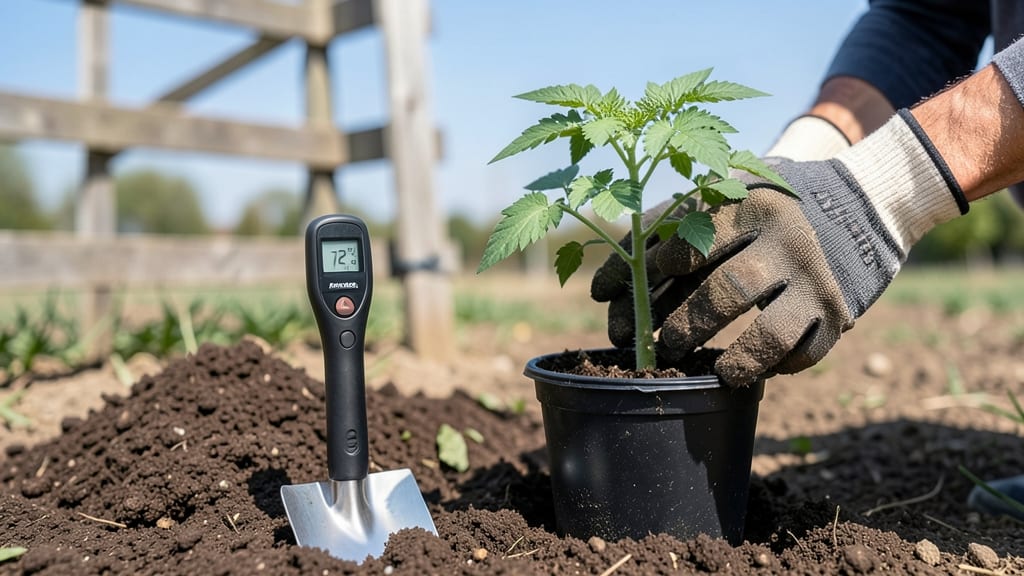
Transplanting tomatoes into the right soil temperature for transplanting tomatoes can leave your seedlings struggling or even dead, while waiting too long risks missing the peak harvest window.
Picture this: you’ve nurtured your 🍅 seedlings for weeks, only to watch them wilt after transplanting because the soil was still chilly. The key to avoiding this heartbreak? Knowing the exact soil temperature ranges that trigger strong root growth and rapid establishment.
Most gardeners in USDA Zone 6 or warmer wait until the soil hits at least 50°F—but that’s just the starting line. Warmer climates may need to hold off until 60°F or higher, while cooler regions can use mulch or black plastic to speed up warming.
Below, I’ll break down the ideal temperature zones for each growth stage, how to measure soil warmth accurately, and what to do if your microclimate runs cold. You’ll learn how to time your transplanting for faster root development and a bumper crop.
Optimal soil temperature ranges for transplanting tomatoes by growth stage
Transplanting tomatoes into cold soil is like handing a newborn a popsicle—it shocks their roots and stunts growth. The ideal soil temperature for tomatoes varies by growth phase, from 50°F (10°C) for seedlings to 86°F (30°C) during fruiting.
Understanding these ranges helps you avoid common mistakes like transplant shock or blossom drop.
Tomatoes thrive when soil warmth aligns with their developmental needs. Root establishment happens fastest at 60-70°F (15-21°C), while fruit development peaks at 75-86°F (24-30°C). Regional climates—whether you're in Zone 5 or Zone 10—require adjustments to these ranges, especially during spring transplanting or fall extensions.
A soil thermometer is your best tool for accuracy. Stick it 2-3 inches deep (where roots grow) and check readings in the morning for consistency. If your soil is below 50°F (10°C), delay transplanting or use black plastic mulch to warm it faster.
Cold soil (below 50°F/10°C) slows root growth, making seedlings vulnerable to damping off or fungal diseases. In northern climates, wait until two weeks after last frost and soil temps stabilize above 60°F (15°C). In southern climates, transplant earlier but monitor for heat stress if temps exceed 90°F (32°C).
During root establishment, aim for 60-70°F (15-21°C) to encourage explosive root growth. This phase is critical—roots need warmth to penetrate compacted soil and access nutrients.
In USDA Zone 7, this typically aligns with late April to early May, while Zone 4 gardeners may wait until mid-June.
When tomatoes flower and fruit, higher temps (75-86°F/24-30°C) boost pollination success and sugar development. However, extreme heat (>90°F/32°C) can cause blossom drop. In arid climates, provide afternoon shade or use drip irrigation to keep roots cool.
Measure soil temperature daily for a week before transplanting. If mornings dip below 50°F (10°C), delay or use row covers. For container growing, soil warms faster—monitor pots with a thermometer and move them to sunniest spots.
In northern gardens, extend the season with black plastic mulch or heat mats to raise soil temps by 5-10°F. In southern regions, transplant early spring or late summer to avoid midday heat stress.
Always prioritize consistent warmth over speed—rushed transplants lead to weak plants and poor yields.
Pro tip: Hardened seedlings (acclimated to outdoor temps) handle cooler soil better. Gradually expose them to outdoor conditions for 7-10 days before transplanting to 50°F (10°C) soil. This hardening-off process reduces transplant shock by 50%.
🌱
How to adjust transplanting timing based on your microclimate’s warmth zones
Your USDA hardiness zone and local frost dates are just the starting point for tomato transplanting. The real game-changer? Understanding how your microclimate’s warmth zones affect soil temperature.
In Zone 5, you might need to wait until late May, while Zone 9 gardeners can plant as early as March—but only if soil warms fast enough.
Soil temperature for transplanting tomatoes should ideally hit 50-60°F (10-15°C) for root establishment, but many gardeners in cooler zones struggle to reach this threshold. That’s where soil warming techniques like black plastic mulch or row covers become essential tools to bridge the gap between frost-free dates and safe planting windows.
Here’s how to calculate your safe transplant window using warmth zones, plus adjustments for northern vs. southern gardens:
For northern gardens (Zones 3–6), I recommend using a soil thermometer to verify warmth before transplanting. If temperatures dip below 50°F (10°C), cover seedlings with row covers or extend the season with black plastic mulch to retain heat.
In my Zone 5 garden, this technique adds 2–3 weeks to the safe transplant window.
Southern gardeners (Zones 7–10) face the opposite challenge: heat stress when soil temperatures exceed 86°F (30°C). Use shade cloth or transplant in early morning to avoid shocking seedlings.
In Zone 9, I’ve had success planting as early as February by combining drip irrigation with mulch to moderate soil heat.
Pro tip: Pair your USDA zone with your local frost-free date and a 7-day soil temperature forecast (available from NOAA or local extension offices) to pinpoint the perfect transplant window. Adjusting timing by just 1–2 weeks can mean the difference between healthy vines and stunted growth.